
 English
 한국어
한국어 中文简体
中文简体Ferrite Core Selection Guide: MnZn vs NiZn, Core Types & Applications
Content
A ferrite core sitting in a switching power supply handles hundreds of thousands of magnetic reversals every second. That relentless cycling is exactly why material selection matters — the wrong core loses energy as heat instead of delivering it to your load. This guide cuts through the complexity so you can match the right ferrite core to the right application, fast.
What a Ferrite Core Actually Does
A ferrite core is a ceramic magnetic component made from iron oxide (Fe₂O₃) combined with metal oxides — typically manganese, zinc, or nickel. It channels and concentrates magnetic flux in transformers, inductors, and EMI suppression components. Unlike laminated steel cores, ferrite's high electrical resistivity (up to several orders of magnitude higher) suppresses eddy currents, which is what makes it the material of choice for frequencies above a few kilohertz.
Two properties drive most design decisions: permeability (how well the core concentrates magnetic flux) and core loss (how much energy is wasted per cycle). These two parameters pull in opposite directions — higher-permeability materials tend to underperform at higher frequencies, so matching material to frequency band is the first and most important choice.
MnZn vs. NiZn: The Frequency Boundary
Soft ferrites split into two dominant families, and the choice between them is largely dictated by operating frequency.
| Property | MnZn Ferrite | NiZn Ferrite |
|---|---|---|
| Optimal frequency range | < 5 MHz (power); up to 70 MHz (common-mode chokes) | 1 MHz – several hundred MHz |
| Initial permeability | ~500 – 15,000+ | ~10 – 2,000 |
| Electrical resistivity | Lower | Higher (several orders of magnitude) |
| Typical applications | SMPS transformers, power inductors, PFC chokes | RF circuits, broadband EMI filters, data cables |
MnZn is the workhorse of power electronics. Its high permeability and saturation induction make it ideal for switch-mode power supplies running at 20–500 kHz. For common-mode chokes specifically, MnZn retains its advantage all the way to 70 MHz. Above that threshold, NiZn's superior resistivity takes over, limiting eddy current losses in high-frequency RF and communication circuits.
The development of ferrite materials and their applications was recognized as an IEEE Milestone in 2009, marking nearly a century of refinement since mass production began in 1937.
Core Shapes and What They're Good For
Material is only half the story. Core geometry determines winding window, thermal management, and assembly complexity. The most common shapes each serve a different engineering constraint:
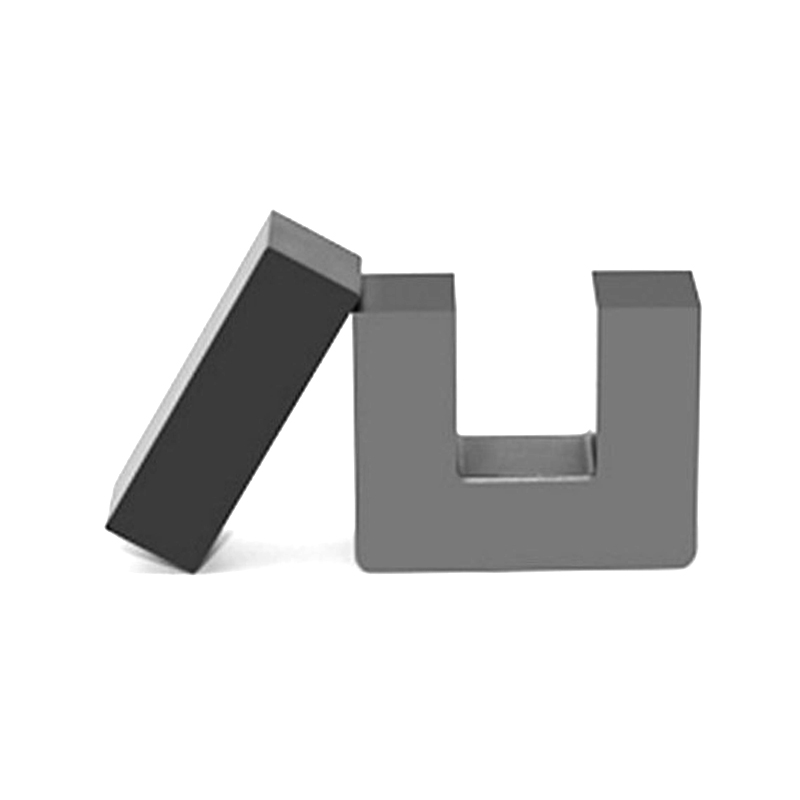
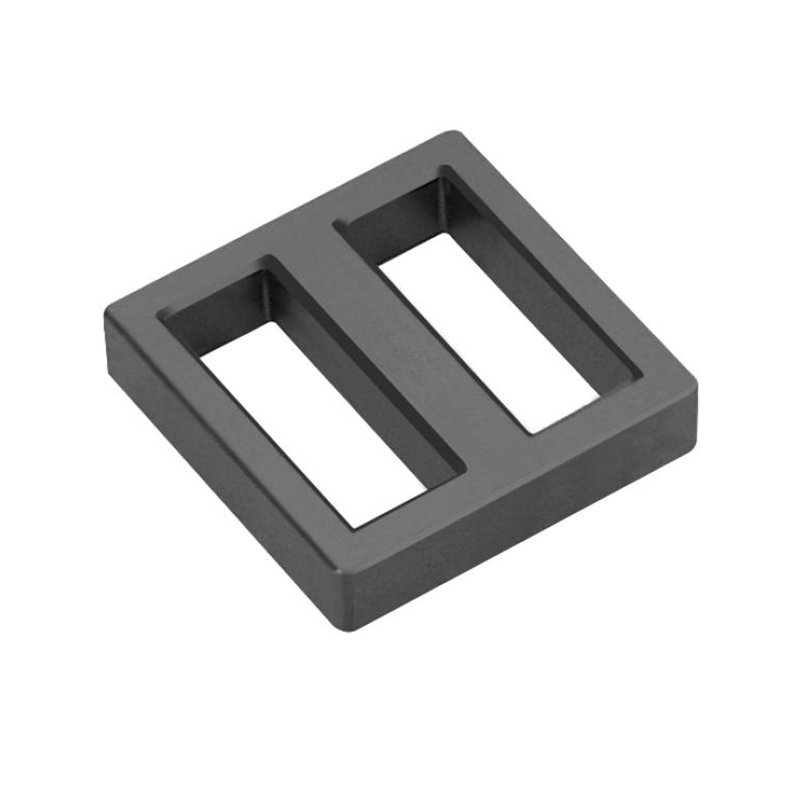
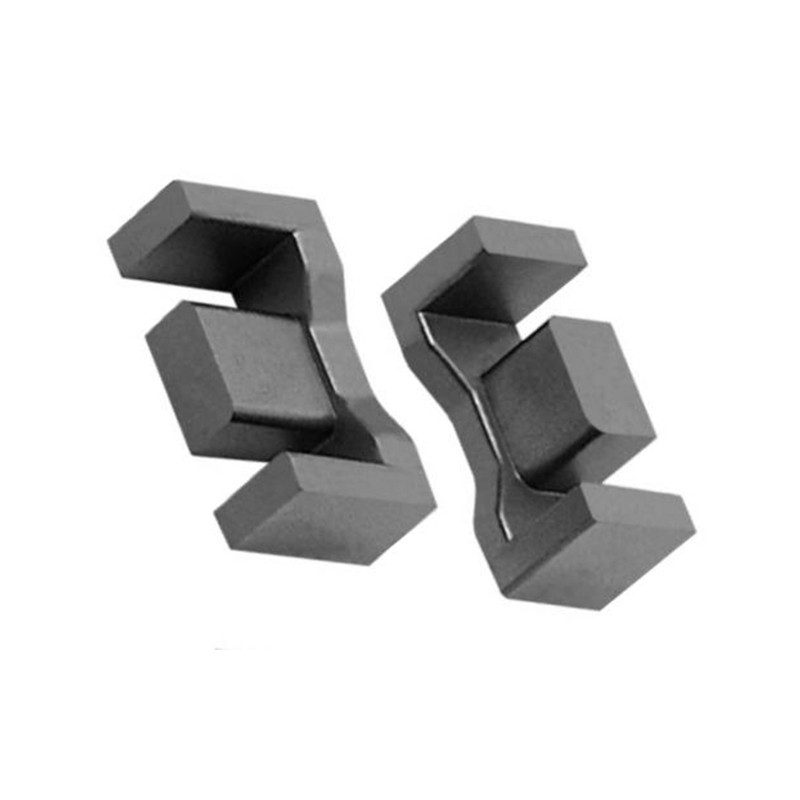
- EE / EF cores — By far the most widely used in power electronics. The paired E shape creates a closed magnetic path with a convenient central winding bobbin. EE cores ranging from EE6.5 (suitable for compact low-power designs) up to EE80/75 (high-power industrial transformers) cover virtually every SMPS application. For example, an MnZn power ferrite EE core like the EE19/10 offers an effective magnetic volume of 1,779 mm³ and AL values from 2,350 to 3,100 nH/N² depending on material grade — a useful reference point when calculating winding turns for a given inductance target.
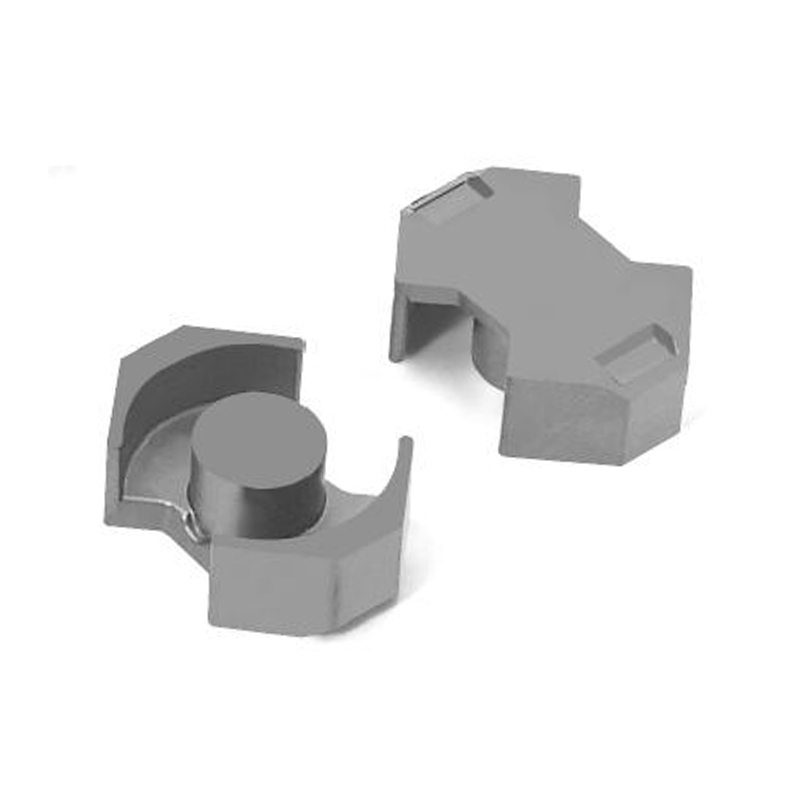
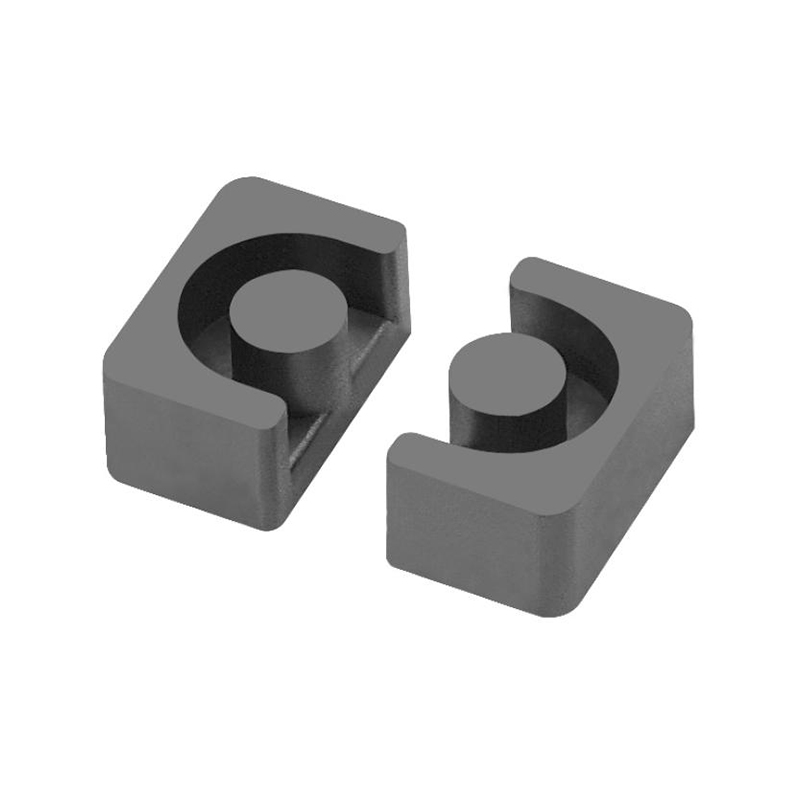
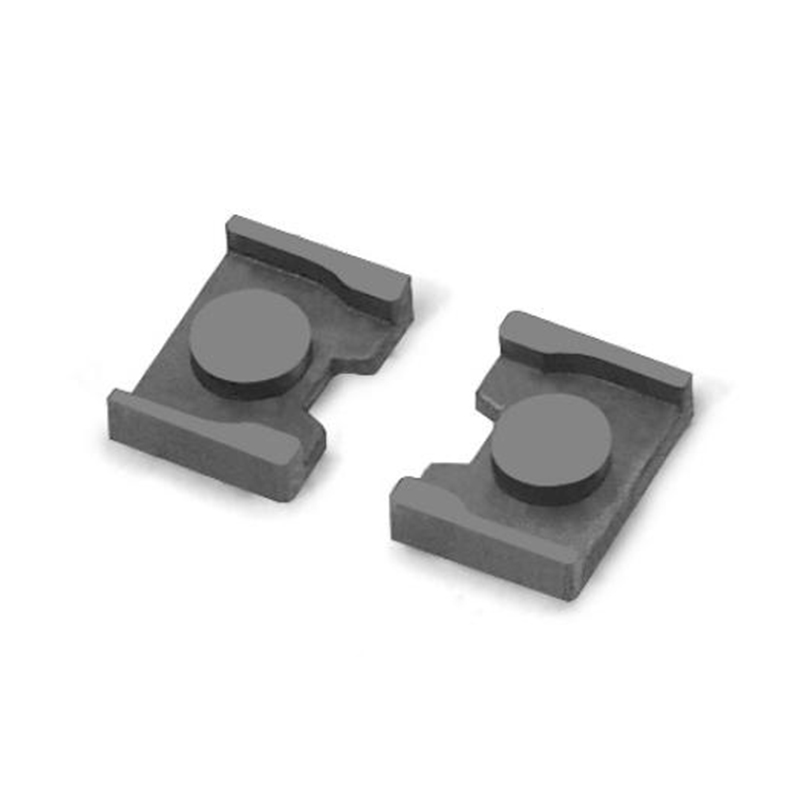
- EC / ER cores — Round center post with lower copper resistance. Preferred for high-current output inductors and LLC resonant converters where winding loss matters more than packaging density.
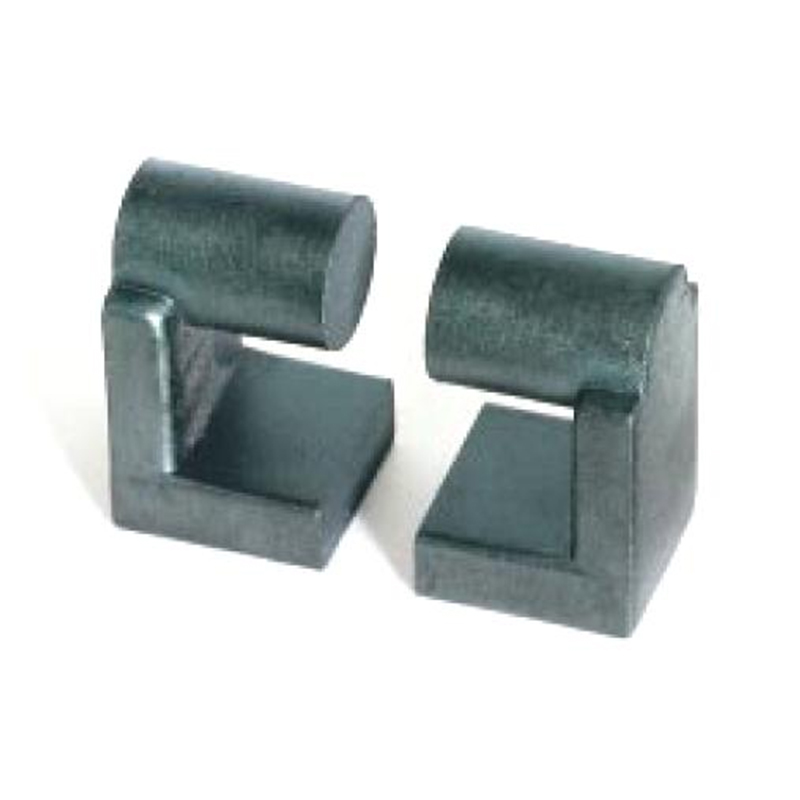
- EB cores — Horizontal orientation suits flat, low-profile assemblies. Increasingly common in automotive and industrial power modules where height constraints are strict.
- PQ / PTS cores — Optimized cross-sectional area-to-volume ratio. The shape allows higher power density in compact designs, a reason they appear frequently in laptop adapters and telecom power supplies.
- Toroidal cores — Excellent flux containment and near-zero external leakage, ideal for common-mode chokes and audio transformers.
Material Grade: The Number Behind the Performance
Within any given shape, material grade controls where the core performs best. For MnZn power ferrite, three grades cover most designs:
- YR28 / lower-permeability grades — Better core loss at high flux density; suited for high-frequency SMPS above 200 kHz.
- YR48 / mid-range grades — Balanced permeability and loss; the default choice for 100–200 kHz switching designs.
- YR98 / high-permeability grades — Lower core loss at moderate frequencies; favored for PFC inductors and power-factor correction stages operating at 50–100 kHz.
For signal filtering and common-mode suppression where high permeability matters more than energy storage, MnZn high-conductivity ferrite grades with initial permeability exceeding 10,000 provide superior impedance in the target noise band. These are the cores found in differential-mode chokes on AC mains filters and in common-mode inductors on power line entries.
Four Practical Selection Rules
- Start with frequency. Below 5 MHz: MnZn. Above 5 MHz: NiZn. Common-mode chokes under 70 MHz: MnZn still wins. This single rule eliminates most material confusion.
- Check saturation flux density at operating temperature. MnZn ferrite loses magnetic capability above its Curie temperature (typically 100–300 °C depending on grade). Designs running at elevated ambient temperatures need material spec sheets, not just room-temperature datasheet values.
- Size for flux density, not just inductance. Inductance can be achieved with turns; core saturation cannot be negotiated away. For an EE core under DC bias, confirm that the peak flux density stays below the material's saturation limit at maximum load current.
- Match AL to your turns budget. The AL value (inductance per turn squared, in nH/N²) directly sets how many turns you need. A higher AL means fewer turns, lower copper loss, and a smaller winding window — but also closer proximity to saturation under DC bias. Review the detailed core type and selection reference to cross-check AL values across the full product range.
EMI Suppression: A Different Mode of Operation
Power ferrites store and transfer energy. EMI suppression ferrites deliberately lose it. When used as a clamp-on bead or sleeve around a cable, the ferrite presents high impedance at the noise frequency and converts common-mode current to heat. Choosing the wrong material here is one of the most common debug mistakes: a power ferrite rated for 100 kHz will barely register at the 10–30 MHz switching harmonics that typically cause conducted EMI failures.
For broadband suppression across a cable bundle, a soft magnetic ferrite with impedance peaked in the 10–100 MHz range is typically needed, which points toward a higher-permeability NiZn or a specialized MnZn grade. Multiple passes of the cable through the core (two to three turns) multiply the impedance without requiring a larger core.
Summary
Ferrite core selection comes down to three variables: frequency range (which determines MnZn vs. NiZn), operating mode (power transfer vs. EMI suppression), and physical constraints (which dictates shape). Get those three right and the material grade becomes a refinement rather than a guessing game. For designs that push flux density or thermal limits, moving to a higher-grade MnZn power material or switching to an EC/ER geometry for better copper utilization are the two most reliable paths to improved efficiency without increasing core size.
Previous Post
Soft Magnetic Ferrites: Material Types, Core Specs & Selection Guide
Next Post
Mn-Zn Power Ferrite: Properties, Grades, and Selection Guide