
 English
 한국어
한국어 中文简体
中文简体Home / News / Industry News / How Does Humidity or Moisture Affect the Performance of Manganese-zinc Ferrite?
How Does Humidity or Moisture Affect the Performance of Manganese-zinc Ferrite?
Content
- 1 1. Understanding Manganese-zinc Ferrite and Its Composition
- 2 2. How Humidity Interacts with Manganese-zinc Ferrite
- 3 3. The Effects of Moisture on Magnetic Properties
- 4 4. Electrical and Dielectric Property Changes
- 5 5. Mechanical Degradation and Microstructural Changes
- 6 6. Influence of Temperature and Humidity Together
- 7 7. Performance Implications in Real Applications
- 8 8. Mitigation and Protection Strategies
- 9 9. Testing and Quality Evaluation Under Humidity Conditions
- 10 10. Future Developments and Research Directions
- 11 11. Summary and Practical Takeaways
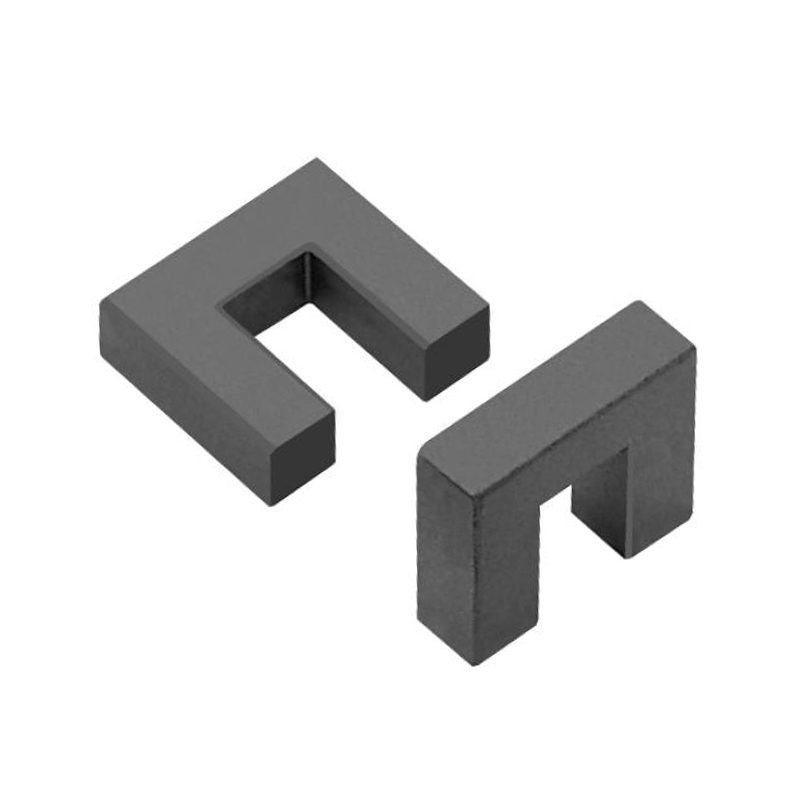
Manganese-zinc ferrite is one of the most widely used soft magnetic materials in modern electronics. Known for its high magnetic permeability, moderate resistivity, and excellent performance in the low- to medium-frequency range, this material plays an indispensable role in transformer cores, inductors, electromagnetic interference (EMI) suppression devices, and power conversion systems.
However, like many ceramic-based materials, Manganese-zinc ferrite is not immune to environmental influences. Among these, humidity and moisture exposure stand out as particularly important factors that can significantly alter its magnetic and physical characteristics. Understanding how water molecules interact with ferrite materials helps engineers design more durable components, select proper coatings, and ensure reliable long-term operation—especially in humid or outdoor environments.
1. Understanding Manganese-zinc Ferrite and Its Composition
Before discussing moisture effects, it is essential to recall what Manganese-zinc ferrite is. Chemically, it is represented by the general formula:
MnₓZn₁₋ₓFe₂O₄,
where x denotes the proportion of manganese relative to zinc. The material is a type of spinel ferrite, meaning it possesses a crystalline structure in which metal ions occupy specific positions within a cubic oxygen lattice.
This crystalline structure contributes to the ferrite’s soft magnetic nature—high permeability, low coercivity, and moderate saturation flux density. However, being a ceramic oxide, Manganese-zinc ferrite is inherently porous and slightly hygroscopic, which means that under certain environmental conditions, it can absorb moisture from the atmosphere.
2. How Humidity Interacts with Manganese-zinc Ferrite
Humidity refers to the amount of water vapor present in the air. When ferrite materials are exposed to humid environments for extended periods, water molecules can penetrate surface pores or adsorb onto the grain boundaries of the material.
This process takes place in two primary ways:
-
Physical Adsorption – Water molecules adhere to the surface of the ferrite through weak van der Waals forces. This type of moisture retention is reversible and typically occurs when humidity levels fluctuate.
-
Chemical Absorption or Reaction – In some cases, water can chemically interact with the ferrite’s surface, forming hydroxides or oxides. This is more serious because it can lead to structural or compositional changes that permanently alter performance.
The extent to which humidity affects Manganese-zinc ferrite depends on several factors:
- The porosity and grain size of the material
- The ambient temperature and relative humidity
- The duration of exposure
- The surface treatment or protective coating applied to the ferrite core
3. The Effects of Moisture on Magnetic Properties
(a) Decrease in Initial Permeability
One of the first observable effects of moisture absorption is a reduction in initial permeability. This property determines how easily the material can be magnetized in response to a small applied magnetic field.
When water molecules infiltrate grain boundaries or micro-pores, they slightly disturb the uniform magnetic domain structure by introducing localized stress or changing the intergranular resistance. As a result, domain wall motion becomes more difficult, reducing permeability.
(b) Increase in Core Loss
Core losses—comprising hysteresis and eddy current losses—are critical parameters for magnetic core efficiency. The presence of moisture typically increases core losses, especially at higher frequencies.
This happens because absorbed water alters the electrical resistivity of the material. While Manganese-zinc ferrite is known for its relatively high resistivity compared to metallic magnetic materials, moisture provides additional conductive pathways between grains, thus facilitating unwanted current loops. The consequence is greater eddy current loss and heat generation.
(c) Shift in Magnetic Induction Characteristics
Humidity exposure may also cause subtle changes in the B-H curve (the magnetic induction versus magnetic field strength relationship). The saturation flux density may drop slightly, and the hysteresis loop may widen, signaling energy inefficiency. Over long-term exposure, these shifts can accumulate, especially in high-temperature and high-humidity conditions.
4. Electrical and Dielectric Property Changes
Manganese-zinc ferrite’s electrical resistivity is essential in minimizing eddy current losses. However, this property is very sensitive to surface moisture.
When humidity levels rise, the following changes can occur:
-
Reduced Volume Resistivity – The absorbed water acts as a conductive film on the surface, leading to reduced overall resistivity. This is detrimental in transformer cores or chokes that depend on high resistivity to maintain energy efficiency.
-
Increased Dielectric Loss – Moisture acts as a polar molecule, increasing dielectric polarization within the ferrite. As a result, dielectric losses increase, leading to reduced efficiency in devices operating at high frequencies.
-
Variation in Impedance – In EMI suppression cores or ferrite beads, impedance is the key performance indicator. Moisture can lower impedance values, thus reducing noise suppression effectiveness.
These effects underscore the importance of controlling environmental exposure during both storage and operation.
5. Mechanical Degradation and Microstructural Changes
Although ferrites are hard and brittle, they remain mechanically stable under normal conditions. Yet prolonged exposure to moisture can subtly alter their microstructure.
(a) Grain Boundary Deterioration
Moisture tends to concentrate at grain boundaries, where it can react with manganese and zinc oxides to form hydroxides. Over time, these reactions may weaken the bonding between grains, causing microscopic cracks or intergranular fractures.
(b) Surface Corrosion or Discoloration
In high humidity or condensation environments, partial hydrolysis can lead to surface corrosion. The ferrite may develop a whitish or brownish film composed of manganese or zinc hydroxide. While this layer might seem superficial, it can affect component fit, appearance, and electrical contact surfaces.
(c) Dimensional Instability
In rare cases, moisture-induced swelling may slightly affect dimensions, particularly in sintered cores with higher porosity. This can compromise mechanical integrity when the ferrite is tightly assembled into coil structures or electronic housings.
6. Influence of Temperature and Humidity Together
Humidity effects do not act in isolation. The combination of high temperature and high relative humidity accelerates degradation. Elevated temperature increases diffusion rates and facilitates the reaction between absorbed water and metal ions in the ferrite lattice.
In accelerated aging tests (commonly 85°C/85% RH for 1000 hours), Manganese-zinc ferrite typically exhibits:
- 5–15% reduction in permeability,
- Noticeable increase in core losses, and
- Slight discoloration or surface oxidation.
These data highlight that thermal management and environmental sealing are critical considerations for ferrite components used in tropical or industrial settings.
7. Performance Implications in Real Applications
(a) Power Transformers and Inductors
For power transformers using Manganese-zinc ferrite cores, high humidity can lead to elevated core losses, temperature rise, and reduced efficiency. In severe cases, excessive heat may accelerate aging of surrounding insulation materials.
(b) EMI Suppression Cores
In ferrite beads and chokes, impedance stability is crucial. If moisture reduces resistivity, the ferrite’s ability to suppress high-frequency noise weakens, leading to potential electromagnetic compatibility (EMC) issues.
(c) Magnetic Sensors or Communication Devices
In precision devices relying on stable magnetic permeability, humidity-induced variations can cause signal drift or reduced sensitivity.
These examples show that even small changes in the magnetic or electrical properties of Manganese-zinc ferrite can have noticeable system-level effects.
8. Mitigation and Protection Strategies
Fortunately, several methods are available to minimize the impact of humidity on Manganese-zinc ferrite performance.
(a) Surface Coating and Sealing
Applying a protective coating is one of the most effective approaches. Common coatings include epoxy resin, silicone varnish, or polyurethane layers. These create a moisture barrier, reducing direct contact between the ferrite and the environment.
(b) Proper Storage and Handling
Ferrite cores should be stored in dry, temperature-controlled environments with relative humidity below 60%. Packaging in sealed bags with desiccants prevents moisture absorption during storage or transport.
(c) Sintering Optimization
Manufacturing improvements, such as reducing porosity through optimized sintering temperatures and times, can make ferrite less susceptible to moisture penetration. Fine-grained, dense microstructures are naturally more resistant to humidity effects.
(d) Encapsulation in Finished Devices
In practical electronic assemblies, ferrite cores can be encapsulated within housings or embedded in resins, further shielding them from environmental exposure. This approach is common in outdoor power systems or automotive electronics.
9. Testing and Quality Evaluation Under Humidity Conditions
To ensure reliability, manufacturers often perform environmental qualification tests on Manganese-zinc ferrite materials. These may include:
- High Humidity Storage Test: Typically at 85°C and 85% RH for 500–1000 hours.
- Thermal Shock and Humidity Cycling: Alternating dry and humid conditions to simulate real-world environments.
- Surface Resistivity and Impedance Measurements: Conducted before and after humidity exposure to quantify performance degradation.
Data from these tests help engineers determine whether a ferrite grade is suitable for specific operating conditions.
10. Future Developments and Research Directions
Research into improving Manganese-zinc ferrite’s humidity resistance continues. Current innovations include:
- Nano-coatings that provide ultra-thin, uniform protection without affecting magnetic properties.
- Doping strategies, where small amounts of rare-earth or non-magnetic oxides are added to improve chemical stability.
- Hybrid ferrite composites that combine ceramic ferrite with polymer matrices for enhanced environmental durability.
Such advancements aim to extend the lifespan of ferrite components in increasingly demanding applications such as electric vehicles, renewable energy converters, and 5G communication systems.
11. Summary and Practical Takeaways
Humidity and moisture can significantly influence the magnetic, electrical, and mechanical performance of Manganese-zinc ferrite. The main effects include:
- Reduced permeability and increased core loss due to disrupted domain wall motion and lowered resistivity.
- Microstructural degradation, including grain boundary corrosion and surface oxidation.
- Long-term performance instability, particularly in high-temperature, high-humidity environments.
To mitigate these issues, engineers and manufacturers should:
- Use ferrite grades with dense microstructures,
- Apply protective coatings or encapsulation
- Store and transport components in controlled environments, and
- Conduct reliability tests under humid conditions before deployment.
By understanding and controlling these environmental effects, the remarkable magnetic properties of Manganese-zinc ferrite can be preserved, ensuring stable operation and long service life across diverse applications.
Previous Post
What are the main properties of Soft Magnetic Ferrites?
Next Post
How Does Common Mode Inductance Reduce Noise in Data Lines?