
 English
 한국어
한국어 中文简体
中文简体Ferrite Core: Types, Uses, and How to Choose the Right One
Content
A ferrite core is a magnetic component made from ferrimagnetic ceramic material — primarily iron oxide combined with metalite metals like manganese, zinc, or nickel — used to guide and concentrate magnetic flux in electronic circuits. It is the go-to solution for reducing electromagnetic interference (EMI), improving energy transfer in transformers, and filtering high-frequency noise in power electronics. Ferrite cores are found in virtually every modern electronic device, from smartphone chargers to industrial inverters.
Unlike silicon steel or powdered iron cores, ferrite cores have very high electrical resistivity (typically 10² to 10⁶ Ω·cm), which drastically reduces eddy current losses at high frequencies. This makes them especially effective in applications ranging from 10 kHz to several hundred MHz.
How Ferrite Cores Work
Ferrite cores function by providing a low-reluctance path for magnetic flux. When a conductor carrying alternating current is wound around or threaded through a ferrite core, the core amplifies the inductance of the winding and constrains the magnetic field, preventing energy from radiating outward as interference.
The key physical property is high permeability (µ). Manganese-zinc (MnZn) ferrites, for example, can reach initial permeabilities of µᵢ = 300 to 20,000, while nickel-zinc (NiZn) ferrites typically range from µᵢ = 10 to 2,000. This permeability determines how effectively the core concentrates magnetic flux relative to air.
At high frequencies, the core's impedance rises, which is why a simple ferrite bead on a cable can suppress conducted EMI without any active circuitry. The energy is dissipated as heat within the core material itself — a process called magnetic hysteresis loss.
Main Types of Ferrite Core Materials
The two dominant ferrite material families each serve distinct frequency ranges and applications:
| Property | MnZn (Manganese-Zinc) | NiZn (Nickel-Zinc) |
|---|---|---|
| Frequency Range | 1 kHz – 2 MHz | 1 MHz – 500 MHz |
| Initial Permeability (µᵢ) | 300 – 20,000 | 10 – 2,000 |
| Resistivity | ~0.1 – 10 Ω·cm | ~10² – 10⁶ Ω·cm |
| Core Loss | Low at low frequency | Low at high frequency |
| Typical Use | Power transformers, inductors | EMI suppression, RF filters |
A third material, magnesium-zinc (MgZn), is used in specialized high-frequency applications and offers properties between the two main families, though it is far less common commercially.
Common Ferrite Core Shapes and Their Applications
Ferrite cores are manufactured in a wide variety of geometries, each optimized for specific winding configurations and circuit requirements.
Toroidal Core
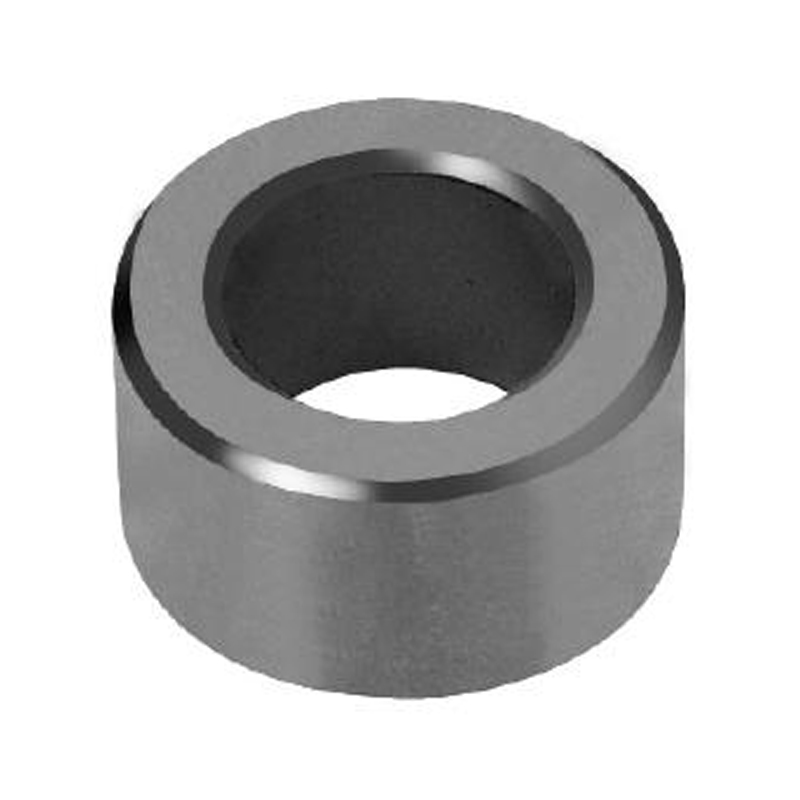
The donut-shaped toroid is one of the most efficient geometries because it offers a closed magnetic path with virtually no air gap, minimizing leakage flux. Toroids are widely used in common-mode chokes, power-line filters, and audio transformers. A well-designed toroidal choke can suppress common-mode noise by 40–60 dB in the 1–30 MHz range.
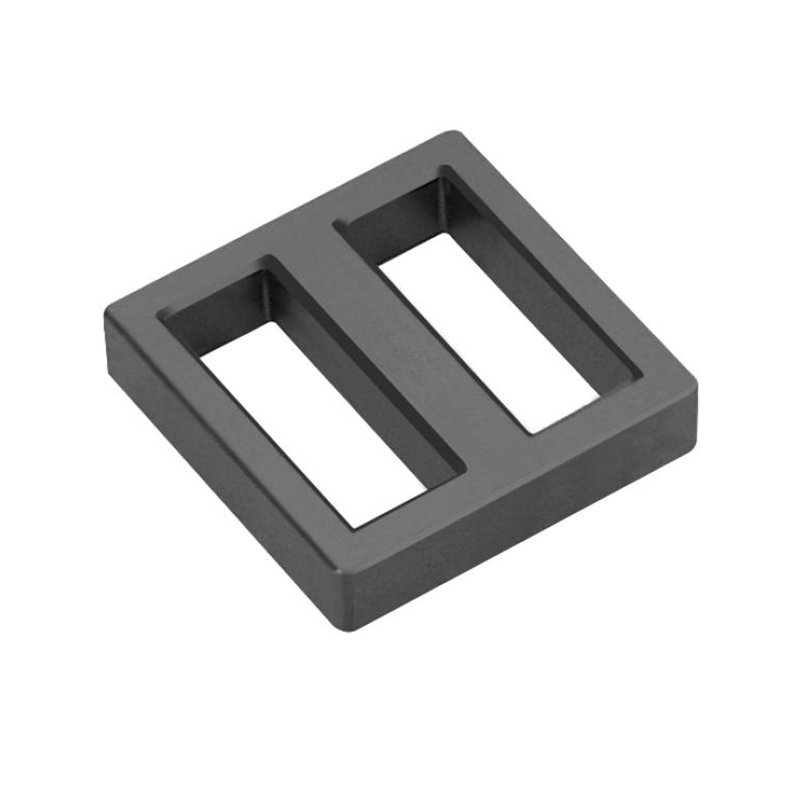
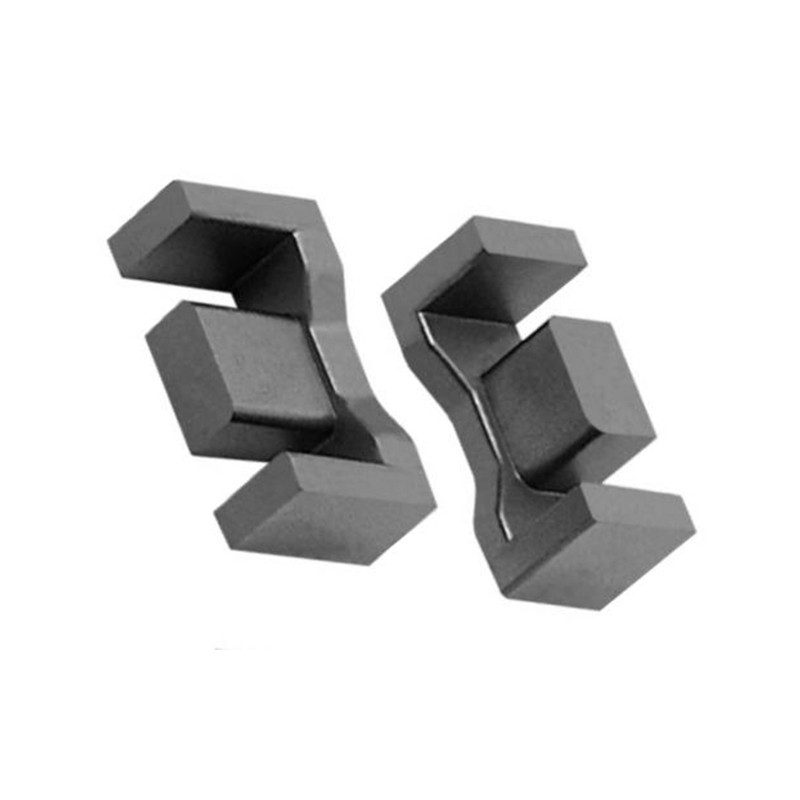
E-Core and I-Core (EI Core)
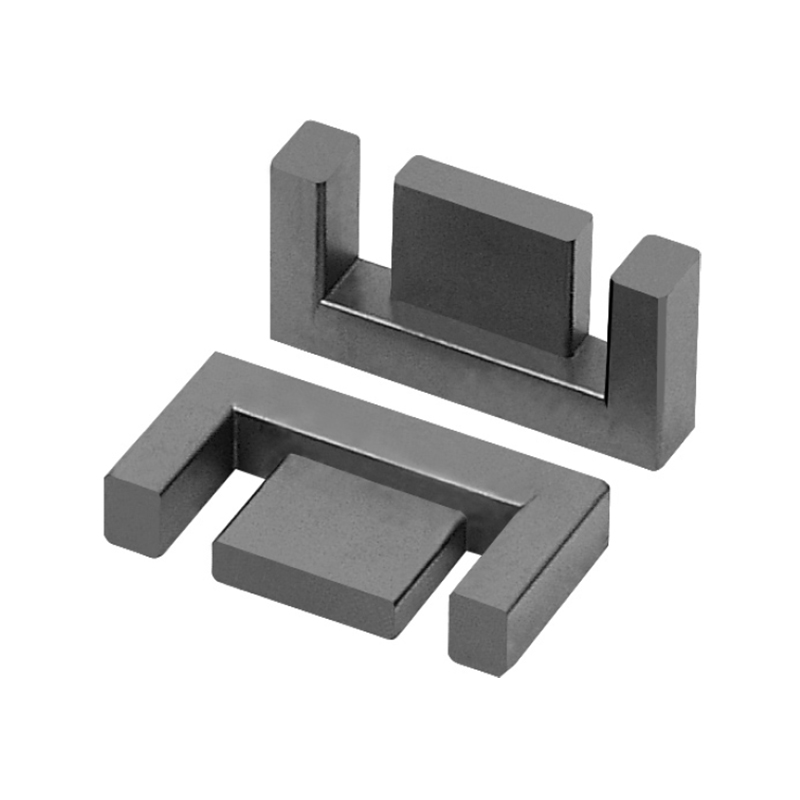
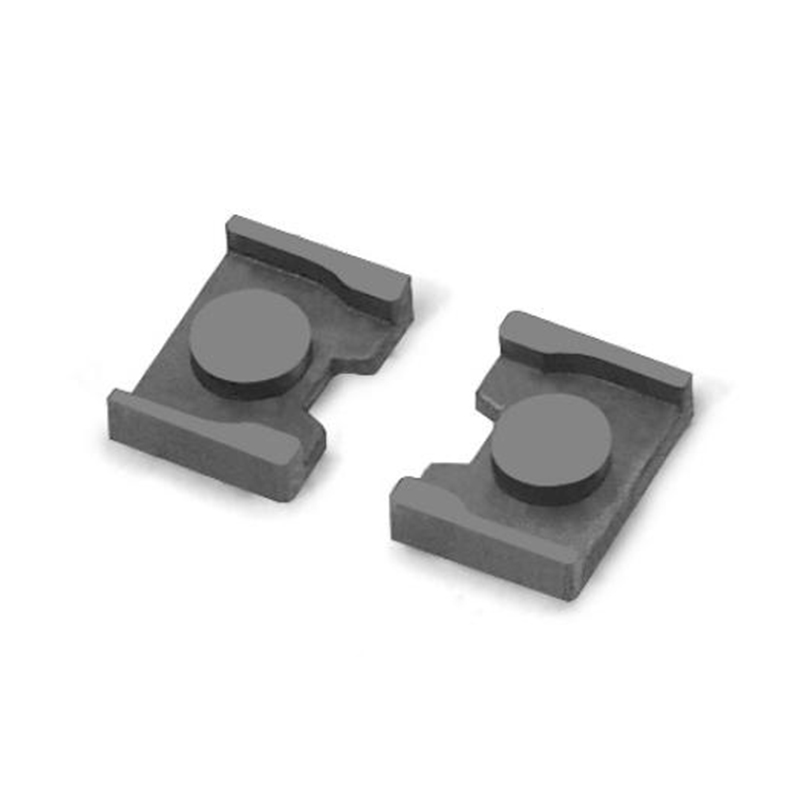
EI cores are the workhorses of transformer design. The E and I sections clamp together around a bobbin, making winding easy and manufacturing cost-effective. They are standard in switch-mode power supplies (SMPS), where operating frequencies are typically 20 kHz to 500 kHz.
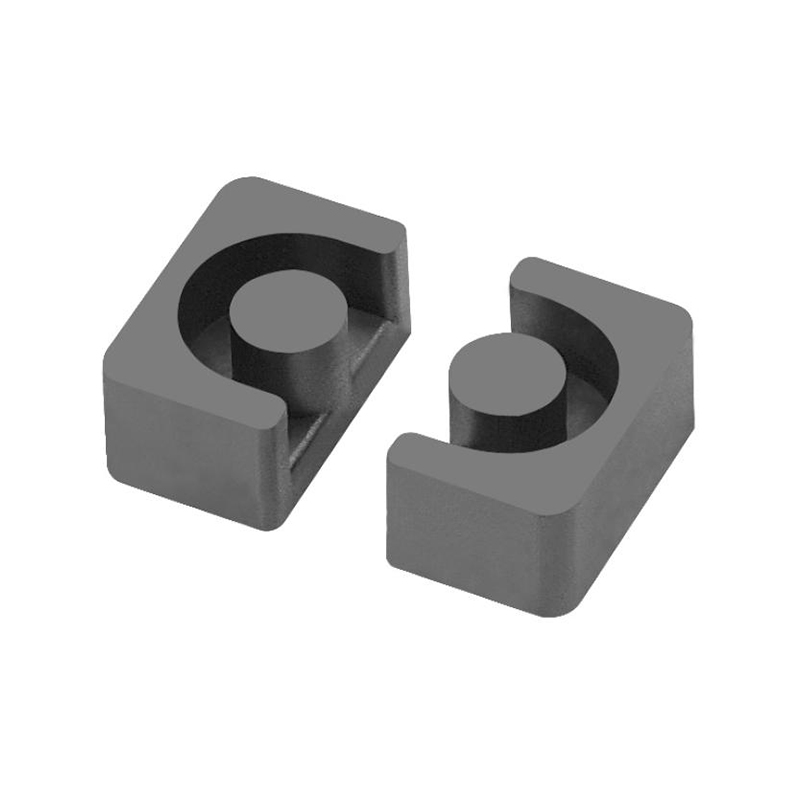
Pot Core
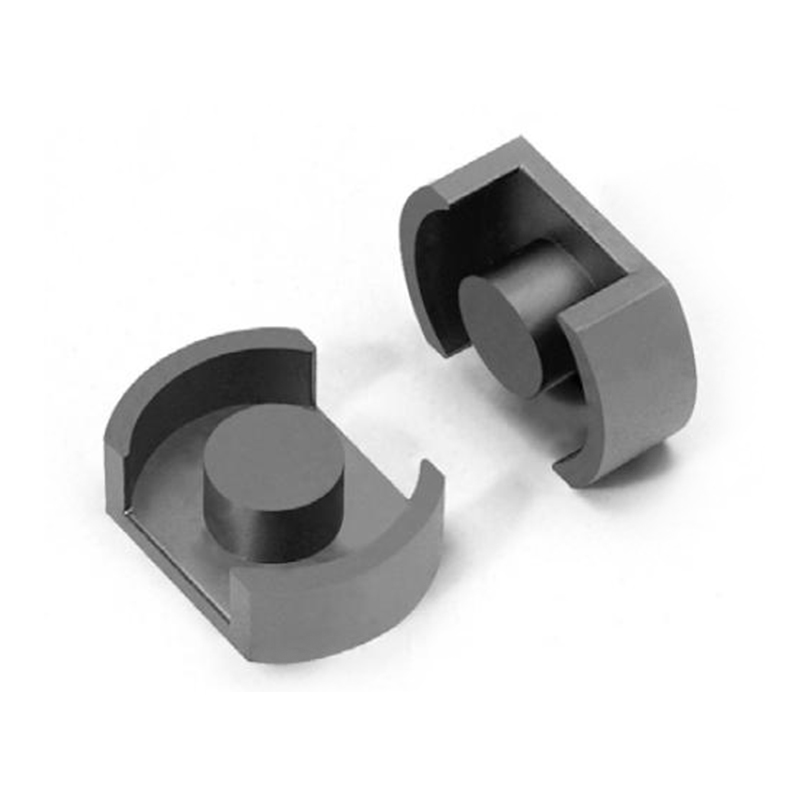
Pot cores fully enclose the winding, providing excellent shielding against external magnetic fields and low radiated emissions. They are used in precision inductors and high-Q resonant circuits where Q factors of 100–300 are required.
Ferrite Bead
A ferrite bead is a small cylindrical or chip-form component threaded onto a wire or integrated into a PCB trace. It acts as a frequency-dependent resistor, presenting high impedance (50–1000 Ω) at frequencies above 10 MHz while passing DC and low-frequency signals with minimal loss. Surface-mount ferrite beads are ubiquitous on power supply pins in digital electronics.
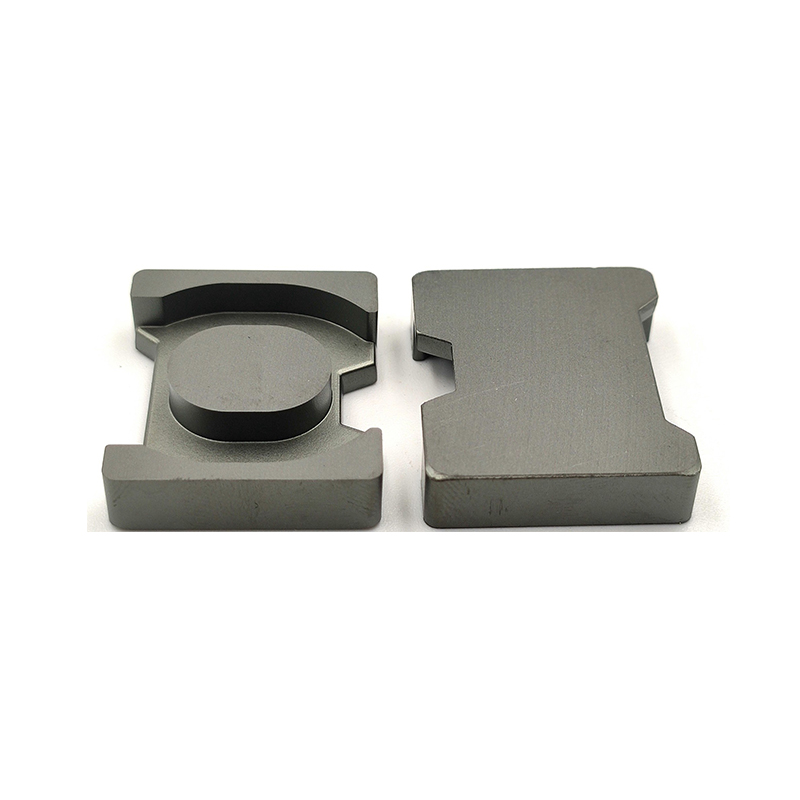
RM Core and PQ Core
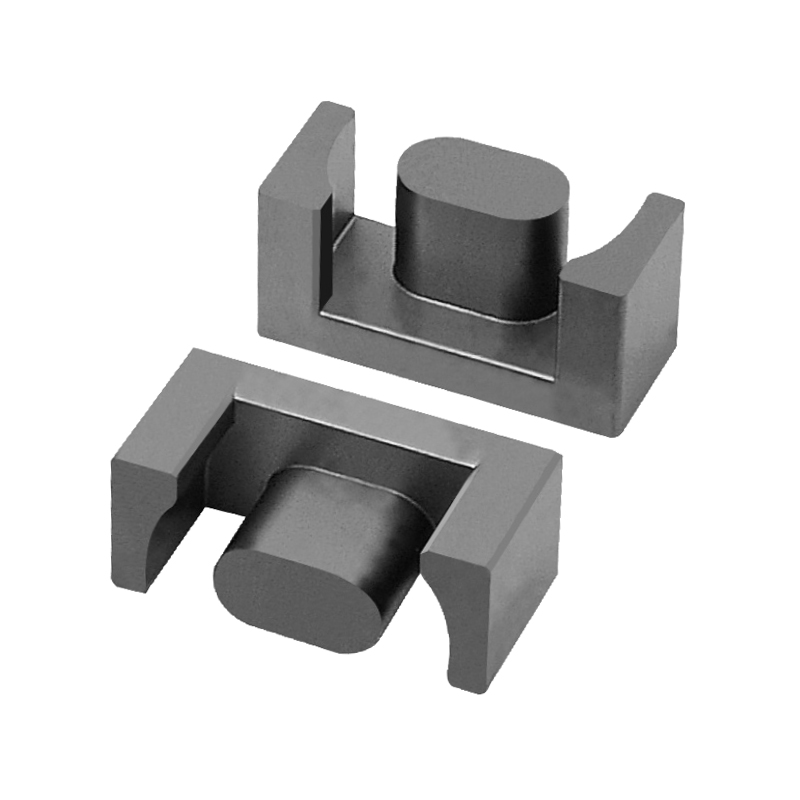
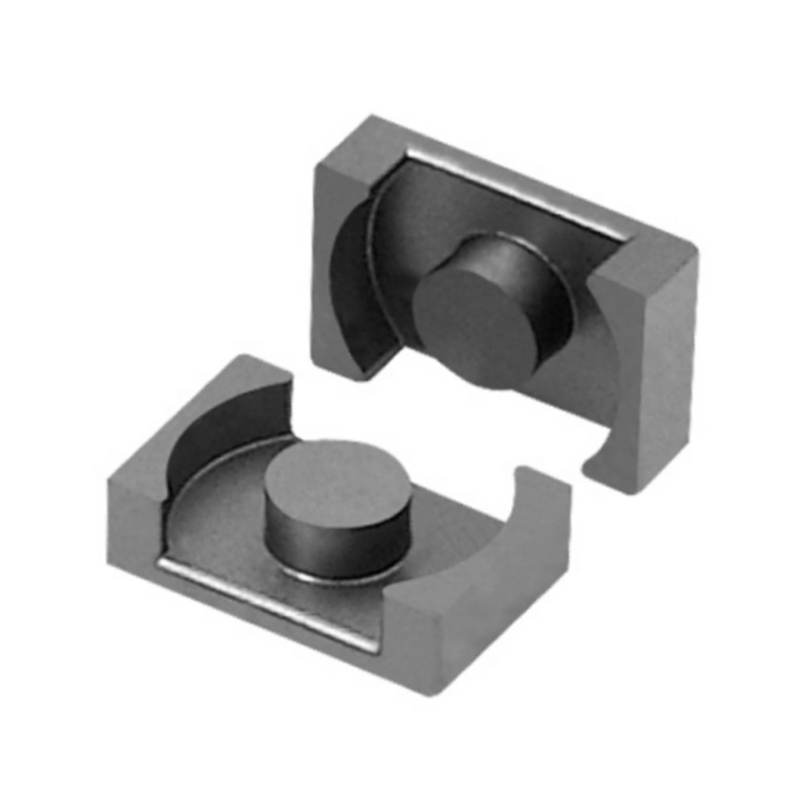
RM (rectangular modular) and PQ cores are designed for compact, automated assembly. They offer good volumetric efficiency and are common in telecom power supplies and DC-DC converters where board space is limited.
Key Parameters When Selecting a Ferrite Core
Choosing the wrong ferrite core is one of the most common causes of transformer overheating, EMI failures, and inductor saturation. Here are the critical parameters to evaluate:
- Operating Frequency: Match the material to the frequency. Use MnZn for frequencies below 2 MHz and NiZn for higher frequencies. Using a MnZn core at 50 MHz, for example, will result in excessive core losses and thermal failure.
- Saturation Flux Density (Bsat): Ferrite cores typically saturate between 0.3 T and 0.5 T at room temperature. Above this, permeability drops sharply and inductance collapses. Always calculate peak flux density using B = V·t / (N·Ae) to ensure you remain below Bsat.
- Initial Permeability (µᵢ): Higher permeability allows fewer turns for a given inductance, reducing copper losses — but high-µ materials saturate more easily under DC bias.
- Core Loss (Pv): Expressed in mW/cm³, core loss depends on frequency and flux density. At 100 kHz and 100 mT, a typical power ferrite like TDK's PC95 has a core loss of approximately 300 mW/cm³. Minimizing this is critical for thermally constrained designs.
- Temperature Stability: Permeability varies with temperature. Most MnZn power ferrites are optimized for minimum core loss around 80–100°C, which coincidentally aligns with typical operating temperatures in power electronics.
- Effective Cross-Section (Ae) and Path Length (Le): These geometric parameters determine inductance via L = µ₀·µᵢ·N²·Ae / Le. Larger cores support higher power but add size and cost.
Ferrite Core Applications Across Industries
Ferrite cores appear across a broad range of industries, often performing invisible but critical functions:
| Industry | Application | Core Type Used |
|---|---|---|
| Consumer Electronics | Phone chargers, laptop adapters | EE / EI core (MnZn) |
| Automotive | Onboard chargers, DC-DC converters | PQ / RM core (MnZn) |
| Telecommunications | Signal line filters, baluns | Toroid (NiZn) |
| Industrial Power | Inverters, UPS transformers | Large EE / UI cores (MnZn) |
| Medical Devices | Isolated power supplies, MRI RF coils | Pot core / toroid |
| PCB / Digital | EMI suppression on power rails | SMD ferrite bead (NiZn) |
Air Gap and DC Bias Considerations
One practical challenge with ferrite cores in inductor design is their sensitivity to DC bias. As DC current increases through an inductor winding, the magnetic flux in the core increases, and once it approaches saturation, inductance can drop by 50% or more — severely compromising filter performance.
The standard engineering solution is to introduce a controlled air gap into the magnetic path, typically by grinding a gap into the center leg of an EE or pot core. A gap of just 0.1–1.0 mm can linearize the BH curve significantly, allowing the inductor to handle much higher DC currents before saturation. The trade-off is reduced effective permeability and slightly higher leakage flux.
For applications requiring high DC bias tolerance without an air gap, distributed gap materials like powdered iron or Kool Mµ® composites are sometimes preferred over solid ferrite — though they have higher core losses at elevated frequencies.
Practical Tips for Working with Ferrite Cores
- Handle with care: Ferrite is a ceramic and is brittle. Even minor cracks or chips can disrupt the magnetic path and alter inductance by 10–30%. Never overtighten core clamps.
- Use manufacturer simulation tools: Companies like TDK, Ferroxcube, and Fair-Rite provide free online core loss calculators and material datasheets with Steinmetz coefficients for accurate loss estimation.
- Account for thermal derating: Bsat decreases at elevated temperature. TDK's PC95 material, for instance, drops from 530 mT at 25°C to approximately 380 mT at 100°C. Always derate flux density in thermal environments.
- For EMI cables, use split (clamp-on) ferrite cores: These can be retrofitted to existing cables without cutting. One clamp-on core at the cable entry point of a device can reduce conducted emissions by 20–30 dB in the 30–200 MHz range.
- Multiple turns increase suppression: Looping a cable through a toroid multiple times multiplies the impedance by N². Two passes give 4× the impedance of one pass; three passes give 9× — a significant improvement with no added cost.
Conclusion
Ferrite cores are a foundational component in modern electronics, offering an unmatched combination of high-frequency performance, low eddy current loss, and design flexibility across dozens of geometries and material grades. Selecting the right ferrite core comes down to matching material type to frequency range, ensuring adequate flux density headroom, and choosing a geometry that fits the winding and thermal constraints of the design.
Whether you are suppressing EMI on a cable, designing a 200 kHz flyback transformer, or building a precision RF inductor, there is a ferrite core material and shape optimized for the task. Investing time in proper core selection — using manufacturer datasheets and simulation tools — pays dividends in efficiency, reliability, and regulatory compliance.
Previous Post
Ferrite Core: Types, Properties, and How to Select the Right One
Next Post
Soft Magnetic Ferrites: Properties, Applications & Selection Guide