
 English
 한국어
한국어 中文简体
中文简体Home / News / Industry News / Minimizing Losses: Optimizing Magnetic Loop Inductance for High-Efficiency Systems
Minimizing Losses: Optimizing Magnetic Loop Inductance for High-Efficiency Systems
Content
In high-frequency power electronics, magnetic loop inductance is not just a design parameter — it is the primary lever for controlling system losses. Whether in DC-DC converters, wireless charging systems, or EMI filters, the inductance value, core geometry, and material choice collectively determine how much energy is wasted as heat. Optimizing these variables is the most direct path to high-efficiency performance.
What Makes Magnetic Loop Inductance a Loss Driver
Total loss in an inductive component has two main sources: core loss (hysteresis and eddy currents in the magnetic material) and winding loss (DC resistance plus AC effects from skin and proximity effects). These two components are not independent — reducing one often aggravates the other, making simultaneous optimization both essential and non-trivial.
At higher switching frequencies, AC resistance can reach orders of magnitude above DC resistance. At the same time, core loss scales sharply with frequency and peak flux density. The classical Steinmetz equation captures this relationship:
Pcore = Cm · fα · Bacβ
where Cm, α, and β are material-specific constants. For MnZn power ferrites, β typically ranges from 2.5 to 3.0, meaning that even small increases in flux density cause disproportionate core heating. This makes inductance tuning — which directly governs peak flux density for a given volt-second product — a critical design decision.
The Optimal Loss Ratio: Balancing Core and Winding
Research has established that minimum total loss does not occur when either core loss or winding loss is individually minimized. Instead, it occurs at a specific optimal loss ratio between the two, which varies with frequency, AC resistance coefficient, and the window utilization factor of the winding.
At low frequencies, winding loss dominates and increasing inductance (via more turns) worsens copper loss. At high frequencies, core loss dominates and a thicker core cross-section drives up Bac. The design sweet spot balances winding turns, conductor geometry, and core cross-section to land at minimum total dissipation for the target operating frequency.
For applications in the 100–700 kHz range, studies have shown that losses can be reduced by more than 40% through systematic geometry optimization, compared to conventional inductor designs. At 250 W converter output, a well-optimized inductor geometry has demonstrated a 1.2% improvement in overall system efficiency — significant in high-power applications where thermal management costs are substantial.
Core Material Selection: The Foundation of Loss Minimization
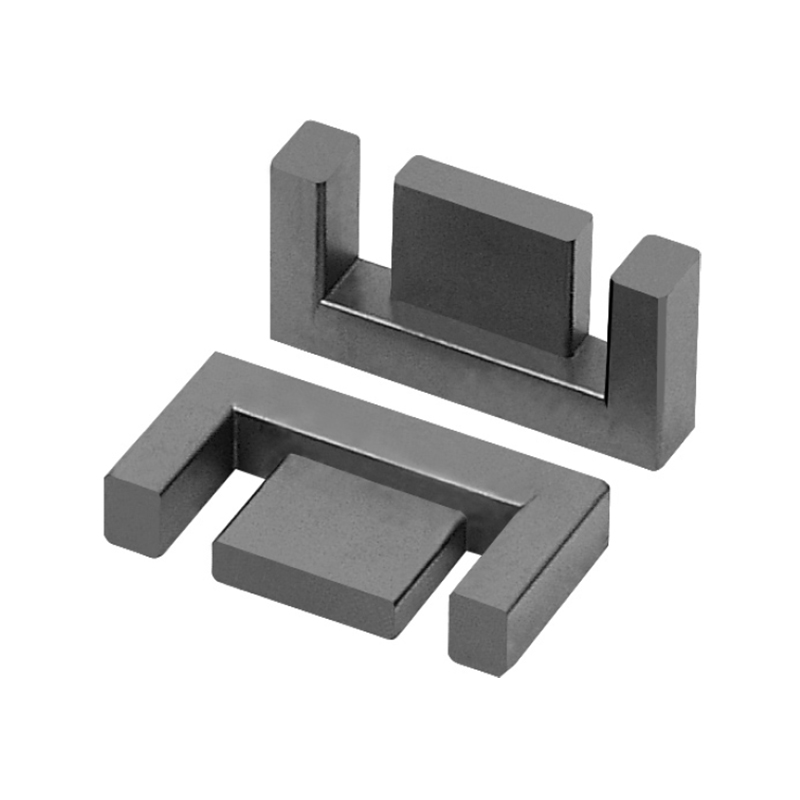
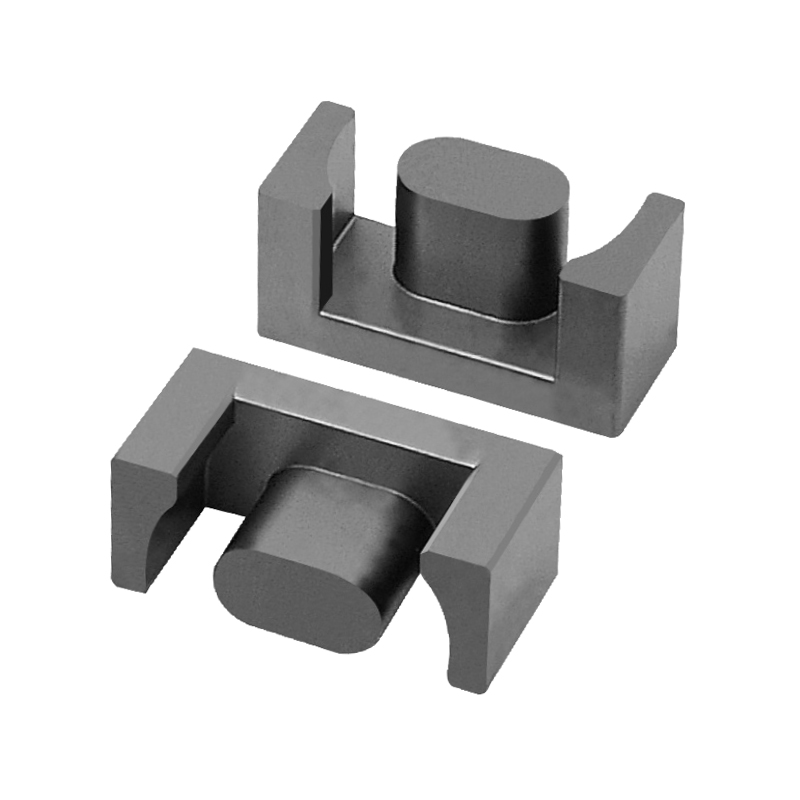
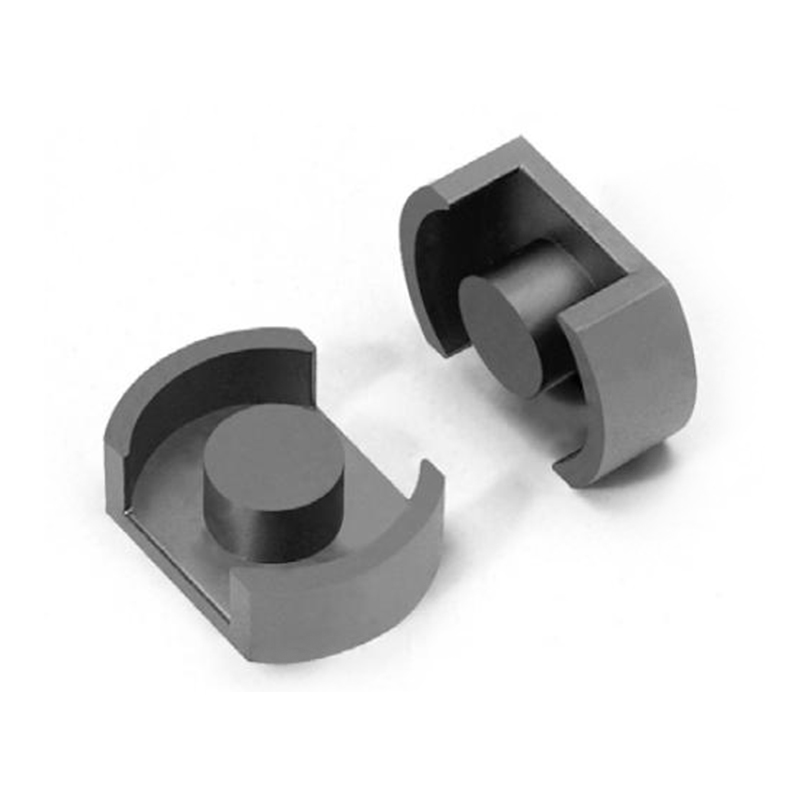
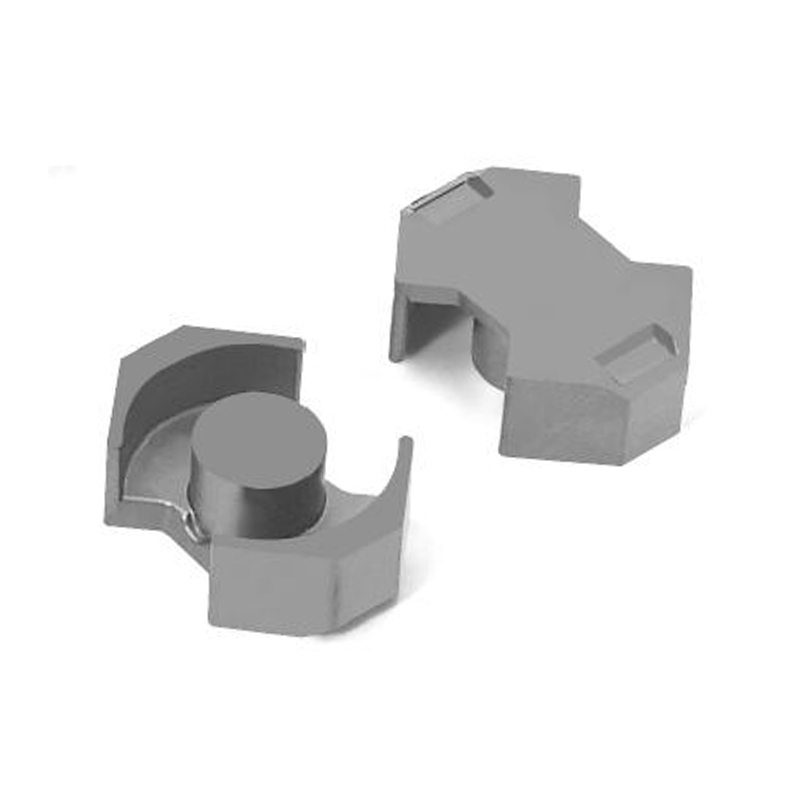
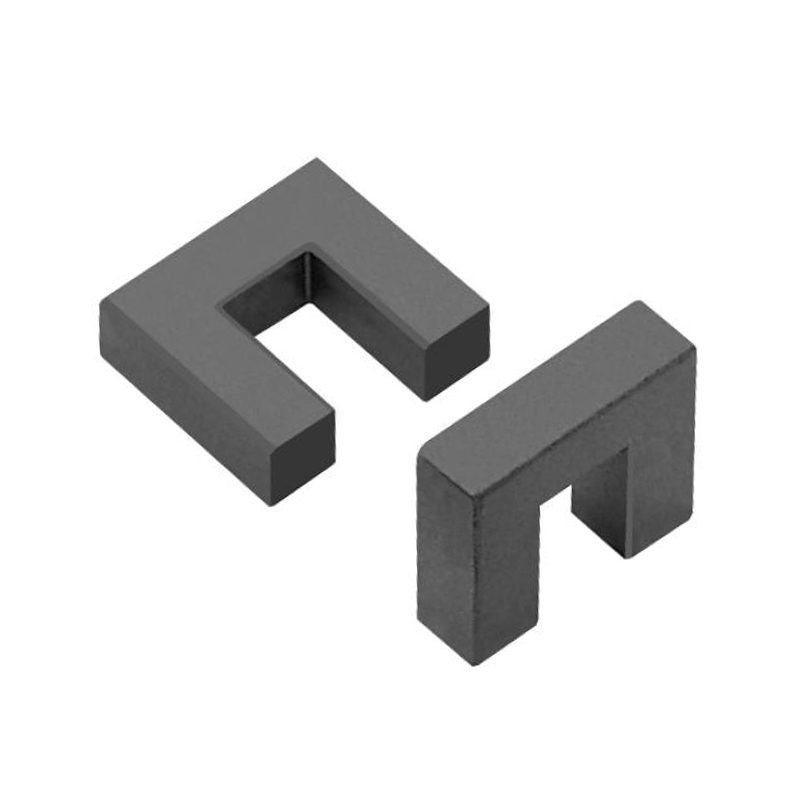
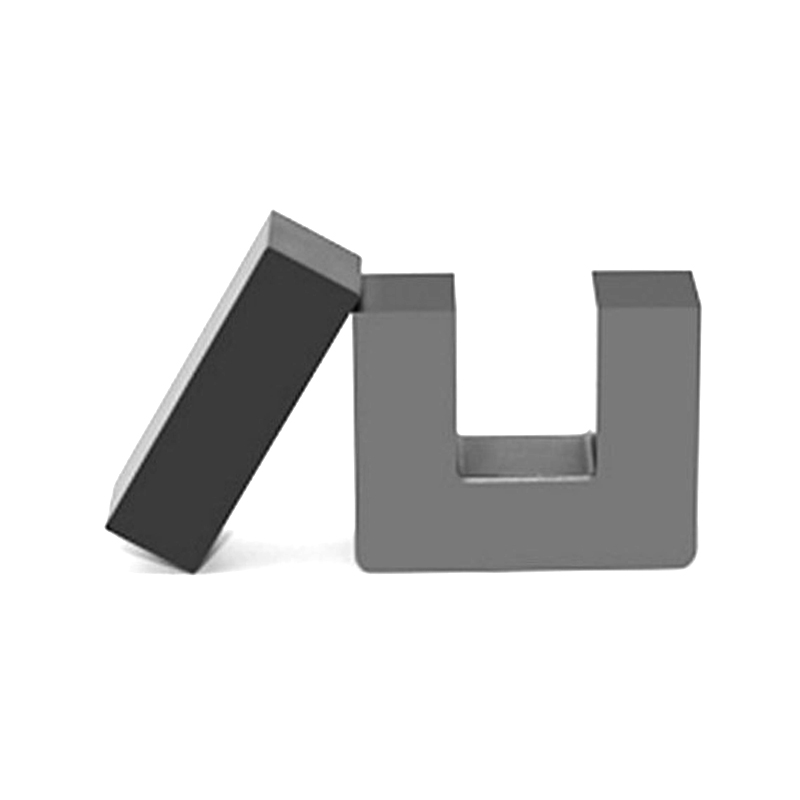
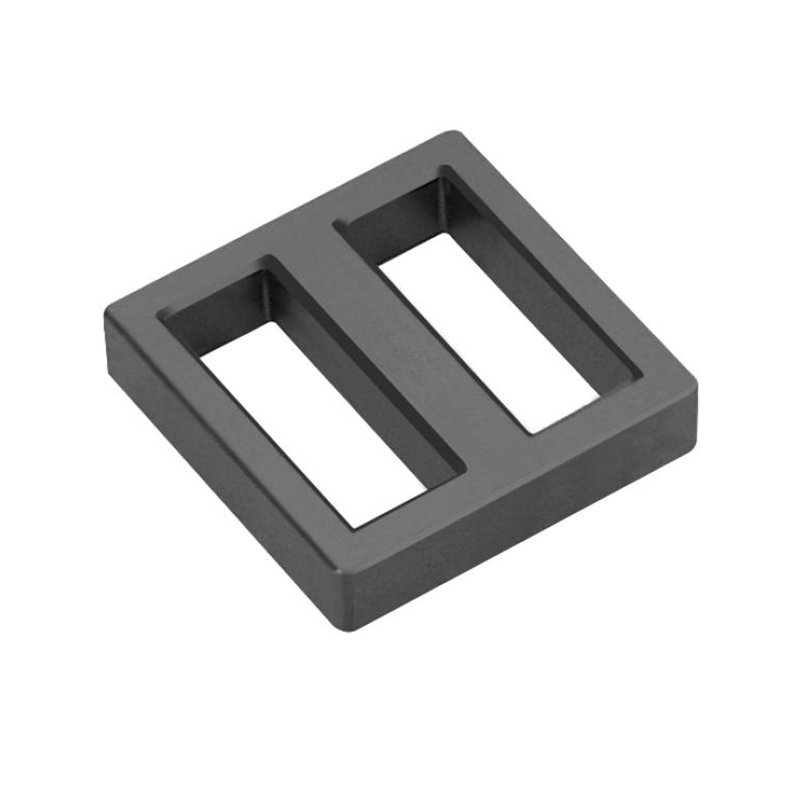
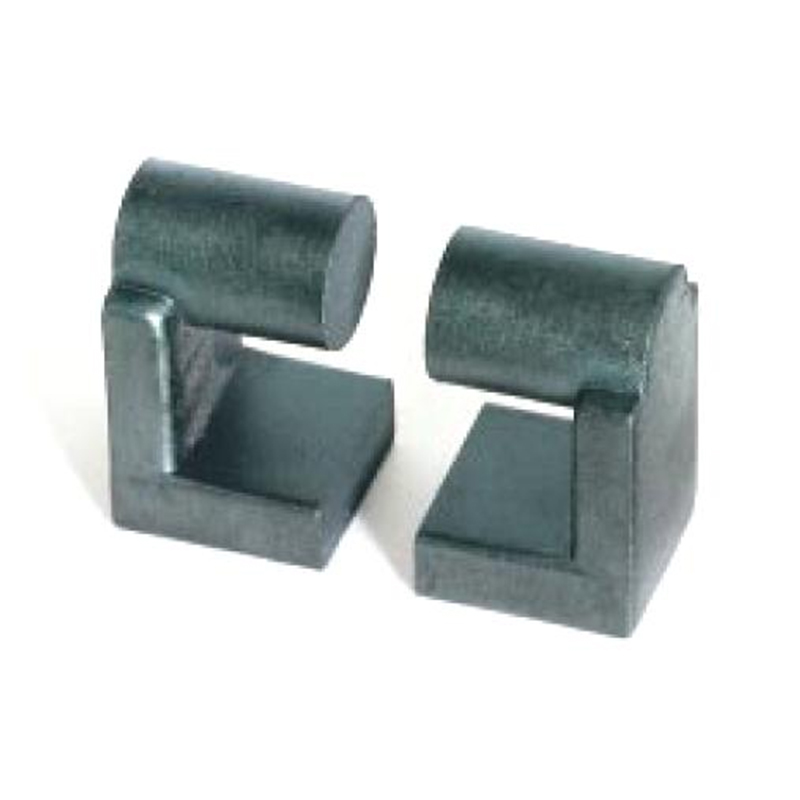
Core material is the single most impactful variable in the loss equation. The three main candidates for power inductors are MnZn ferrite, silicon iron powder, and iron-based amorphous materials — each with distinct trade-offs in loss density, saturation flux density, and cost.
| Material | Typical Frequency Range | Core Loss (Relative) | Saturation Flux Density |
|---|---|---|---|
| MnZn Power Ferrite | 10 kHz – 3 MHz | Low | ~0.4–0.5 T |
| Silicon Iron Powder | DC – 100 kHz | Medium | ~1.0–1.5 T |
| Amorphous / Nanocrystalline | 1 kHz – 100 kHz | Very Low | ~1.2–1.5 T |
For switching frequencies above 100 kHz, Mn-Zn Power Ferrite cores consistently offer the best combination of low core loss and stable permeability. Their fine-grained microstructure restricts eddy current paths, significantly reducing high-frequency losses compared to metallic alloys. For applications requiring high permeability at lower loss — such as EMI filtering and wireless charging coils — Mn-Zn High Conductivity Ferrite provides superior impedance at target frequencies.
The starting point for any well-controlled core is the powder quality. Consistent particle size distribution, high purity, and controlled sintering determine the final core's magnetic properties. Soft Magnetic Ferrite Powder with tightly managed composition is the prerequisite for achieving repeatable low-loss performance across production batches.
Winding Design: Managing AC Loss in the Conductor
Even with the best core, poor winding design can negate all gains. At high frequencies, skin effect concentrates current near the conductor surface, reducing effective conduction area and inflating AC resistance. Proximity effect — induced eddy currents from neighboring conductors — compounds the problem in multi-layer windings.
Key winding strategies for loss reduction include:
- Single-layer solenoidal windings, which eliminate proximity effect between layers and are preferred above 3 MHz where litz wire becomes impractical.
- Litz wire for the 50 kHz–3 MHz range, where stranding below the skin depth keeps AC resistance close to DC resistance.
- Shaped-foil conductors, which achieve the lowest winding loss in high DC current applications with AC ripple exceeding 10%, outperforming both solid and litz wire geometries.
- Air gap placement and distribution — multiple distributed gaps reduce fringing field intrusion into windings, though with diminishing returns beyond a certain gap count.
The interaction between air gap fringing fields and winding conductors is a particularly underestimated loss mechanism. Fringing flux at the gap penetrates nearby conductors and creates localized eddy current losses that can exceed calculated core loss in improperly spaced designs.
System-Level Optimization: Connecting Inductance to Efficiency
Inductance value directly controls current ripple in a switching converter: ΔI = (V · D) / (L · fsw). Higher inductance reduces ripple, which lowers both winding RMS current loss and core flux swing. However, more turns to achieve higher L means more copper and greater DC resistance, while a larger core to avoid saturation means more volume and potentially more core loss.
The optimized solution is always system-specific. For a 2 kW, 400 V DC-DC converter operating at 150–700 kHz, experimental validation has shown that frequency-dependent optimization of both the core geometry and litz wire parameters can cut total inductor losses substantially compared to fixed-parameter designs. The result is a direct improvement in converter efficiency and a reduction in heatsink requirements.
Selecting the right soft magnetic ferrites — tuned to the operating frequency, flux density, and temperature range — is the non-negotiable foundation of any such optimization. Material choice constrains every downstream design variable, from the number of turns to the air gap length to the thermal management approach.
Conclusion
Minimizing losses in magnetic loop inductance requires simultaneous optimization of core material, core geometry, winding configuration, and operating frequency. No single variable controls the outcome. The practical path forward is to start with a low-loss core material matched to the frequency band, size the inductance to the minimum value that meets ripple requirements, and select a winding topology that manages skin and proximity effects at the target frequency. Executed correctly, this approach eliminates the dominant loss mechanisms and enables the high-efficiency performance that modern power systems demand.
Previous Post
Soft Magnetic Ferrites: Core Properties & Applications
Next Post
Soft Magnetic Ferrites Powering Green Tech: Transformers to EVs