
 English
 한국어
한국어 中文简体
中文简体MnZn Ferrite Core: High Saturation & Low Loss Power Material
Content
Why MnZn Ferrite Cores Excel in Power Applications
For high-efficiency power conversion, the core material directly determines whether a design meets its thermal and size targets. MnZn ferrite cores provide the best balance of high saturation induction, low hysteresis, and minimal iron loss in the frequency range from several kilohertz to a few megahertz. In a typical forward converter transformer, replacing a generic ferrite with an optimized MnZn power core can reduce total core loss by 20–35%, allowing a smaller heatsink or a higher switching frequency. This article examines the material properties that deliver that advantage, practical selection criteria, and the manufacturing controls that make consistent performance possible.
Critical Material Properties and Performance Metrics
MnZn ferrite belongs to the spinel crystal structure class. Its composition—primarily Fe₂O₃, MnO, and ZnO—is tuned to achieve a specific combination of magnetic characteristics. The following properties define a power-grade MnZn ferrite core:
- Saturation magnetic flux density (Bs): At 25°C, typical values range from 470 to 530 mT. At 100°C, the material still maintains 380–440 mT, which is critical because most power supplies operate with a core temperature near 90–110°C.
- Core loss (Pv): At 100 kHz and 200 mT, advanced low-loss grades exhibit a power loss density below 350 kW/m³. The best materials push this figure to around 280–300 kW/m³, directly reducing temperature rise.
- Initial permeability (µi): Power materials typically offer µi between 1,500 and 3,000. Higher values up to 5,000 exist but often compromise the loss profile; selection depends on the required inductance factor.
- Curie temperature (Tc): A Tc above 200°C ensures that the core does not abruptly lose its magnetic properties during overload or high-ambient operation. Values of 220–250°C are common for robust industrial grades.
- DC bias superposition: In storage chokes, inductance must remain stable under load. High-superposition materials keep inductance drop below 20% at field strengths of 100–200 A/m.
Selection Criteria for Power MnZn Ferrite Cores
Choosing a specific MnZn core grade involves matching the operating frequency and flux swing to the material’s loss characteristics. The table below outlines typical material families and where they perform best.
| Material Type | Optimum Frequency | Bs at 25°C | Pv at 100 kHz, 200 mT | Example Applications |
|---|---|---|---|---|
| Low-frequency power | 10–50 kHz | 520 mT | ~400 kW/m³ | Industrial SMPS transformers, welding inverters |
| Mid-frequency low-loss | 50–200 kHz | 500 mT | 300–350 kW/m³ | Adapter transformers, LED drivers, PFC chokes |
| High-frequency wide-temp | 200–500 kHz | 480 mT | ~280 kW/m³ | Planar transformers, resonant converters, DC-DC modules |
Engineers should prioritize core loss density when the design is efficiency-limited, and prioritize saturation flux density when size reduction under peak load is the main goal. In many LLC resonant converters, a core grade with flat loss behavior between 80°C and 120°C delivers the most stable performance.
Manufacturing Controls That Determine Core Consistency
Producing MnZn ferrite cores with repeatable high Bs and low loss requires extreme precision in the powder preparation and sintering stages. Key process parameters include:
- Raw material purity: Iron oxide with an alpha-Fe₂O₃ content above 99.2% and controlled SiO₂/CaO levels prevents abnormal grain growth.
- Oxygen partial pressure during sintering: The Fe²⁺/Fe³⁺ ratio must be kept within a narrow window. Even a 0.1% deviation shifts the magnetocrystalline anisotropy constant and increases high-frequency loss.
- Grain size engineering: Average grain diameters of 8–15 µm strike a balance between permeability and hysteresis loss. Finer grains near 5 µm are used for sub-MHz applications to reduce eddy current losses.
- Post-sintering cooling rate: A controlled ramp-down minimizes internal stress, which would otherwise raise coercivity and the B-H loop area.
Established manufacturers combine these controls with in-line magnetic property testing at frequencies up to several megahertz. Each lot is verified for Bs, remanence, and core loss, ensuring that a core shipped for a 300 W adapter transformer will exhibit the same thermal footprint as the qualification samples.
Key Applications Shaping Demand
MnZn ferrite cores are the dominant choice wherever compact, efficient power magnetics are required below 5 MHz. The most active application areas include:
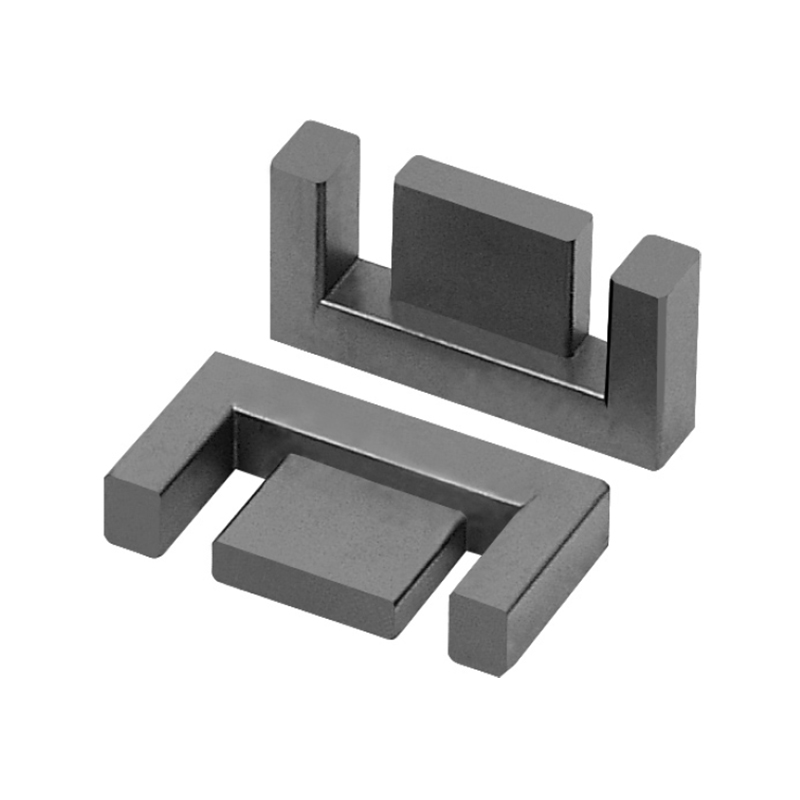
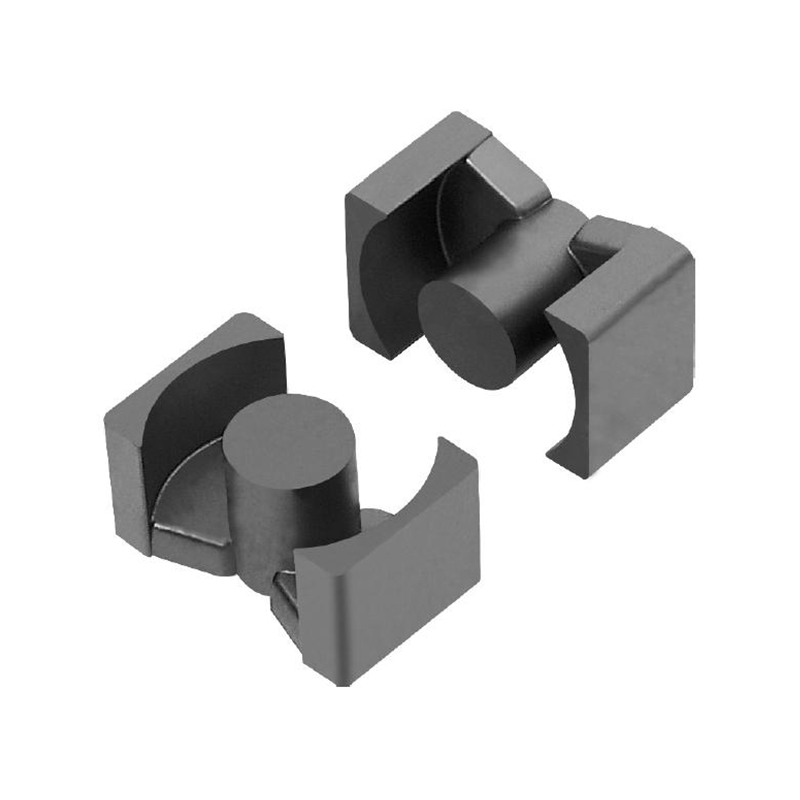
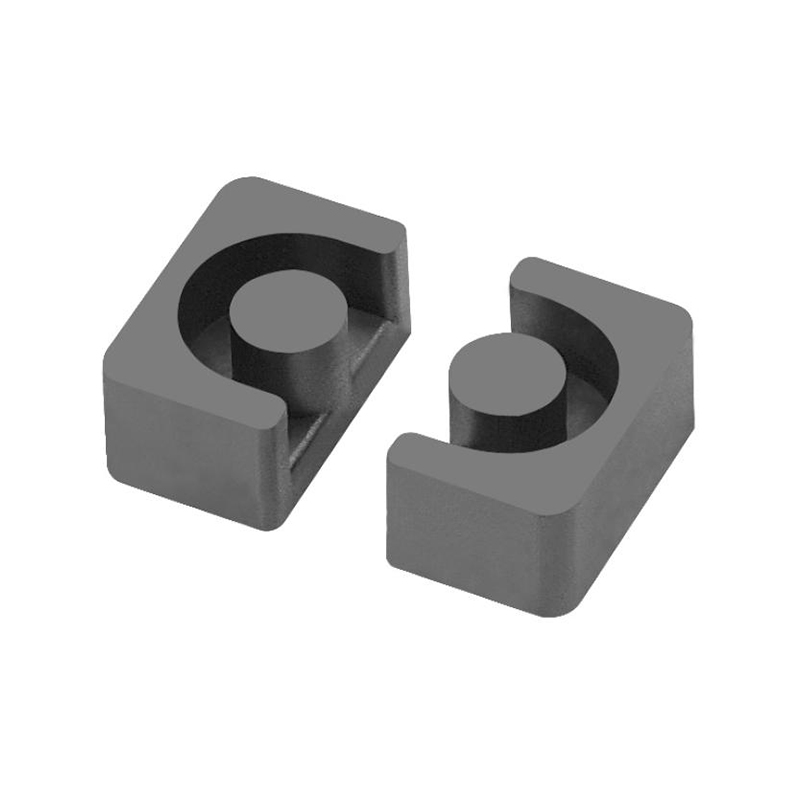
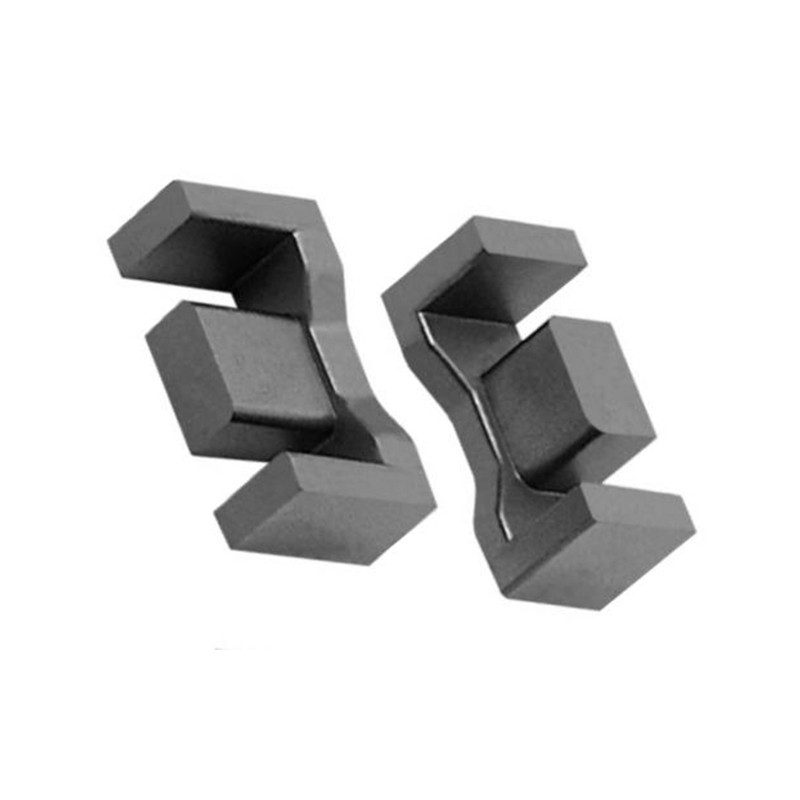
- Switching power supplies and adapters: EE, PQ, and RM shaped cores in flyback and LLC topologies benefit from materials with Pv below 350 kW/m³ at 100 kHz.
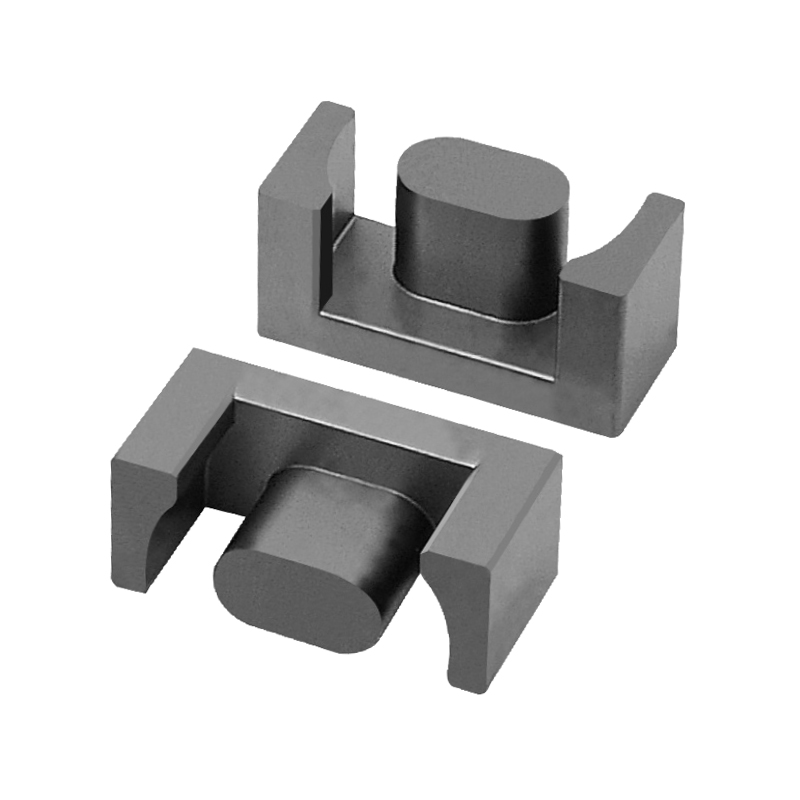
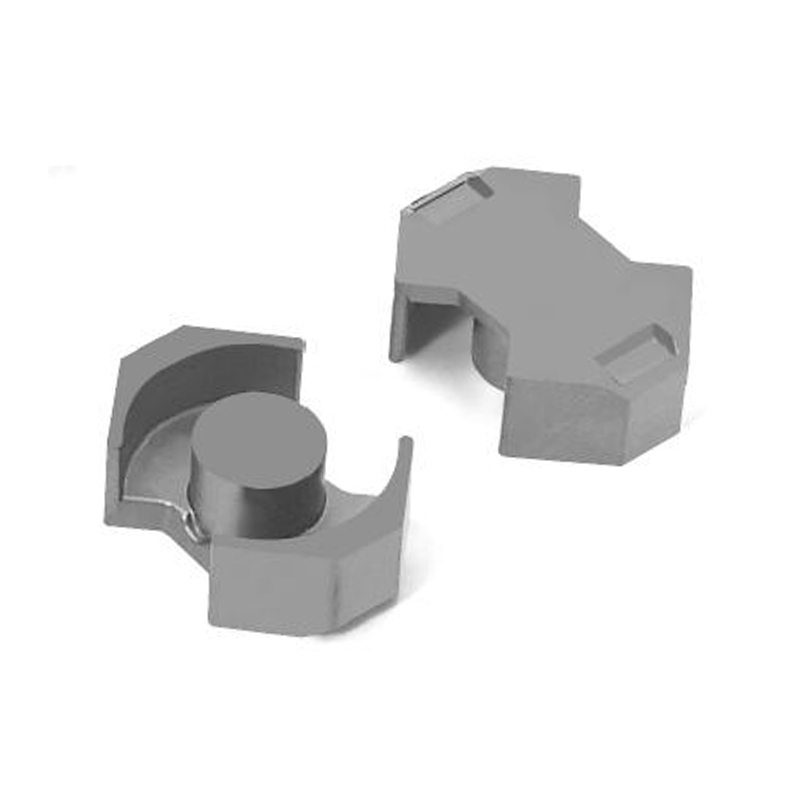
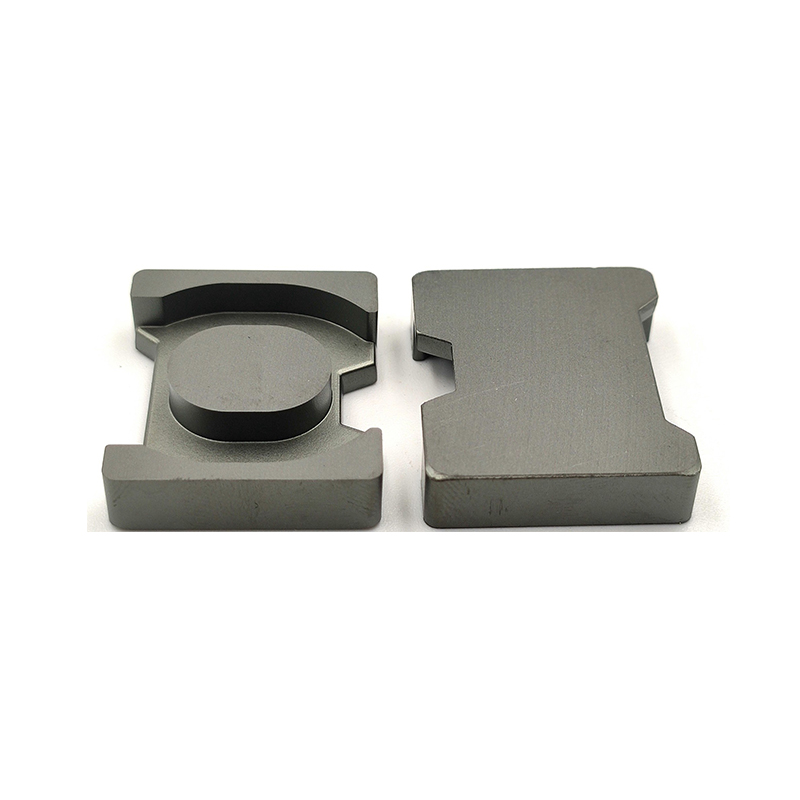
- DC-DC converters and voltage regulator modules: Planar ER and low-profile cores enable high power density with excellent thermal spreading.
- Wireless charging: High-permeability MnZn cores in transmitter and receiver coils improve coupling coefficients, pushing system efficiency above 85% in the 100–200 kHz range.
- EMI suppression and common-mode chokes: High-µ grades with single-turn inductances in the millihenry range are standard for conducted emission filtering.
- Automotive and industrial motor drives: Wide-temperature materials with stable Bs up to 140°C are critical for under-hood and factory-floor reliability.
MnZn Versus Alternative Magnetic Core Materials
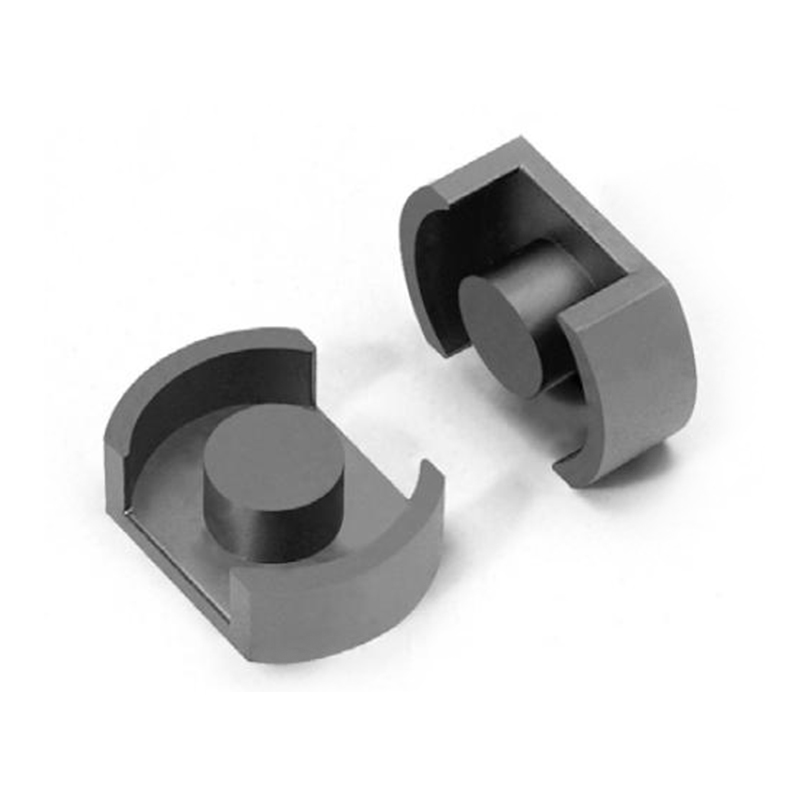
NiZn ferrite cores offer higher resistivity and lower eddy current losses above 1 MHz, but their saturation flux density is typically limited to 300–400 mT. This makes them less attractive for high-power, sub-MHz converters where every fraction of a tesla counts. Powdered iron cores can handle higher DC bias, yet their distributed gap structure creates significantly higher AC losses above 50 kHz. MnZn ferrite cores bridge these gaps: they provide the highest Bs among ferrites while keeping AC loss under control through refined grain structures. For a 500 W server supply operating at 200 kHz, a MnZn PQ core will usually be 30–40% lighter than an equivalent NiZn solution and run cooler than a powdered iron toroid.
The material’s ability to maintain a Bs above 400 mT at 100°C is the deciding factor in compact adapter designs where the core temperature routinely reaches that level. When combined with the low hysteresis inherent to the soft ferrite structure, MnZn cores enable designs that meet both efficiency regulations and aggressive form-factor targets without exotic cooling.
Previous Post
MnZn Ferrite Core: Properties, Types, and Selection Guide
Next Post
Soft Magnetic Ferrites: Core Materials for High-Frequency Power