
 English
 한국어
한국어 中文简体
中文简体Core Material Advantages in High-Frequency Circuits
Soft magnetic ferrites serve as the backbone of efficient power conversion and signal integrity in circuits operating from tens of kilohertz to several megahertz. Their defining advantage is a combination of high electrical resistivity and tunable permeability. Unlike silicon steel or powdered iron cores, manganese-zinc (MnZn) ferrites exhibit resistivity values typically ranging from 10 to 104 Ω·m, which suppresses eddy current losses even as frequency rises. This makes them indispensable in switch-mode power supplies, DC-DC converters, and EMI filters where compact size and low heat generation are critical.
The ceramic nature of ferrites also provides thermal stability and chemical resistance, enabling reliable operation in harsh environments. Designers can select from material grades that prioritize low core loss at elevated temperatures, high saturation flux density, or constant permeability over a wide temperature span. The result is a material family that directly addresses the trade-off between size, efficiency, and thermal management in modern power electronics.
Material Grade Classification and Performance Parameters
MnZn soft ferrite materials are grouped into distinct performance categories, each engineered for a specific set of operating conditions. The following table summarizes the primary types and their typical characteristics.
| Material Type | Initial Permeability (μi) | Key Performance Attribute | Typical Application |
|---|---|---|---|
| Low Power Loss | 1500 – 3000 | Minimal core loss at 100 kHz, 200 mT | Switching power supplies, resonant converters |
| Wide Temperature | 2000 – 3500 | Flat loss curve from -40 °C to 140 °C | Automotive under-hood electronics, outdoor power supplies |
| High Saturation Flux Density | 1800 – 2800 | High Bs (above 500 mT at 100 °C) | High-current chokes, DC-DC converters |
| High Permeability | 5000 – 15000 | High inductance factor, low magnetizing current | Common-mode chokes, broadband transformers, EMI filters |
| High Frequency / High Spectrum | 800 – 1500 | Stable impedance up to several MHz | Telecom transformers, multimedia signal lines |
In practice, a material optimized for low loss at 100 kHz may exhibit a power loss density below 350 kW/m³ at 100 °C, while a high-permeability grade can achieve μi values above 10,000. The selection process balances these parameters against the required operating flux density, frequency, and ambient temperature range.
Core Geometry and Winding Considerations
The physical shape of a ferrite core directly influences magnetic path length, leakage inductance, and thermal dissipation. Common geometries each present distinct advantages:
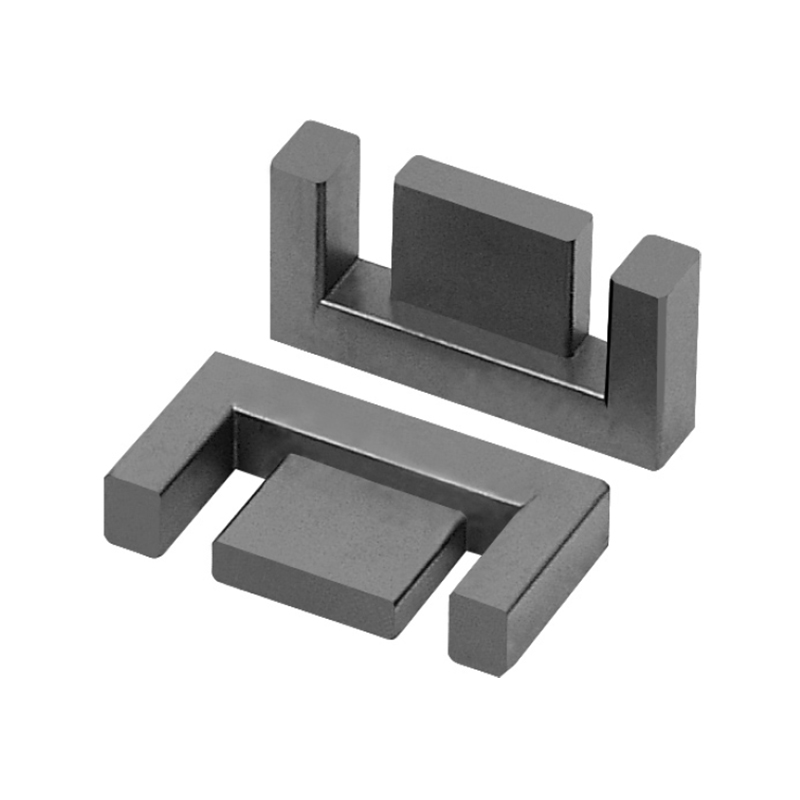
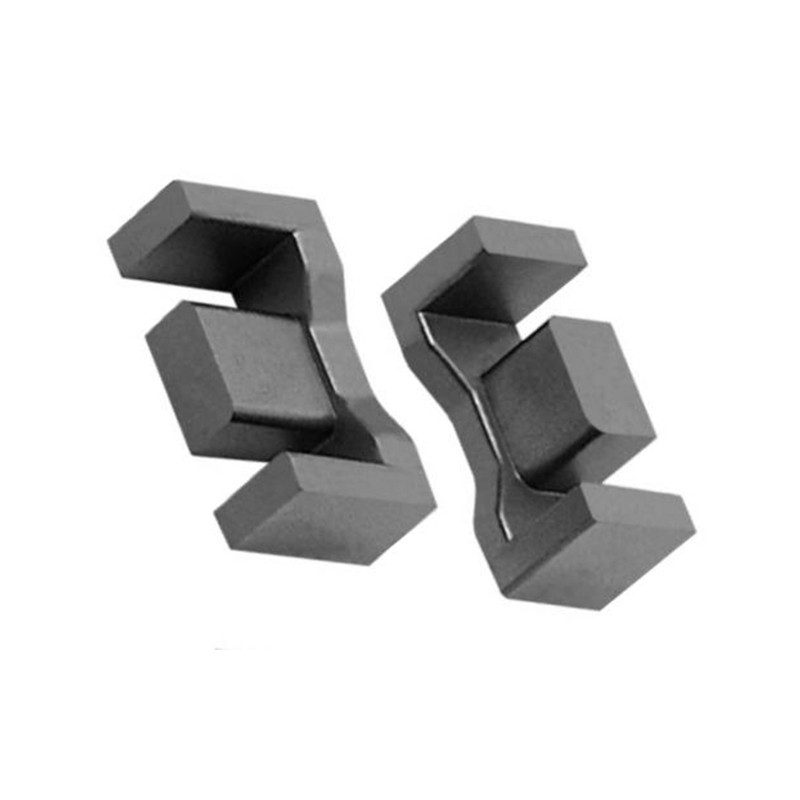
- EE and EI cores: Provide a large winding area and good heat dissipation; widely used in low- and medium-power transformers.
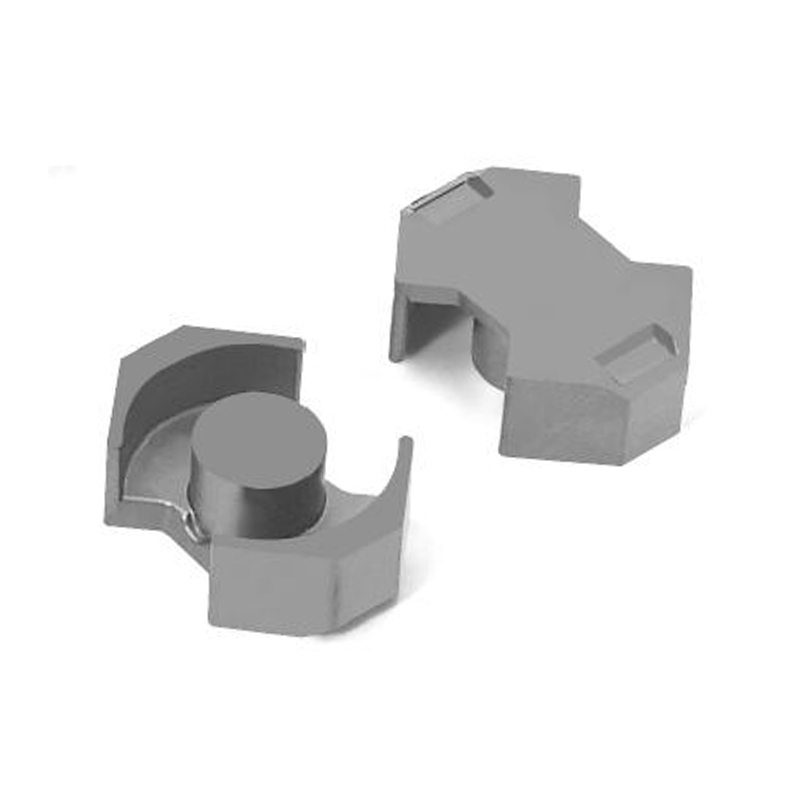
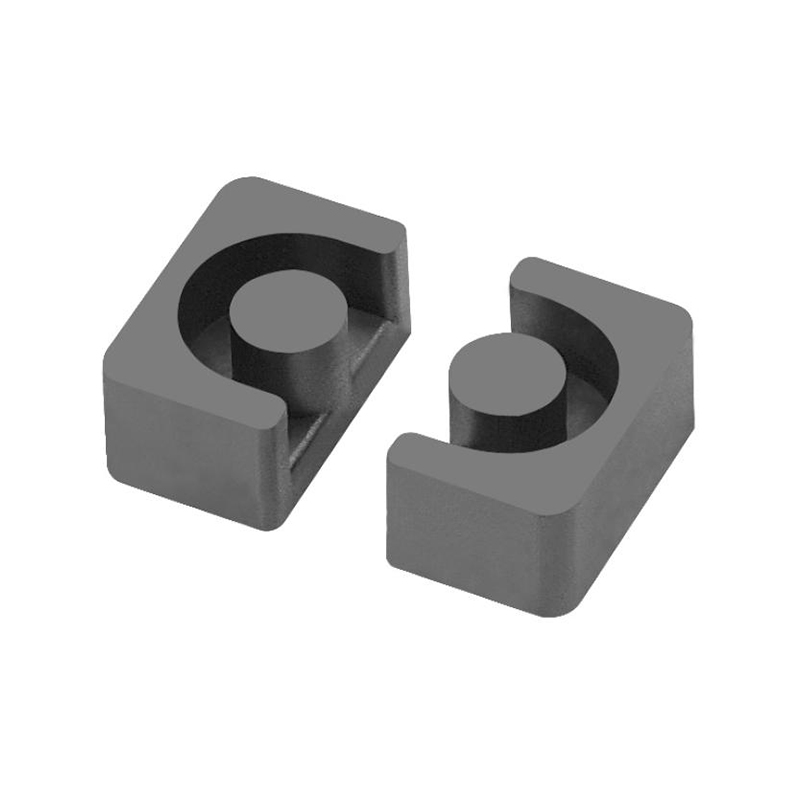
- PQ cores: Optimized for a round center leg, which reduces winding resistance and minimizes leakage inductance, making them ideal for high-frequency power transformers.
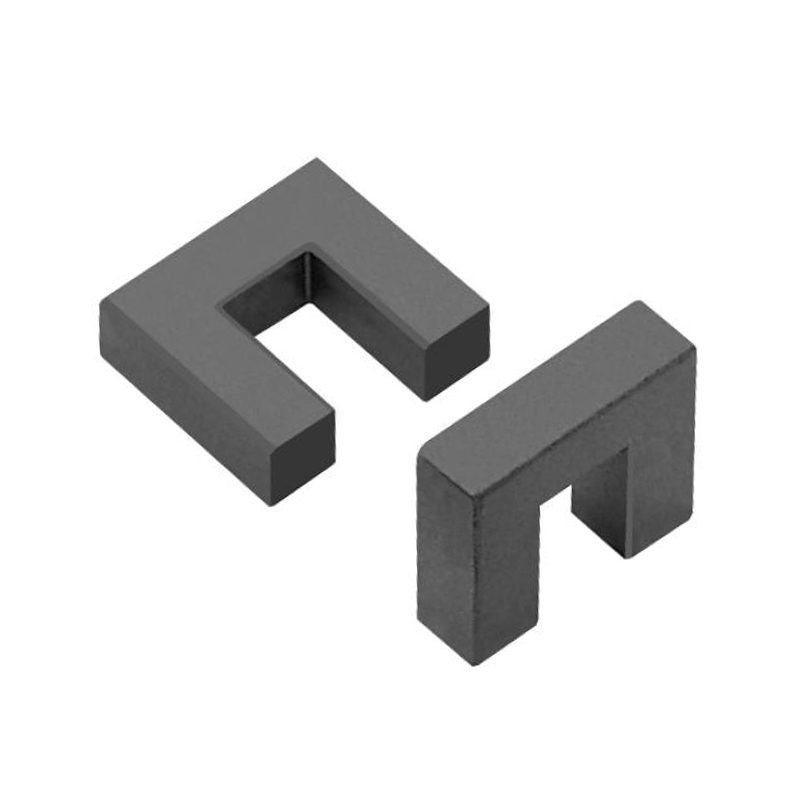
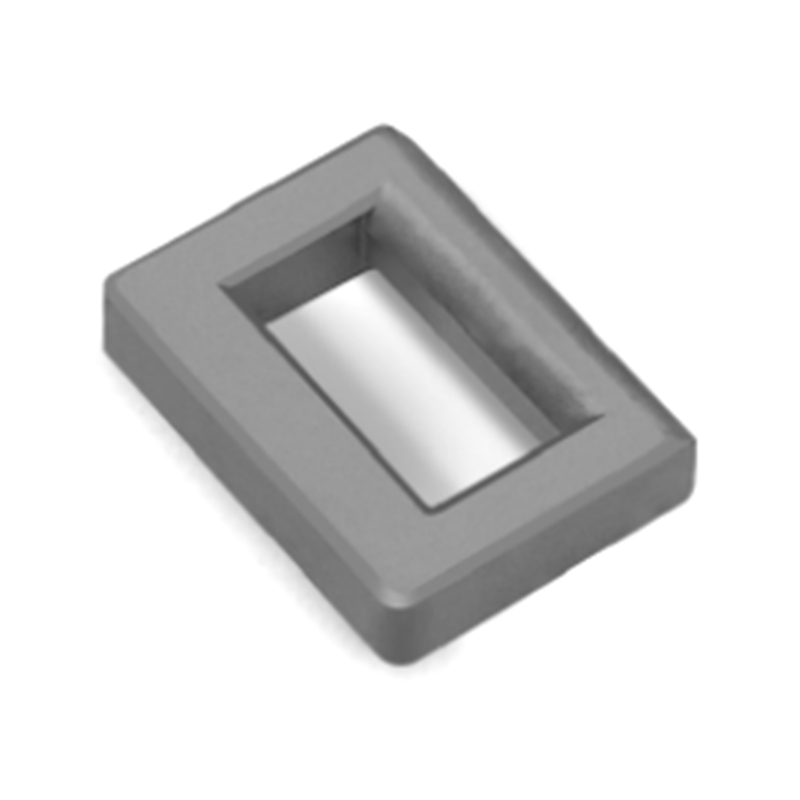
- Planar cores (EIR, ER): Low-profile design suited for high-density DC-DC converter modules where height is limited.
- Toroidal cores: Offer a completely closed magnetic path with negligible air gap, excellent for current transformers and common-mode chokes requiring high inductance stability.
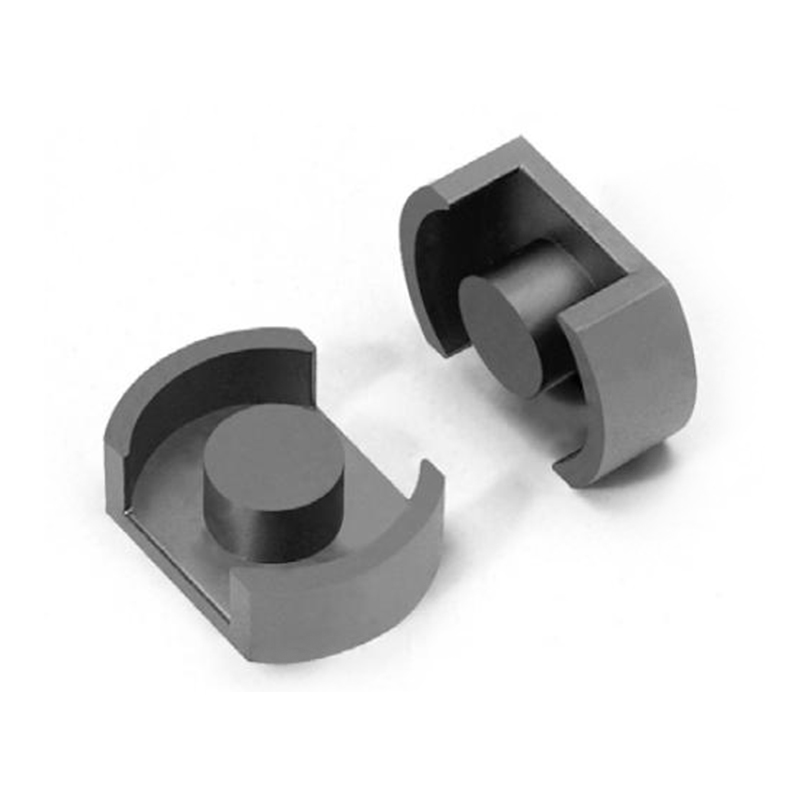
- RM and pot cores: Provide self-shielding and compact form factor, often selected for telecom inductors and low-power resonant circuits.
Winding topology paired with the core shape determines the final component performance. For example, interleaved windings on a PQ core can cut AC resistance by 30% compared to a simple EE design at the same frequency, directly improving converter efficiency.
Selecting the Right Ferrite for Switching Power Supplies
Power supply designers typically face a three-way optimization between core size, operating frequency, and thermal budget. For a 500 W LLC resonant converter running at 200 kHz, a low-loss MnZn material with a permeability around 2000 and a saturation flux density above 450 mT at 100 °C is a common choice. The core loss density under these conditions often needs to stay below 400 kW/m³ to keep the core temperature rise under 60 °C without forced air cooling.
When the same converter must operate from a cold start at -40 °C, a wide-temperature material becomes necessary. These grades employ additives that flatten the power loss versus temperature curve, so the loss at -40 °C is only 1.2 to 1.5 times the minimum loss value, rather than the factor of three or more seen in conventional materials. This predictability prevents start-up failures in outdoor telecom rectifiers and electric vehicle on-board chargers.
EMI Suppression and Wide-Temperature Demands
For electromagnetic interference suppression, the ferrite material must maintain high complex permeability across the noise frequency band. High-permeability MnZn cores with μi values from 6,000 to 15,000 are employed in common-mode chokes that attenuate conducted emissions in the 150 kHz to 30 MHz range. In these applications, the core’s impedance characteristic is as important as the initial permeability. A single toroidal core with μi = 10,000 can provide 30 dB of common-mode attenuation at 500 kHz, significantly reducing the number of required filter stages.
Automotive and industrial environments add a further requirement: stable impedance from -40 °C up to the Curie temperature, which for MnZn ferrites typically lies above 200 °C. Materials qualifying under automotive quality management standards are tested for impedance drift over the full temperature profile, ensuring the EMI filter remains effective under all operating conditions.
Process Control and Reliability Factors
Consistent manufacturing of soft ferrite cores depends on precise control of the powder calcination, milling, and sintering cycles. Particle size distribution and oxygen partial pressure during sintering directly influence grain boundary resistivity and core loss repeatability. Quality assurance systems aligned with ISO/TS16949 and related standards enforce process capability indices (Cpk) above 1.33 for critical parameters such as permeability and AL value. This level of control is essential when cores are used in safety-critical automotive traction inverters or medical power supplies.
Traceability from powder lot to finished core, combined with outgoing tests for inductance factor, core loss at specified temperature and flux density, and dielectric strength, closes the loop on reliability. For instance, a power core intended for an aerospace converter may require a dielectric withstand voltage above 1.5 kV AC between windings and core, a value that is verified on every production sample.
Ongoing Material Development Directions
The push toward higher power density and wide-bandgap semiconductors (GaN and SiC) drives ferrite material innovation toward lower high-frequency losses and improved thermal conductivity. Recent powder formulations have demonstrated core loss reductions of 15–20% at 500 kHz compared to previous generation materials, while maintaining the same saturation flux density. Simultaneously, work on grain boundary engineering aims to raise the Curie temperature without sacrificing resistivity, enabling ferrite use in 200 °C ambient environments near the engine block or in deep-well sensors.