
 English
 한국어
한국어 中文简体
中文简体MnZn Ferrite Core Selection: 5 Specs Engineers Check First
Content
A switching power supply that ran cool on the bench started overheating after three months in the field. Same circuit, same winding count — just a different batch of magnetic cores. That single substitution turned a stable design into a returns problem.
This happens more often than most procurement teams admit. MnZn ferrite core selection looks simple on a datasheet, but the gap between "meets the spec" and "performs in your circuit" comes down to a handful of parameters that rarely get checked carefully. Five specs decide whether a magnetic core runs cool or runs hot, and most of them take less than a minute to verify before you place an order.
Saturation Flux Density: Your Real Power Ceiling
Saturation flux density marks the point where a core stops behaving like a magnetic conductor and starts acting like air. Push current past that point, and inductance collapses, ripple current spikes, and the part starts dissipating heat instead of transferring energy.
For Mn-Zn ferrite, this ceiling sits well above what NiZn materials offer, which is exactly why MnZn dominates power transformers and inductors running below a few hundred kilohertz. The catch: saturation flux density drops as temperature rises, often by 20–30% between room temperature and 100°C. A core with 15% headroom at 25°C might have none left once the enclosure warms up. Check the manufacturer's curve at your actual operating temperature — not just the room-temperature number printed on the headline spec.
The AL Value Nobody Reads Carefully Enough
The AL value — inductance per turn squared, in nH/N² — is how a physical core gets translated into the inductance your circuit actually needs. Get it wrong and you'll either rewind the transformer three times or end up with a part that saturates under load.
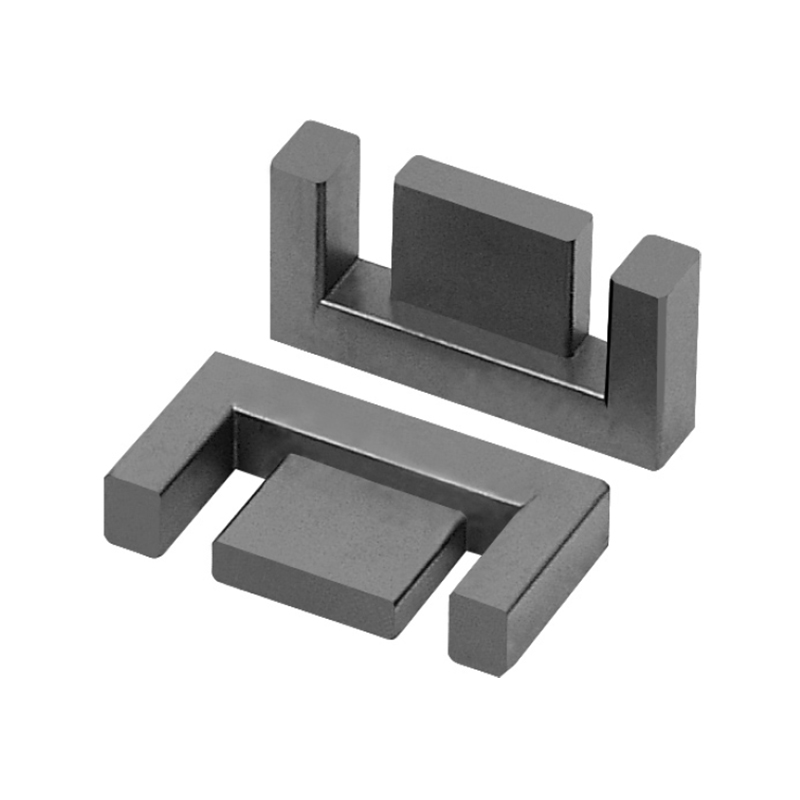
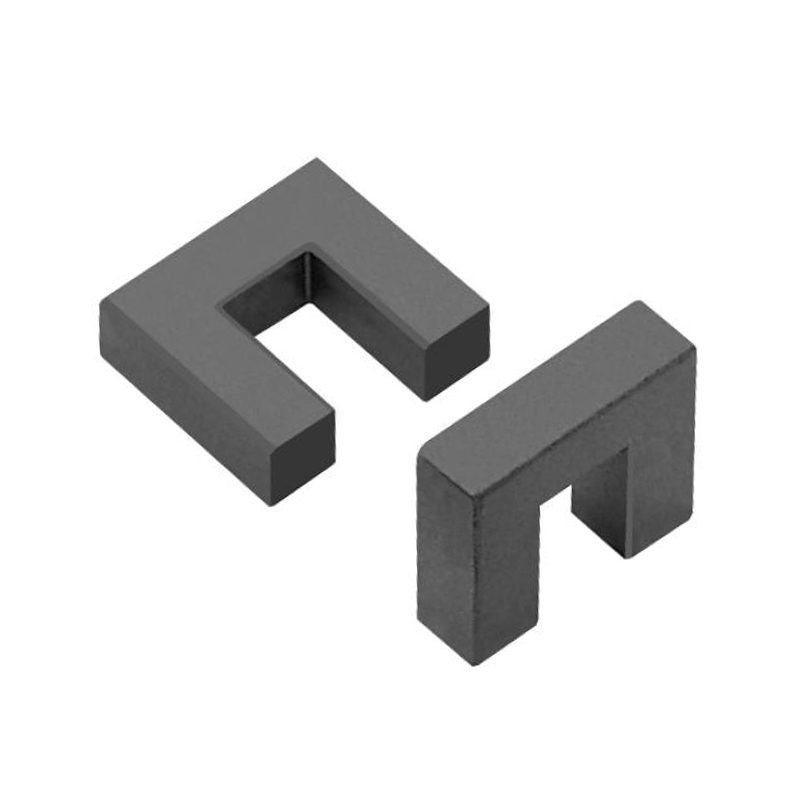
Real numbers make this concrete. An EE16/8 core typically carries an AL rating around 1700 nH/N² with a ±25% tolerance, while stepping down to an EE13/6 in the same family drops that to roughly 1000 nH/N². That tolerance band matters: a ±25% swing means your actual inductance could land anywhere across a fairly wide range, so designs with tight inductance budgets need either a tighter-spec core or post-production trimming. Pull the Mn-Zn power ferrite core specifications for the exact shape and size you're using before finalizing turn counts, not after.
MnZn vs NiZn: Pick by Frequency, Not by Habit
Engineers often default to whichever material they used last time. Frequency should make that decision instead.
MnZn ferrite holds the advantage from roughly 10 kHz up to a few megahertz — power transformers, PFC chokes, and main filter inductors all live in this range. Past that point, eddy current losses inside MnZn's lower-resistivity structure climb fast, and NiZn's higher resistivity takes over for EMI suppression and signal-line work running into the tens or hundreds of megahertz. For a closer side-by-side breakdown, this MnZn vs NiZn ferrite core selection guide covers the loss mechanisms in more depth.
If a design straddles both — a power stage and a high-frequency noise filter on the same board — don't ask one material to do both jobs. A Mn-Zn high conductivity ferrite for high-frequency designs handles the power side, while a separate NiZn component handles suppression further up the spectrum.
A Quick Checklist Before You Place an Order
Three checks take less time than the warranty claim that follows skipping them:
- Confirm saturation flux density at your actual operating temperature, not the datasheet's 25°C figure
- Pull the AL tolerance for your exact core shape and size, then check it against your inductance budget
- Match the material to your frequency range instead of your last project's bill of materials
None of these require lab equipment — just the right datasheet open at the right page. For details on the key properties of MnZn ferrites, or if you're sourcing in volume and need a sample matched to your circuit, request a quote for your magnetic core and we'll match it to your operating point, not just your part number.
Previous Post
Soft Magnetic Ferrites: Core Materials for High-Frequency Power
Next Post
How to Choose the Right Soft Magnetic Ferrites: A Practical Engineer's Guide