
 English
 한국어
한국어 中文简体
中文简体Home / News / Industry News / How to Choose the Right Soft Magnetic Ferrites: A Practical Engineer's Guide
How to Choose the Right Soft Magnetic Ferrites: A Practical Engineer's Guide
Content
- 1 Why Core Selection Starts with the Right Ferrite Material
- 2 MnZn Power Ferrite vs. High-Conductivity Ferrite: Know the Difference
- 3 Core Shape and Geometry: What the Specs Actually Tell You
- 4 Interpreting AL Values and Material Grade
- 5 Matching Ferrite Grade to Operating Frequency and Thermal Environment
- 6 A Practical Selection Checklist
Why Core Selection Starts with the Right Ferrite Material
A switching power supply running at 200 kHz doesn't need the same core material as a common-mode choke operating at 10 MHz. Picking the wrong ferrite — even with the right core shape — can quietly destroy efficiency. The decision starts with understanding what separates soft magnetic ferrites from one another at the material level.
Manganese-zinc (MnZn) ferrites dominate the 1 kHz–10 MHz range. They offer high saturation induction strength, low hysteresis, and low core losses — the combination that makes them the default choice for power inductors, high-frequency transformers, and energy storage applications. Nickel-zinc (NiZn) ferrites extend performance above 10 MHz, particularly where EMI suppression is the primary goal. Most power electronics engineers spend the majority of their time selecting within the MnZn family.
MnZn Power Ferrite vs. High-Conductivity Ferrite: Know the Difference
Not all MnZn cores behave the same way. Two distinct sub-types serve different roles, and confusing them leads to undersized transformers or over-engineered inductors.
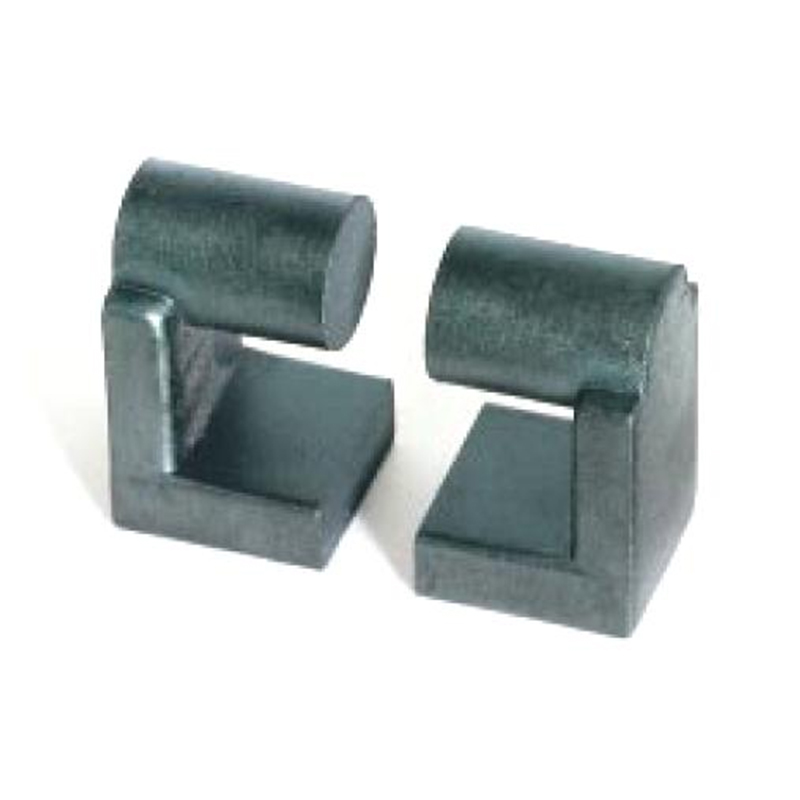
MnZn Power Ferrite is built for energy conversion. Its defining traits are high saturation flux density, low iron loss, and efficient energy transfer under continuous AC excitation — exactly what's required in switch-mode power supplies, DC-DC converters, and motor drive transformers. This material is specified to handle large magnetic induction strength at a given frequency without excessive heating.
Mn-Zn power ferrite cores for inductors and transformers are ideal for applications where the core is the primary site of energy transfer, particularly when thermal management is a constraint.
MnZn High-Conductivity Ferrite, by contrast, is optimized for high initial permeability. This type is engineered for signal-level applications — magnetic heads, antenna bars, filters, and common-mode chokes — where the core needs to respond accurately to small magnetic excitations without saturation. The spinel-type crystal structure gives it a naturally high starting permeability, making it effective at concentrating weak magnetic fields efficiently.
For applications demanding both high permeability and precise signal linearity, Mn-Zn high-conductivity ferrite cores provide the stability required across the 1 kHz to 10 MHz operating range.
Core Shape and Geometry: What the Specs Actually Tell You
Once material type is confirmed, geometry determines the electrical outcome. The three parameters printed on every ferrite datasheet — Ae (effective cross-sectional area), Le (effective magnetic path length), and Ve (effective volume) — directly control inductance, saturation behavior, and core loss at operating temperature.
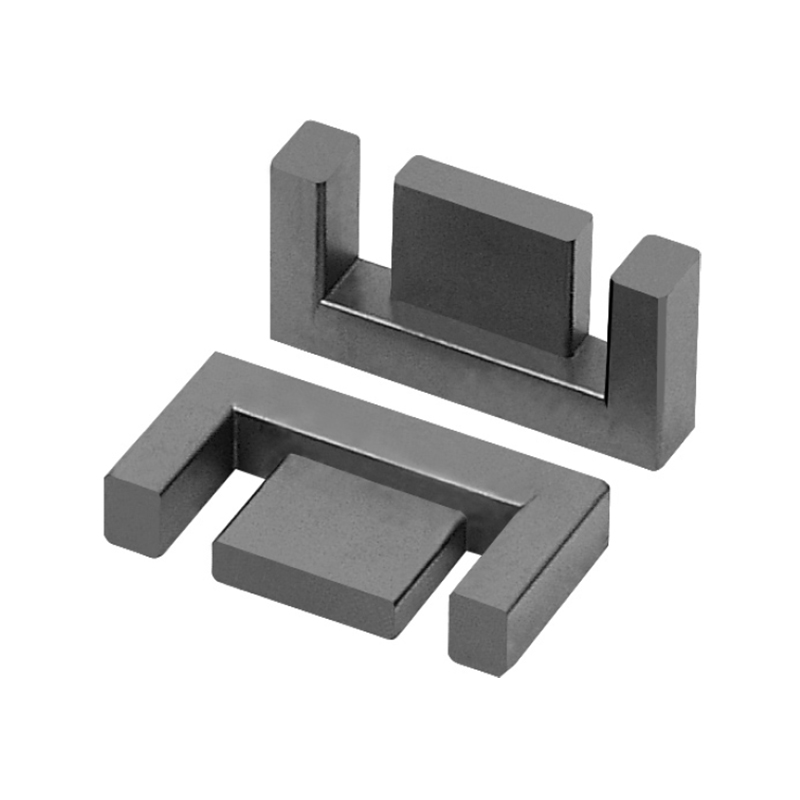
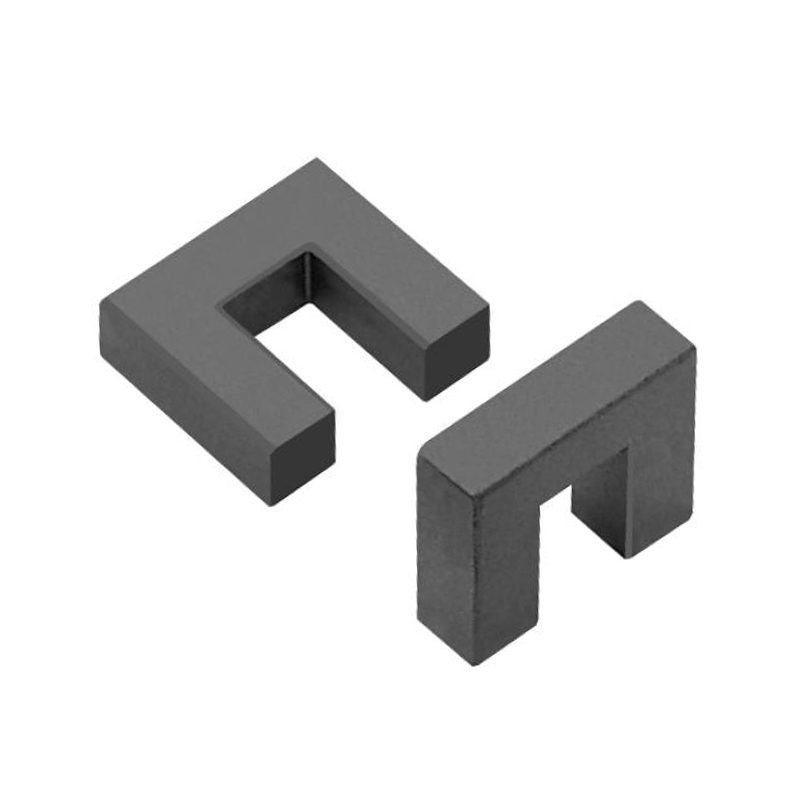
EE-type cores are the most widely used. Consider two points on the size spectrum from the product range:
| Core | Ae (mm²) | Le (mm) | Ve (mm³) | AL – YR48 (nH/N²) | Weight (g) |
|---|---|---|---|---|---|
| EE6.5/3-M | 4 | 16.6 | 66.5 | 360 | 0.35 |
| EE13/6 | 31.1 | 16 | 498 | 1050 | 2.82 |
| EE42/15 | 97.3 | — | 17,611 | 4170 | 117 |
The EE6.5/3-M is built for compact, low-power circuits. Its 66.5 mm³ volume and 0.35 g weight fit tightly constrained PCB footprints. At the other extreme, the EE42/15 — with a 97.3 mm² effective area and nearly 18,000 mm³ of core volume — is suited for high-power conversion applications where thermal mass and energy handling are priorities.
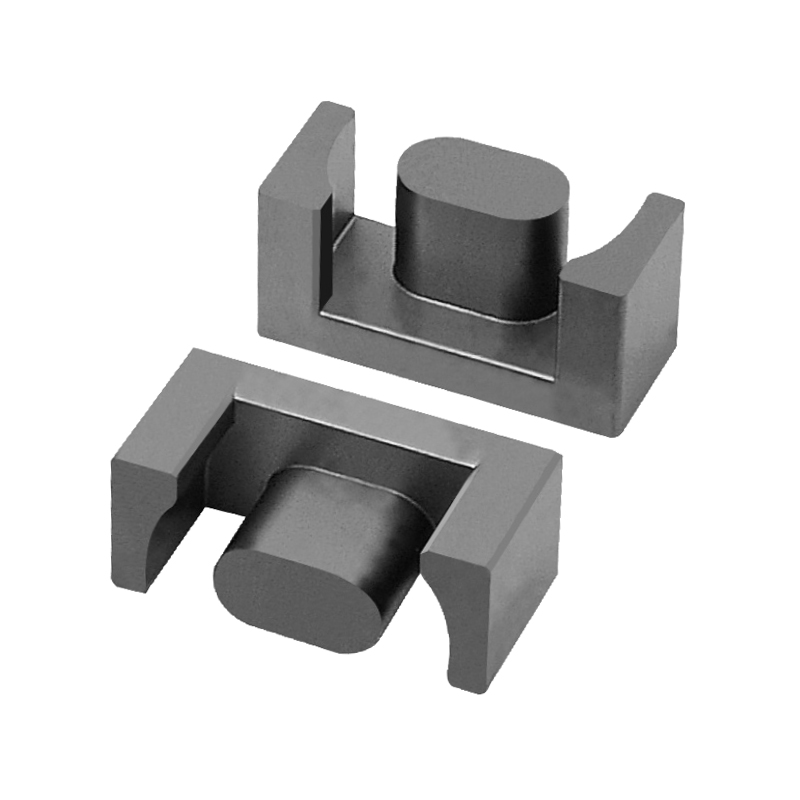
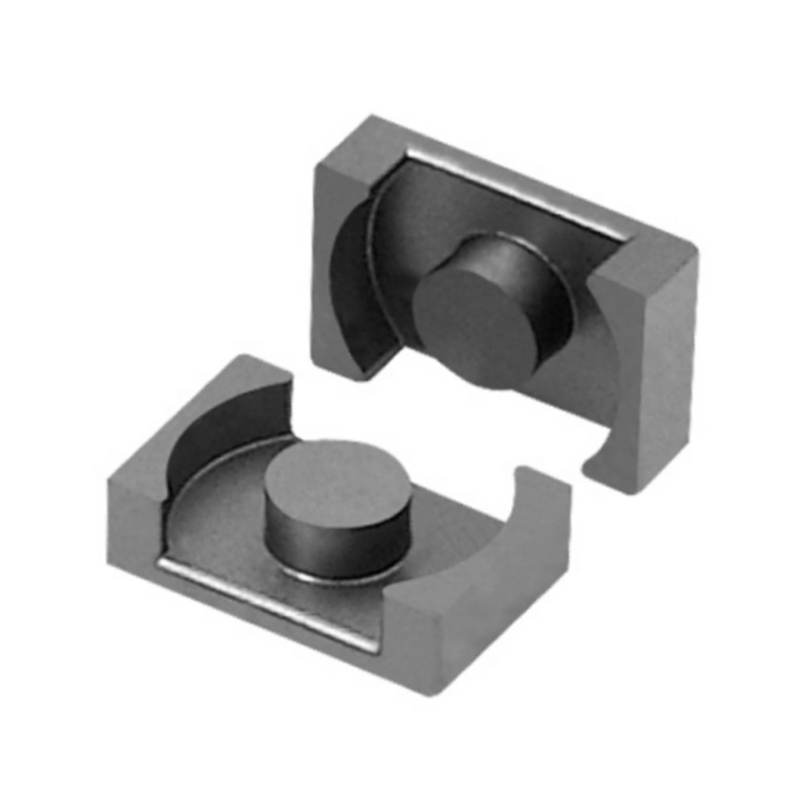
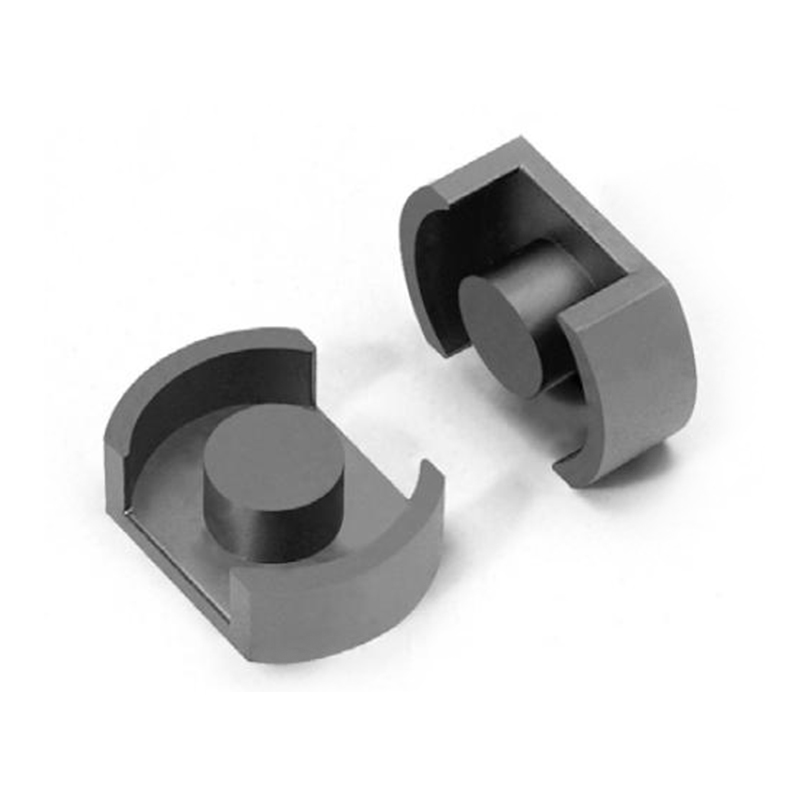
EB-type cores handle a different geometry constraint: they provide long magnetic path lengths relative to their cross-section, making them suitable for inductors with large stored-energy requirements. The EB47/11, for instance, achieves a Ve of 8,137 mm³ across a 47 mm profile. EC and ECO types offer cylindrical geometries that minimize leakage flux, preferred in RF transformers and precision inductors where stray field control matters.
Interpreting AL Values and Material Grade
The AL value — inductance per turn squared, expressed in nH/N² — is your primary handle for winding calculation. It varies by both core geometry and material grade. Across the product range, three primary grades are specified: YR28, YR48, and YR98, each corresponding to a different initial permeability level.
Higher grades carry higher AL values. An EE13/6 core in YR28 grade delivers 1,000 nH/N², while the same geometry in YR98 reaches 1,300 nH/N² — a 30% increase without changing the physical core at all. This means fewer turns are needed to reach a target inductance, which directly reduces winding resistance, copper losses, and total component height.
For engineers calculating turn counts, the formula is straightforward: N = √(L / AL), where L is the target inductance. The AL value from the datasheet includes a ±25% tolerance, which must be factored into the minimum and maximum inductance validation across the production range.
Matching Ferrite Grade to Operating Frequency and Thermal Environment
MnZn ferrites are temperature-sensitive by nature. Their magnetic permeability peaks near the Curie temperature and drops sharply beyond it. In practical terms, this means a core performing well at room temperature can exhibit measurably different AL values at 80°C operating temperature inside a sealed enclosure.
For switching frequencies between 50 kHz and 500 kHz — the dominant range in modern SMPS designs — MnZn power ferrite grades offer the lowest core loss per unit volume. Above 1 MHz, either selecting a NiZn-based material or reducing flux density becomes necessary to control losses.
The ferrite powder stage is equally worth attention for custom inductor development. Soft magnetic ferrite powder for custom core fabrication enables tailored permeability profiles and grain structures when standard geometries don't meet density or form-factor requirements.
A Practical Selection Checklist
Before finalizing a core, confirm these five parameters:
- Operating frequency range — confirms MnZn vs. NiZn and grade family.
- Required inductance (L) — determines AL × N² product and winding count.
- Peak flux density (Bpk) — must stay below saturation Bs to prevent core collapse under load.
- Core loss budget — expressed as a temperature rise limit; lower-loss grades reduce thermal burden.
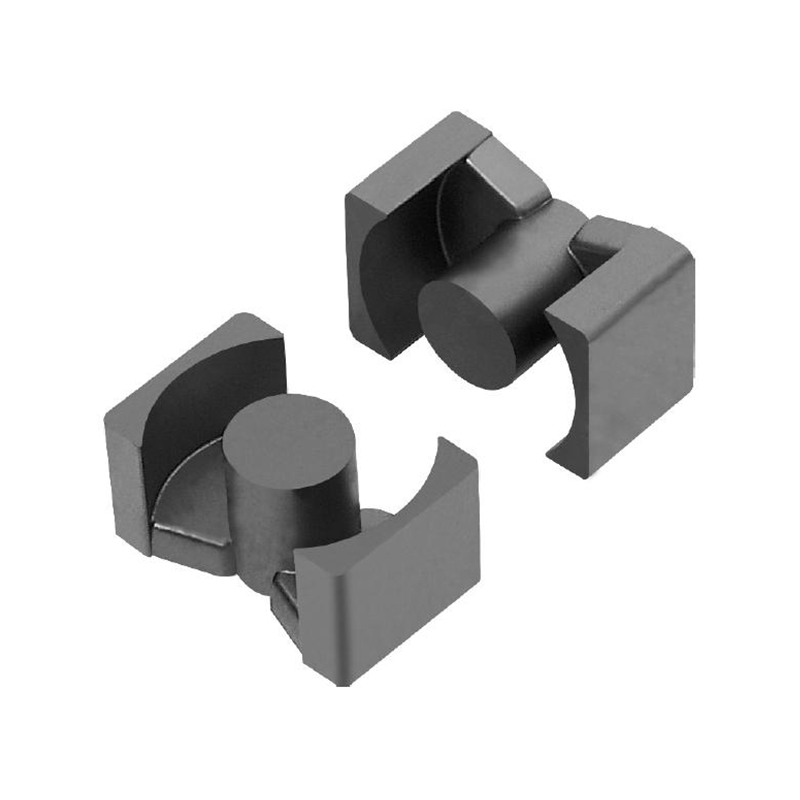
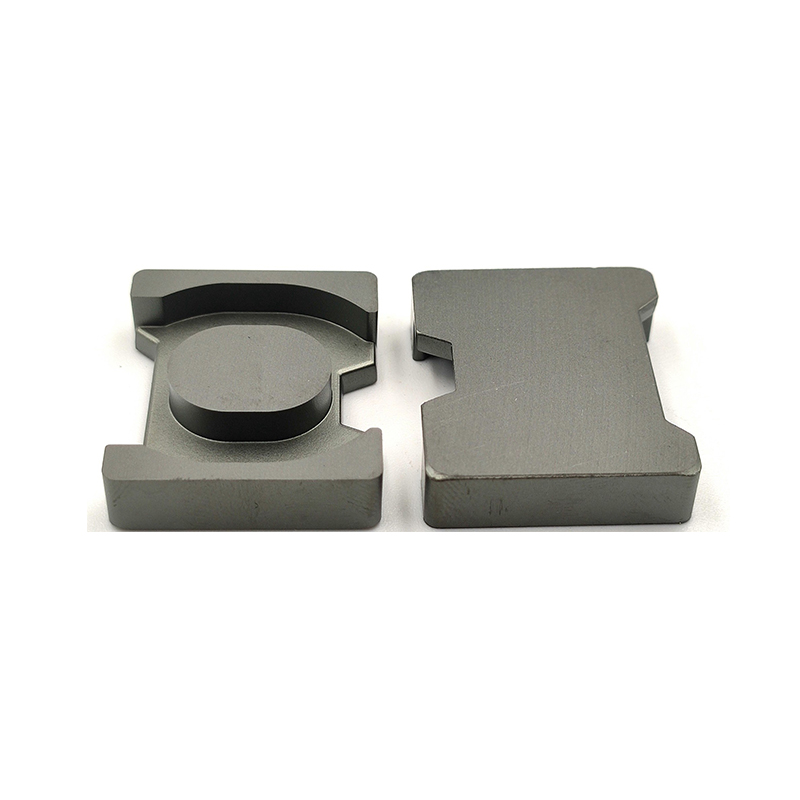
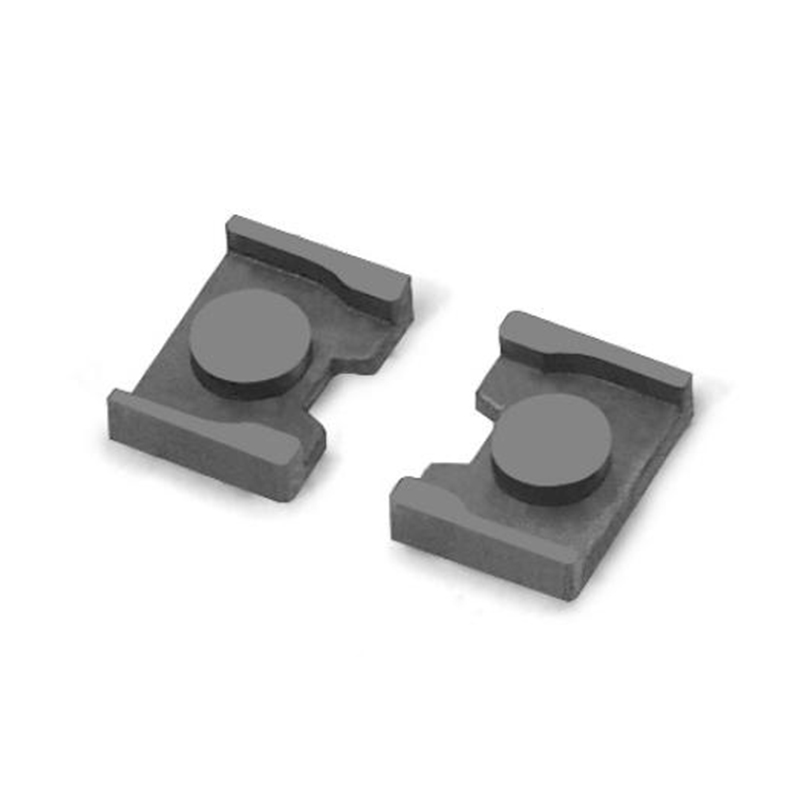
- Physical constraints — height, footprint, and weight drive the choice among EE, EB, EC, EFD, and PQ geometries.
Getting these five parameters aligned before selecting a specific core type eliminates most of the iteration that occurs late in the design cycle. The material class and core geometry together define the performance ceiling; the winding design then determines how close to that ceiling a given application can operate.
Previous Post
MnZn Ferrite Core Selection: 5 Specs Engineers Check First
Next Post
Mn-Zn High Conductivity Ferrite: Key Properties, Applications & Selection Tips