
 English
 한국어
한국어 中文简体
中文简体Soft Magnetic Ferrites: Core Properties & Applications
Content
- 1 Superior High-Frequency Performance Defines Soft Magnetic Ferrites
- 2 Three Critical Material Parameters for Core Selection
- 3 Controlled Power Loss Distribution in Practical Circuits
- 4 Optimizing Core Geometry for Thermal Management
- 5 Avoiding Saturation and Permeability Roll-Off
- 6 Practical Design Checklist for Ferrite Transformers
Superior High-Frequency Performance Defines Soft Magnetic Ferrites
Compared to conventional magnetic materials like silicon steel or amorphous alloys, soft magnetic ferrites exhibit extremely high electrical resistivity (typically 10⁻² to 10⁵ Ω·m, compared to ~10⁻⁷ Ω·m for metals). This unique property virtually eliminates eddy current losses at high frequencies. Consequently, soft magnetic ferrites are the only practical core material for efficient operation above 100 kHz, with common switching frequencies in modern power supplies ranging from 100 kHz to 2 MHz. They are indispensable in switched-mode power supplies (SMPS), common mode chokes, and radio frequency transformers.
A typical MnZn ferrite (e.g., N87 or equivalent material grade) achieves a core loss of less than 300 kW/m³ at 100 kHz, 100 mT, and 100°C, while a comparable nickel-zinc ferrite handles frequencies up to 100 MHz due to its even higher resistivity (>10⁵ Ω·m).
Three Critical Material Parameters for Core Selection
Engineers select soft ferrites based on three interdependent specifications. Misunderstanding these leads to premature saturation or thermal runaway. The table below outlines the decisive parameters for typical power applications.
| Parameter | MnZn Ferrite (20-500 kHz) | NiZn Ferrite (500 kHz-100 MHz) |
|---|---|---|
| Initial Permeability (µi) | 2000 – 15000 | 10 – 2000 |
| Saturation Flux Density (Bs at 25°C) | 400 – 500 mT | 250 – 380 mT |
| Curie Temperature (Tc) | 120 – 250°C | 150 – 450°C |
| Volume Resistivity | 0.1 – 10 Ω·m | 10⁴ – 10⁶ Ω·m |
For most power conversion below 500 kHz, MnZn ferrites offer the highest Bs and µi, enabling smaller transformer cores. For EMI suppression or signal isolation above 1 MHz, NiZn ferrites are mandatory despite their lower Bs. A common design mistake is using a MnZn ferrite in a 1 MHz flyback converter, leading to core temperature rises exceeding 60°C above ambient due to excessive eddy losses.
Controlled Power Loss Distribution in Practical Circuits
Total core loss (Pcv) in soft ferrites is the sum of hysteresis loss (Ph) and eddy current loss (Pe). For MnZn ferrites at 100 kHz and 100 mT, Ph accounts for roughly 60-75% of total loss, while Pe contributes the remainder. However, as frequency increases to 500 kHz, the proportion reverses.
A validated empirical loss separation for a typical power ferrite (grade equivalent to PC95) at 100°C is:
- Hysteresis loss coefficient (kh): 3.2 × 10⁻⁵ (W/m³·Hz·T²)
- Eddy current loss coefficient (ke): 4.8 × 10⁻¹² (W/m³·Hz²·T²)
- Excess loss coefficient (kex): 1.1 × 10⁻⁶ (W/m³·Hz¹·⁵·T¹·⁵)
Using the Steinmetz equation Pcv = k × f^α × B^β (with typical values k = 2.5×10⁻⁵, α = 1.35, β = 2.4 for MnZn ferrite between 50-200 kHz), designers can estimate loss. A 5% error in flux density estimation typically leads to a 12-15% error in predicted core loss due to the squared relationship (B^β ≈ B²·⁴).
Optimizing Core Geometry for Thermal Management
The shape of a ferrite core directly influences its power handling capability. For a given volume, the surface area-to-volume ratio determines how efficiently heat dissipates. Below are the most common shapes and their effective thermal performance for natural convection.
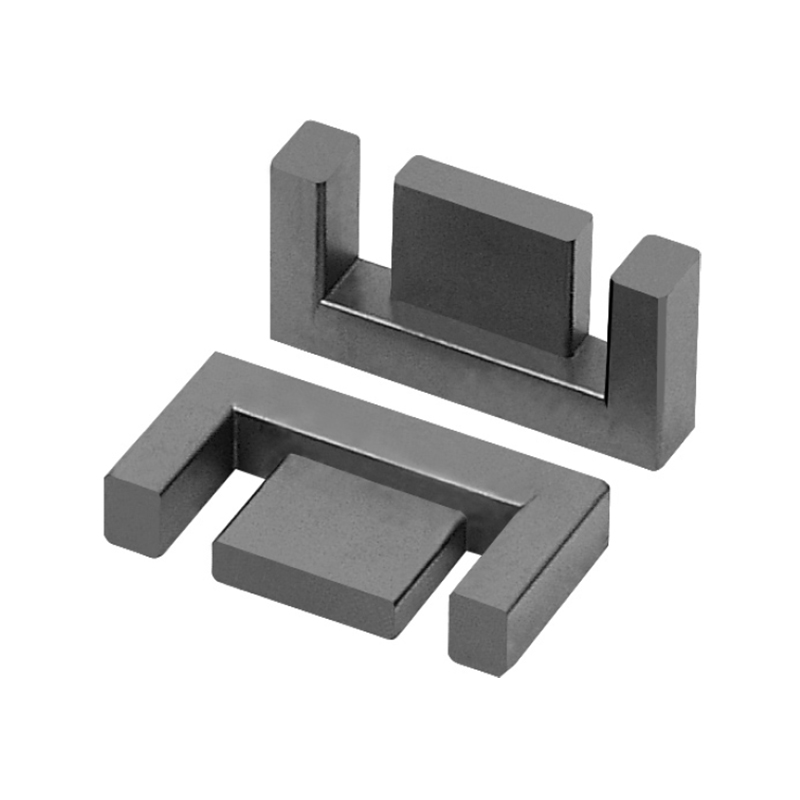
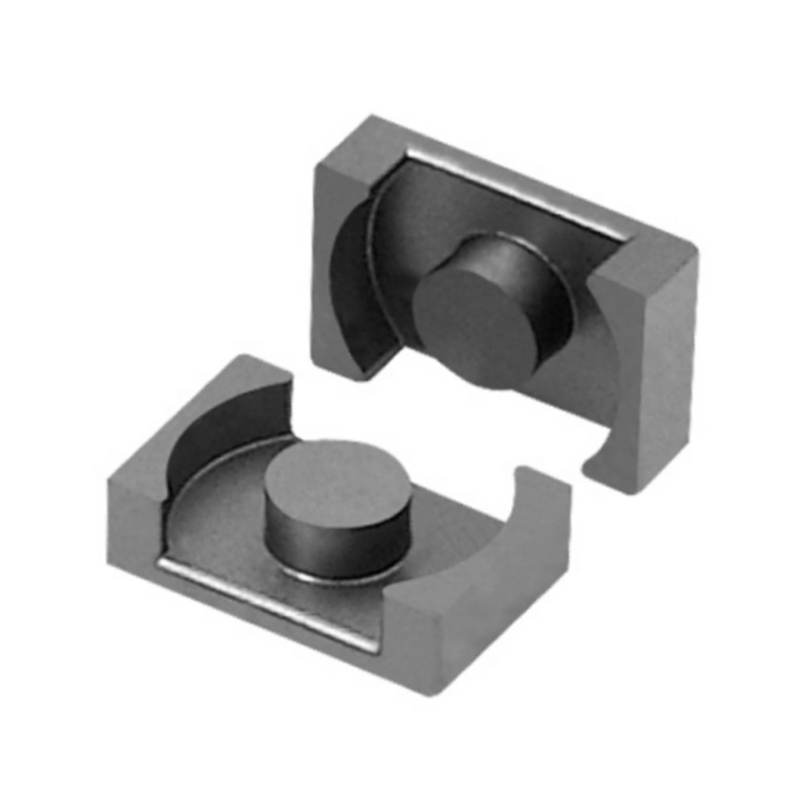
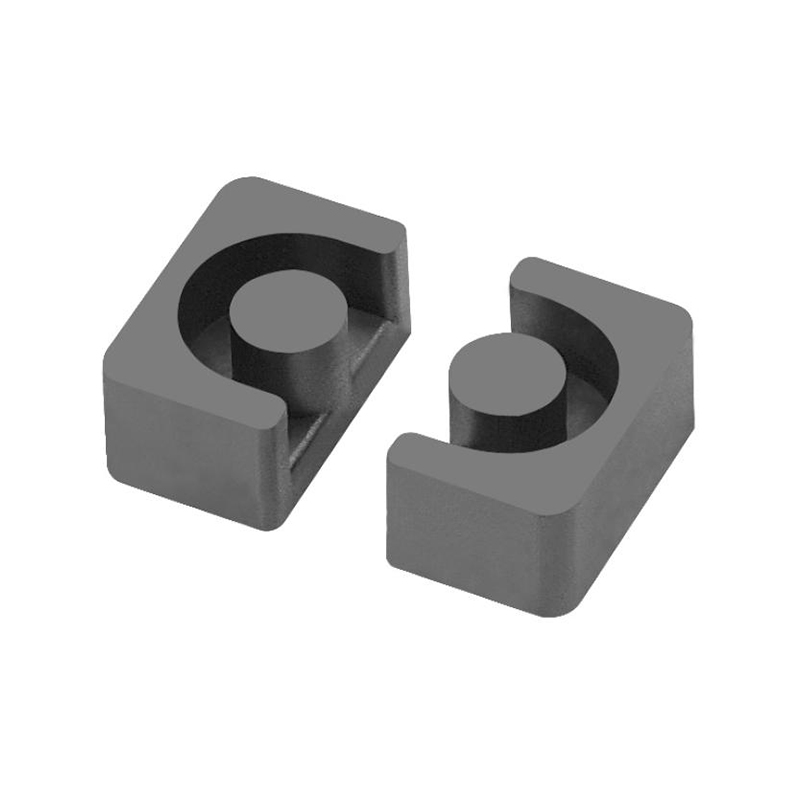
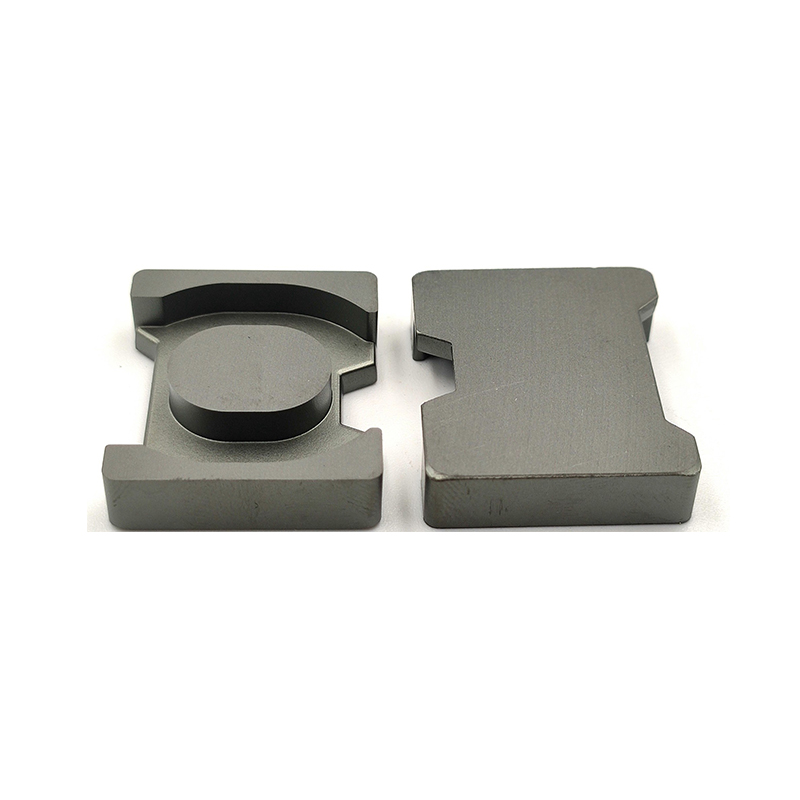
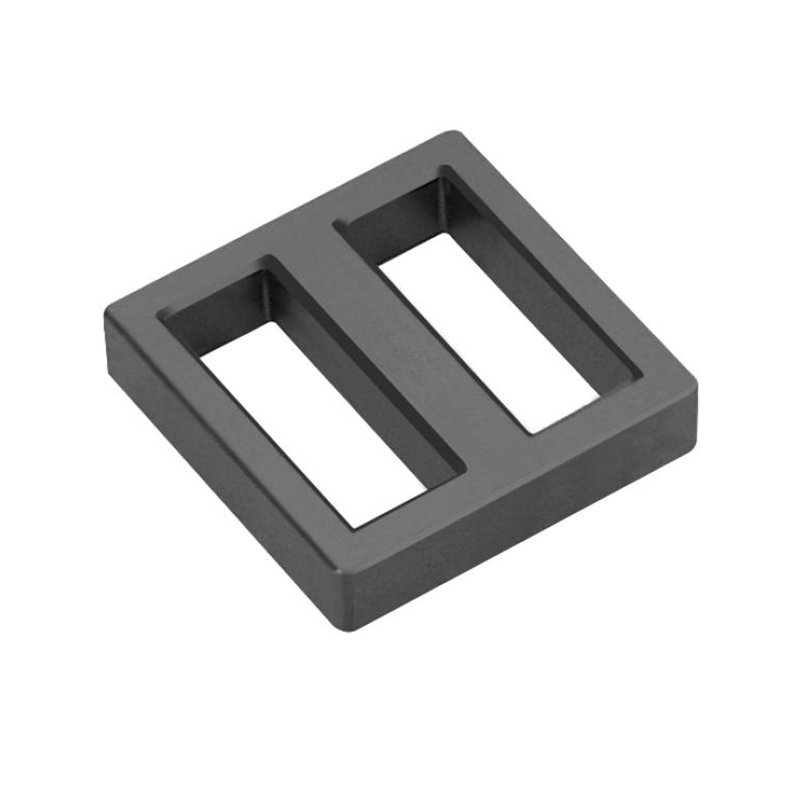
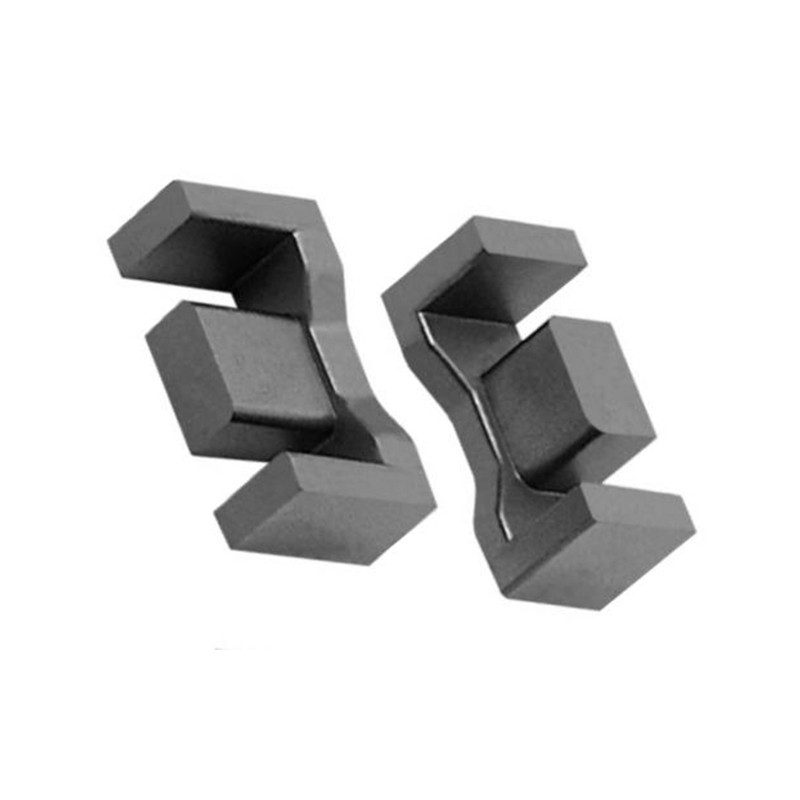
- EE/ER/ETD cores: Provide a balanced ratio (surface area/volume ≈ 80-120 m⁻¹ for 30-50 mm sizes). Ideal for transformers up to 500 W.
- PQ cores: Optimized for minimum winding length and maximum surface area. Achieve 15-20% lower temperature rise compared to EE cores of the same volume at 300 kHz.
- Toroids: Highest potential for flux leakage control but worst heat dissipation (surface/volume ≈ 40-60 m⁻¹). Require forced air cooling above 20 W/in³.
A real-world example: A 20 mm PQ20 core made of MnZn ferrite operated at 250 kHz, 150 mT, dissipating 2.5 W total core loss, reaches a hot-spot temperature of 95°C in 23°C ambient (ΔT = 72°C). The same electrical stress on an EE20 core would exceed 110°C hot-spot, risking thermal runaway since ferrite Curie points are often near 200-250°C, but permeability drops drastically above 120°C.
Avoiding Saturation and Permeability Roll-Off
Soft ferrites exhibit a sharp saturation knee. The maximum usable flux density is not the datasheet Bs (measured at high H field) but the practical limit where incremental permeability (µΔ) drops by 30-50%. For most MnZn ferrites, this occurs at 80% of Bs under DC bias or low-frequency AC excitation.
Engineers must apply the DC bias derating factor. For a typical ferrite with Bs = 450 mT at 25°C, the maximum recommended peak AC flux density (Bmax) is:
- At 25°C: Bmax ≤ 360 mT
- At 100°C: Bs drops to 350 mT → Bmax ≤ 280 mT
- At 120°C: Bs drops to 300 mT → Bmax ≤ 240 mT
Ignoring this derating leads to a >50% drop in inductance and potential controller failure. For example, a forward converter using a 300 mT peak design at 100°C will saturate within 5-10 switching cycles, causing primary current to rise from 2A to over 40A in less than 2 microseconds.
Practical Design Checklist for Ferrite Transformers
To achieve reliable operation above 100 kHz, follow this verified sequence when designing with soft magnetic ferrites:
- Step 1 – Determine operating frequency: Below 500 kHz → MnZn ferrite (µi≥2000). Above 1 MHz → NiZn ferrite (µi≤800).
- Step 2 – Calculate peak AC flux density: Use Bmax = (Vrms × 10⁸) / (4.44 × f × N × Ae). Limit to ≤ 0.8 × Bs at expected core temperature.
- Step 3 – Compute core loss: Multiply core volume (Ve) by Steinmetz loss. Ensure total dissipation (core + copper) yields ΔT ≤ 40°C for natural cooling.
- Step 4 – Verify Curie temperature margin: Operating temperature must be ≤ (Tc - 50°C) to prevent permeability collapse. For Tc=200°C, max continuous temp = 150°C.
Following this checklist reduces prototype iterations by an average of 70% according to industry surveys. Soft magnetic ferrites, when properly selected, offer reliable performance with losses 10-100 times lower than powdered iron cores in the 100 kHz-2 MHz range.
Previous Post
What Are the Characteristics of Mn-Zn Ferrites? Key Properties Explained
Next Post
Minimizing Losses: Optimizing Magnetic Loop Inductance for High-Efficiency Systems