
 English
 한국어
한국어 中文简体
中文简体Ferrite Core: Types, Properties, and How to Select the Right One
Content
- 1 What Is a Ferrite Core Made Of
- 2 Key Magnetic Properties That Define Performance
- 3 Common Ferrite Core Shapes and Their Applications
- 4 How Ferrite Cores Suppress EMI
- 5 Ferrite Cores in Power Electronics
- 6 Selecting the Right Ferrite Core for Your Design
- 7 Handling and Mechanical Considerations
- 8 Ferrite Cores Versus Other Core Materials
- 9 Practical Tips for Working With Ferrite Cores
- 10 Emerging Applications and Future Directions
A ferrite core is a type of magnetic core made from ferrite, a ceramic compound composed primarily of iron oxide combined with other metallic oxides such as manganese, zinc, or nickel. Its primary function is to guide and concentrate magnetic flux in inductors, transformers, and electromagnetic interference (EMI) filters, significantly improving energy efficiency and signal integrity across a wide range of electronic applications. Unlike solid iron cores, ferrite cores exhibit high magnetic permeability alongside high electrical resistivity, making them exceptionally effective at high frequencies where conventional metal cores would suffer from excessive eddy current losses.
What Is a Ferrite Core Made Of
Ferrite cores are ceramic-like materials formed through a sintering process. The base ingredient is iron oxide (Fe2O3), which is blended with secondary oxides to tailor magnetic and electrical properties for specific use cases.
Common Ferrite Compositions
- Manganese-Zinc (MnZn): High permeability, best suited for frequencies below 2 MHz. Widely used in power transformers and broadband inductors.
- Nickel-Zinc (NiZn): Lower permeability than MnZn but effective from 2 MHz to several hundred MHz. Preferred in RF chokes and EMI suppression components.
- Magnesium-Zinc (MgZn): Used in specialized high-frequency applications where cost and temperature stability matter.
- Lithium Ferrite: Often found in microwave applications due to its low loss at gigahertz frequencies.
The manufacturing process involves mixing raw oxide powders, pressing them into the desired shape, and then sintering at temperatures typically between 1000 degrees Celsius and 1300 degrees Celsius. The final product is hard, brittle, and non-conductive on its surface, which inherently limits eddy current paths.
Key Magnetic Properties That Define Performance
Understanding what makes a ferrite core useful requires familiarity with a few fundamental magnetic properties. These properties directly determine whether a core is appropriate for a given circuit design.
| Property | Description | Typical Range |
|---|---|---|
| Initial Permeability (ui) | Ability to concentrate magnetic flux at low field strengths | 100 to 15,000 |
| Saturation Flux Density (Bs) | Maximum magnetic flux before the core saturates | 0.2 T to 0.5 T |
| Coercive Force (Hc) | Resistance to demagnetization; affects hysteresis loss | 10 A/m to 200 A/m |
| Electrical Resistivity | Resistance to electrical current flow, limiting eddy currents | 1 ohm-m to 10^6 ohm-m |
| Curie Temperature (Tc) | Temperature above which magnetic properties are lost | 100 degrees Celsius to 500 degrees Celsius |
High electrical resistivity is the single most important advantage ferrite holds over metallic cores at high frequencies. Silicon steel, by comparison, has a resistivity of roughly 0.00005 ohm-m, while NiZn ferrite can reach 100,000 ohm-m or higher. This dramatic difference suppresses eddy current losses that would otherwise heat the core and waste energy.
Common Ferrite Core Shapes and Their Applications
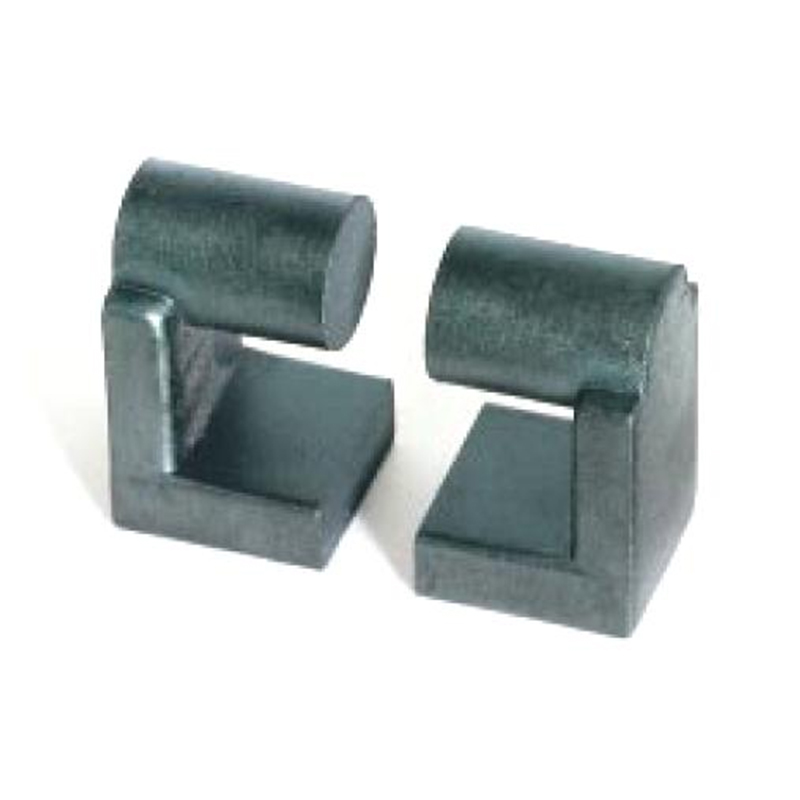
Ferrite cores are manufactured in a variety of shapes, each optimized for different winding geometries, flux paths, and assembly requirements. Choosing the correct shape is as important as choosing the correct material grade.
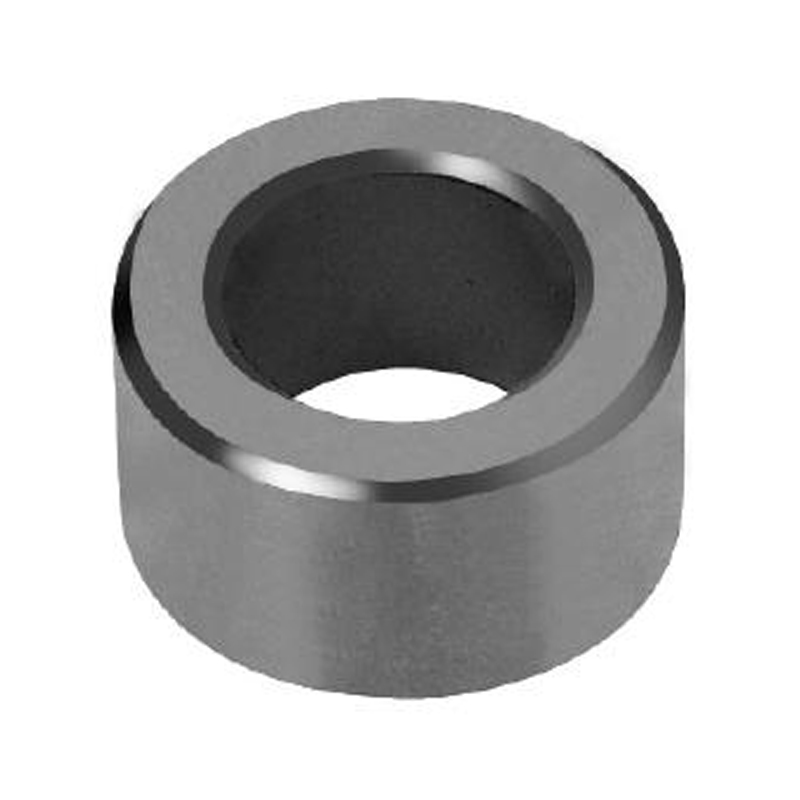
Toroidal Cores
A toroid is a donut-shaped ring. Because the magnetic flux is entirely contained within the core geometry, toroidal cores produce virtually zero external magnetic field leakage, making them ideal for noise-sensitive circuits. They are extensively used in power-line filters and common-mode chokes. The downside is that winding wire around a toroid is difficult to automate, raising manufacturing costs.
E and I Cores
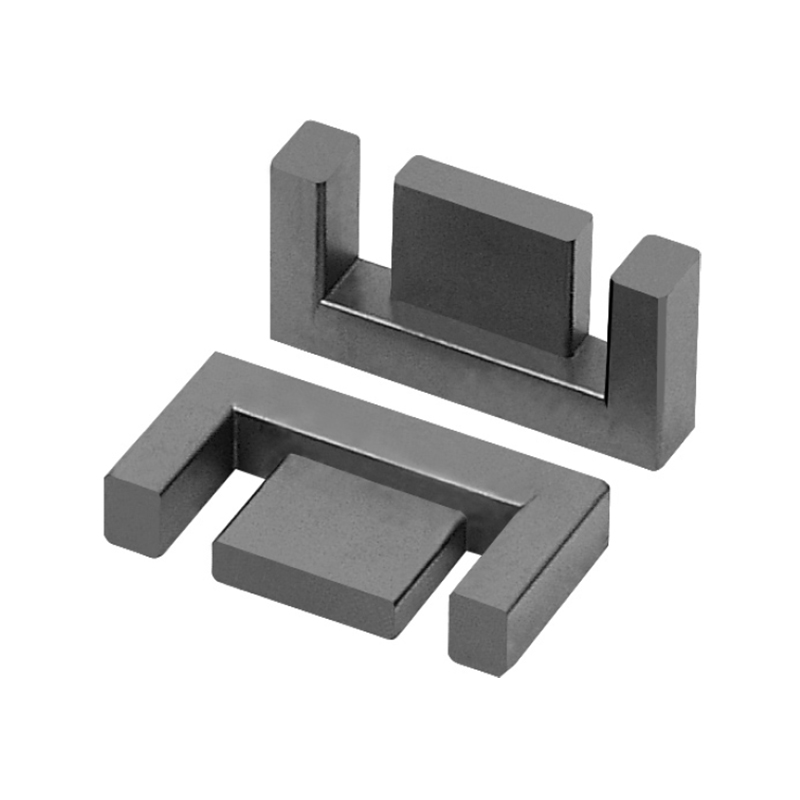
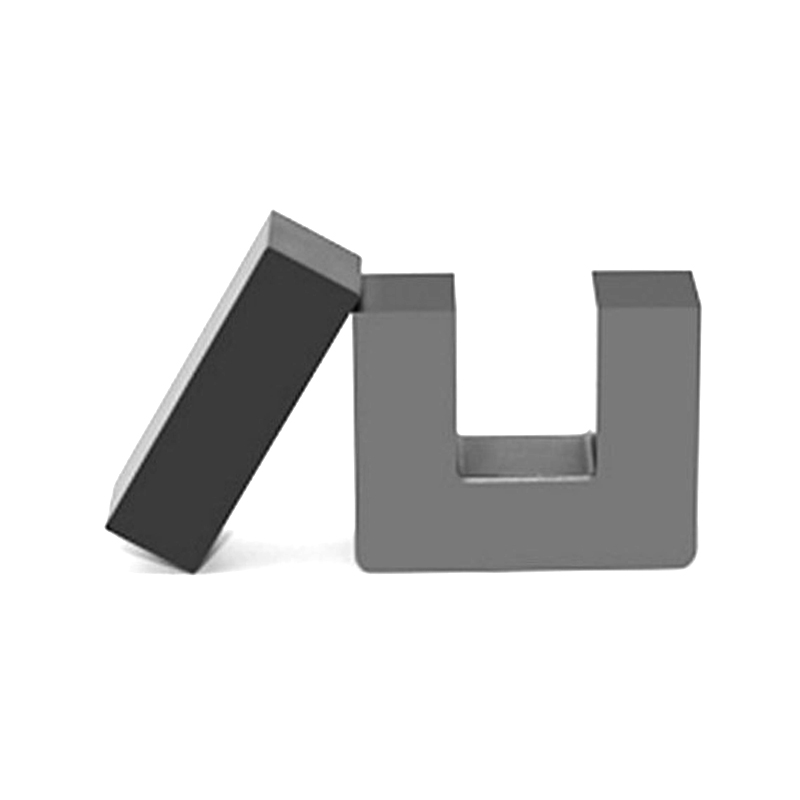
E-cores and I-cores are paired together to form a closed magnetic circuit with a central limb for winding. They are among the most common shapes in switched-mode power supply (SMPS) transformers. A small air gap is often introduced between the E and I halves to prevent saturation under high DC bias currents. Typical power handling at switching frequencies of 100 kHz ranges from a few watts to several kilowatts depending on core size.
Pot Cores
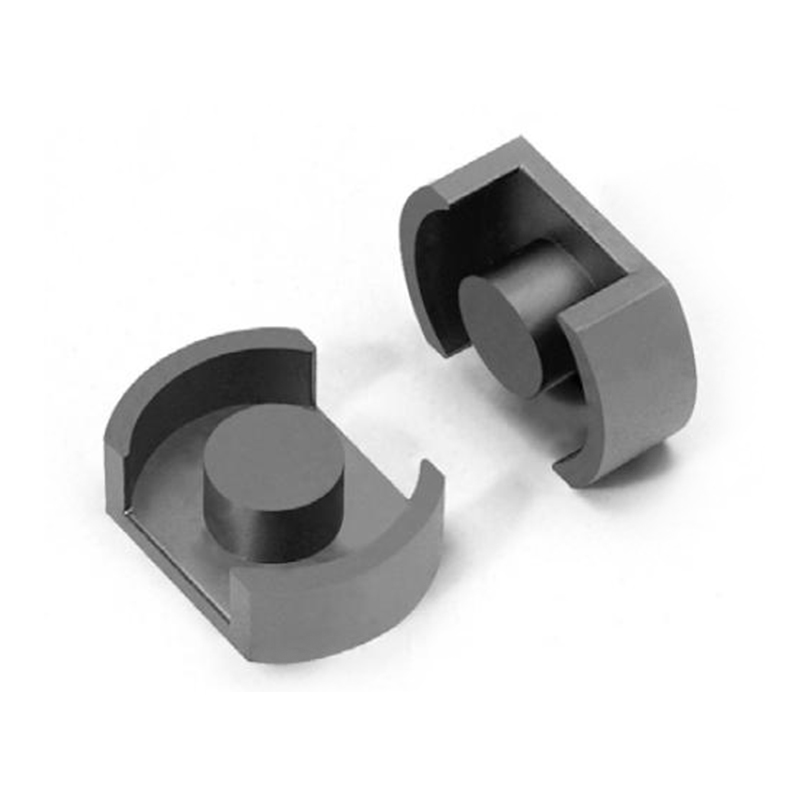
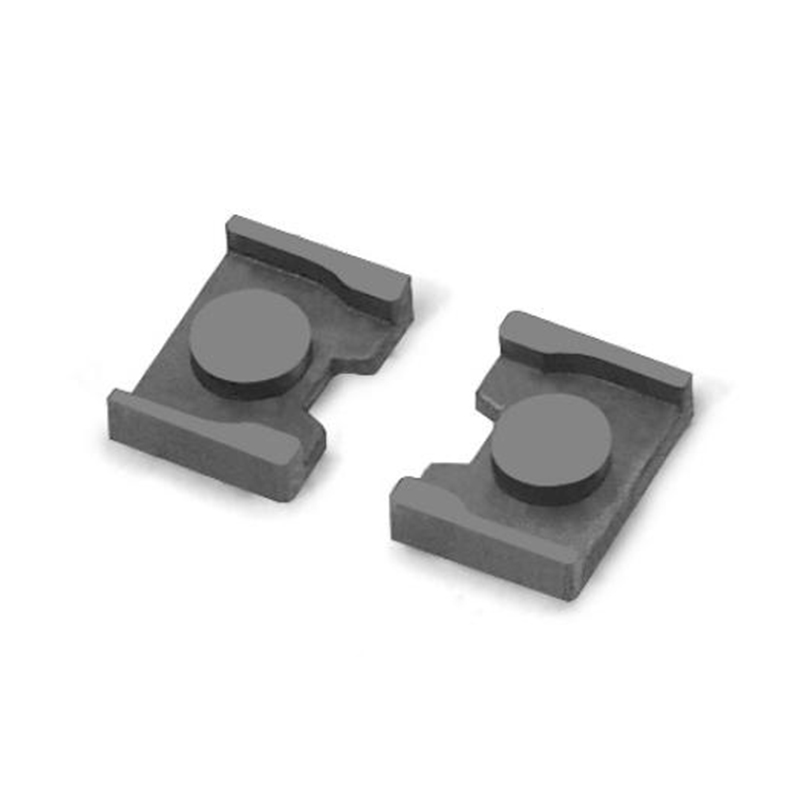
Pot cores fully enclose the winding, shielding it from external electromagnetic interference and reducing emissions. They are favored in precision inductors and telecommunication transformers. The enclosed design also improves temperature stability, though it limits heat dissipation compared to open shapes.
RM and PQ Cores
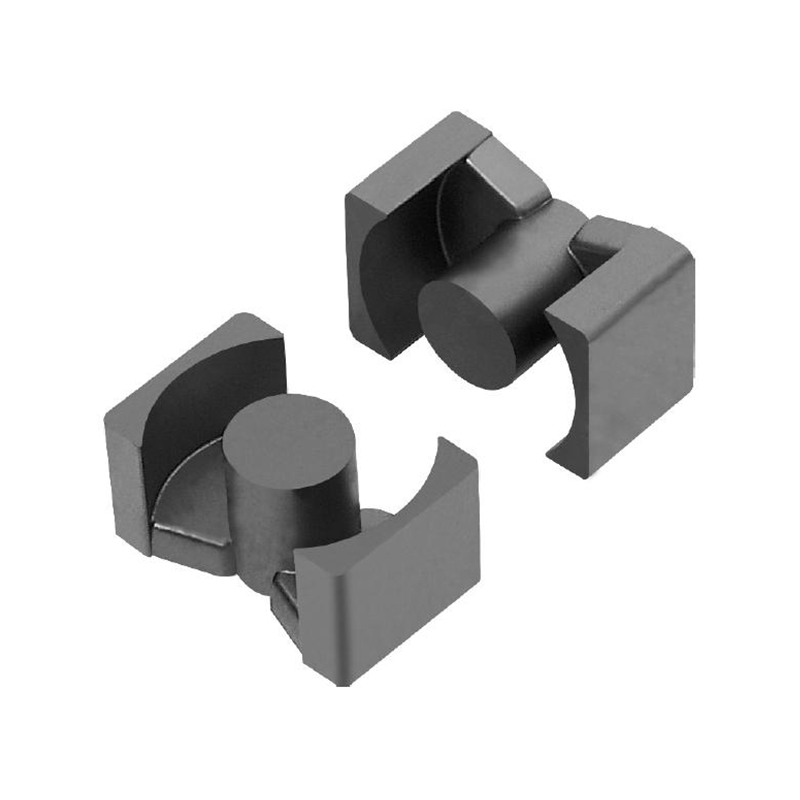
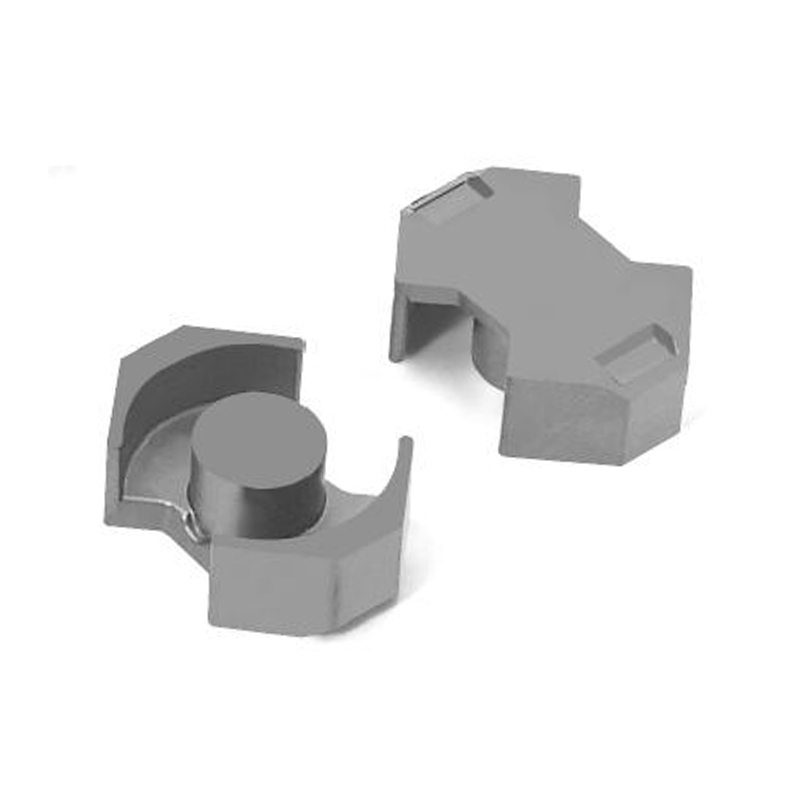
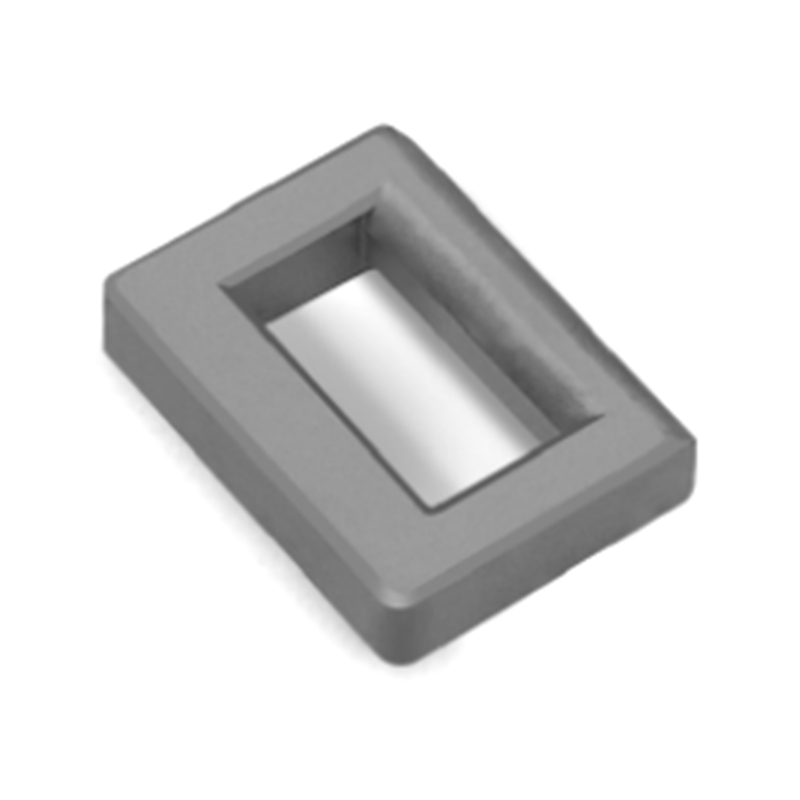
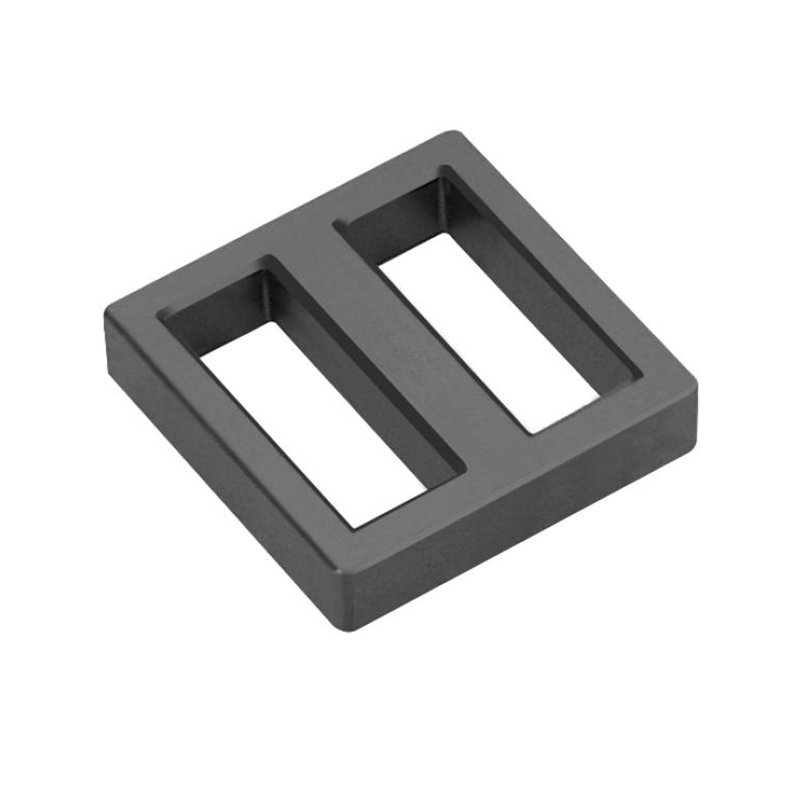
RM (rectangular module) and PQ cores are compact designs that balance winding area, core volume, and mounting footprint. They are well suited for surface-mount and PCB-integrated power inductors where board space is limited. Many modern laptop chargers and phone adapters use PQ cores at switching frequencies between 200 kHz and 1 MHz.
Cylindrical and Bead Cores
Ferrite beads are small cylindrical cores threaded directly onto a wire or cable. They act as high-frequency resistors, absorbing and dissipating noise energy rather than reflecting it. A single ferrite bead can provide 100 ohms or more of impedance at 100 MHz, making it one of the simplest and cheapest EMI suppression tools available.
How Ferrite Cores Suppress EMI
Electromagnetic interference suppression is one of the most commercially significant uses of ferrite cores. Nearly every electronic device that connects to a power line or communicates wirelessly must meet regulatory EMI limits set by bodies such as the FCC in the United States or CISPR internationally.
Ferrite cores suppress EMI through two mechanisms:
- Common-mode choke action: When wound with two conductors in opposite directions, a ferrite toroid presents high impedance to common-mode noise (currents flowing in the same direction on both conductors) while leaving differential-mode signals unaffected. This is the principle behind the ferrite rings seen on laptop power cords and USB cables.
- Absorptive loss: At high frequencies, the complex permeability of ferrite has a significant resistive component (the loss factor). This converts high-frequency noise energy into heat within the core rather than reflecting it back into the circuit, which could cause other interference problems.
A practical example: adding a single NiZn ferrite clamp-on core to a USB cable can reduce radiated emissions at 30 MHz to 300 MHz by as much as 20 dB to 30 dB. That translates to a 10x to 30x reduction in radiated field strength, which is often the difference between passing and failing EMC certification tests.
Ferrite Cores in Power Electronics
Switch-mode power supplies dominate modern power conversion because they are far more efficient than linear regulators. Ferrite cores make high-frequency SMPS designs practical by providing low-loss magnetic energy storage and transfer at the switching frequencies these designs require.
Why Frequency Matters
Transformer size scales inversely with frequency. At 50 Hz (mains frequency), a 100 W transformer might weigh 500 grams. At 100 kHz using a ferrite core, the same power can be transferred through a transformer weighing under 20 grams. This is why phone chargers shrank from heavy boxes to small cubes once ferrite-based SMPS designs became widespread in the 1990s.
Core Loss and Efficiency
Despite their advantages, ferrite cores are not lossless. Core losses arise from two sources:
- Hysteresis loss: Energy consumed each time the magnetic domains are realigned during a flux cycle. This loss increases linearly with frequency.
- Residual loss: Includes domain wall resonance and dimensional resonance effects that become significant above a few megahertz.
Engineers use the Steinmetz equation to model these losses and select core materials that minimize total dissipation at the intended operating frequency and flux density. For a 200 kHz flyback converter operating at 0.2 T peak flux density, a well-chosen MnZn ferrite can achieve core losses below 200 mW per cubic centimeter, enabling overall converter efficiencies exceeding 90 percent.
Air Gap Design
In applications where a DC bias current flows through the winding (such as flyback and boost converters), introducing a small air gap into the core prevents premature magnetic saturation. The air gap stores most of the magnetic energy and allows the inductor to handle larger peak currents without collapsing. A gap of even 0.5 mm in an E-core can increase the usable DC bias range by a factor of three or more compared to a gapless core.
Selecting the Right Ferrite Core for Your Design
Core selection is a multi-variable optimization. The following parameters must be evaluated in sequence to avoid design failures such as core saturation, excessive temperature rise, or inadequate inductance.
- Define the operating frequency range. If the circuit operates below 1 MHz, MnZn materials offer superior permeability and lower loss. Above 2 MHz, NiZn is the standard choice.
- Determine the required inductance and peak flux density. Use the inductance equation L = N squared times AL (where AL is the core inductance factor in nH per turn squared) to find the needed turns count. Verify that peak flux density stays below 80 percent of the core saturation value to maintain a safety margin.
- Calculate core loss. Use the datasheet power loss curves or the Steinmetz equation with the material-specific coefficients provided by the core manufacturer. If core temperature rise exceeds 40 degrees Celsius above ambient, choose a larger core or a lower-loss material grade.
- Evaluate winding window area. The winding must physically fit inside the core window. Calculate the total wire cross-section including insulation and compare it against the available window area multiplied by a fill factor of approximately 0.4 for hand winding or 0.6 for machine winding.
- Check thermal performance. Total power dissipation (core loss plus copper loss) determines the temperature rise. Ferrite cores begin losing permeability noticeably above 100 degrees Celsius for most MnZn grades, and properties can change irreversibly if the Curie temperature is approached.
Handling and Mechanical Considerations
Ferrite is a ceramic material and shares the brittle characteristics of ceramics. This has practical consequences for design, assembly, and long-term reliability.
- Ferrite cores crack easily under point loads or thermal shock. Avoid torquing mounting hardware directly against bare ferrite surfaces; use compliant pads or bobbins.
- The surface of a ferrite core is electrically resistive but not a perfect insulator. In high-voltage applications, additional insulation between the winding and the core is necessary.
- Grinding or machining ferrite to create custom air gaps is possible but must be done with diamond-tipped tools and cooling to prevent micro-cracking. Even hairline cracks can dramatically alter permeability and saturation behavior.
- Moisture absorption is generally low for sintered ferrites, but prolonged exposure to high humidity at elevated temperatures can degrade surface resistivity over time.
- When two mating core halves (such as an E-E pair) are assembled, lapping the mating faces to a flatness of better than 5 micrometers minimizes the effective air gap and ensures the specified AL value is achieved.
Ferrite Cores Versus Other Core Materials
Ferrite is not universally the best core material. Understanding where it excels and where alternatives win helps engineers make better design decisions.
| Material | Best Frequency Range | Saturation Flux Density | Key Advantage | Key Limitation |
|---|---|---|---|---|
| Ferrite (MnZn) | 1 kHz to 2 MHz | 0.3 T to 0.5 T | Low cost, high permeability | Brittle, moderate Bs |
| Ferrite (NiZn) | 1 MHz to 500 MHz | 0.2 T to 0.35 T | Excellent high-frequency performance | Lower permeability than MnZn |
| Silicon Steel | 50 Hz to 1 kHz | 1.5 T to 2.0 T | Very high flux density | High eddy current loss at frequency |
| Amorphous Metal | 1 kHz to 100 kHz | 1.2 T to 1.6 T | Low loss at moderate frequency | High cost, limited shapes |
| Powdered Iron | 100 kHz to 50 MHz | 0.8 T to 1.2 T | Handles high DC bias well | Higher loss than ferrite at low flux |
Ferrite is the dominant choice for switching power supplies and EMI filters operating above 20 kHz. For mains-frequency transformers where high flux density is needed to minimize core weight, silicon steel remains preferred. In applications combining moderate frequency (10 kHz to 100 kHz) with high DC bias, powdered iron or amorphous cores may outperform ferrite in some designs.
Practical Tips for Working With Ferrite Cores
Engineers who work regularly with ferrite cores develop a set of practical habits that prevent common design and assembly problems.
Measure Before Finalizing
Published AL values carry tolerances of plus or minus 25 percent or more in many standard-grade cores. Always measure the actual inductance of your wound prototype with an impedance analyzer before committing to a production design. Differences of 20 percent between measured and expected inductance are common.
Manage Temperature Rise Early
Ferrite permeability is strongly temperature-dependent. Most MnZn materials show a permeability peak between 60 degrees Celsius and 100 degrees Celsius, then drop sharply toward the Curie temperature. Design the thermal environment so the core operates below 80 degrees Celsius under worst-case load and ambient conditions to ensure inductance remains within specification throughout product life.
Secure Mating Cores Properly
Two-piece cores that vibrate against each other generate acoustic noise (the familiar transformer hum) and can gradually abrade the mating faces, changing the air gap and therefore the inductance. Use a small amount of core adhesive or a clamping clip to keep mating halves under constant, moderate pressure.
Use the Correct Grade for Frequency
Substituting a low-frequency MnZn core into a 500 kHz design because it was available in inventory is a common error. The higher loss tangent of low-frequency grades at elevated frequencies can cause the core to run 30 degrees Celsius to 50 degrees Celsius hotter than a properly specified grade, risking thermal runaway in enclosed power supplies.
Emerging Applications and Future Directions
The role of ferrite cores continues to expand as electronic systems push toward higher frequencies, greater power density, and tighter electromagnetic compatibility requirements.
- Wide-bandgap power semiconductors: Silicon carbide and gallium nitride transistors switch at frequencies above 1 MHz, requiring ferrite cores with even lower losses at these frequencies. New low-loss NiZn and nanocrystalline ferrite grades are being developed specifically for this application.
- Wireless power transfer: Resonant inductive charging systems for electric vehicles and consumer electronics use ferrite plates or ferrite-filled flexible mats to shape and direct the magnetic field between coils. Ferrite shielding in these systems improves coupling efficiency by 15 percent to 30 percent and reduces heating of nearby metallic objects.
- Millimeter-wave and microwave circuits: Lithium and yttrium iron garnet ferrites are used in microwave circulators and isolators, devices that allow RF signals to travel in only one direction. These are critical in radar systems, satellite communications, and 5G base stations.
- Miniaturization: Integrated ferrite cores deposited by thin-film and screen-printing techniques are enabling on-chip inductors with usable permeability at frequencies above 100 MHz, potentially reducing the need for discrete ferrite components in some mobile and IoT applications.
As power electronics and wireless systems continue to increase in frequency and complexity, ferrite core technology will remain a foundational element of electromagnetic design. Its combination of low cost, design flexibility, and excellent high-frequency magnetic properties makes it difficult to replace across most of its core application areas.
Previous Post
How to Wire a Ferrite Core: A Complete Practical Guide
Next Post
Ferrite Core: Types, Uses, and How to Choose the Right One