
 English
 한국어
한국어 中文简体
中文简体How to Wire a Ferrite Core: A Complete Practical Guide
Content
- 1 Why Proper Wiring Makes or Breaks a Ferrite Core
- 2 Understanding Ferrite Core Shapes and Their Winding Implications
- 3 Selecting the Right Wire for Ferrite Core Winding
- 4 Calculating the Number of Turns
- 5 Step-by-Step: How to Wire a Ferrite Core
- 6 Winding Techniques for Specific Performance Goals
- 7 Common Wiring Mistakes and How to Avoid Them
- 8 How Core Material Affects Wiring Design Decisions
- 9 Testing Your Wired Ferrite Core
- 10 Starting with a Quality Core Makes Every Step Easier
Why Proper Wiring Makes or Breaks a Ferrite Core
Ferrite cores are at the heart of inductors, transformers, EMI filters, and power supplies — but the core material alone is only half the equation. How you wind and connect the wire around the core determines whether your component meets its electrical specifications or fails in the field. In our experience working with engineers and procurement teams across automotive, wireless charging, and industrial automation sectors, wiring errors account for a significant share of early component failures — most of which are entirely preventable.
This guide walks through the complete process of wiring a ferrite core: from selecting the right wire and understanding winding geometry, to practical step-by-step techniques and the mistakes most commonly seen in both prototyping and production environments.
Understanding Ferrite Core Shapes and Their Winding Implications
Before winding a single turn, you need to understand the geometry of the core you are working with. Different core shapes impose different constraints on how wire can be applied and how electromagnetic flux flows.
Common Core Shapes
| Core Shape | Typical Application | Winding Access | Key Consideration |
|---|---|---|---|
| Toroid | EMI filters, power inductors | Through the center hole | Uniform winding distribution is critical |
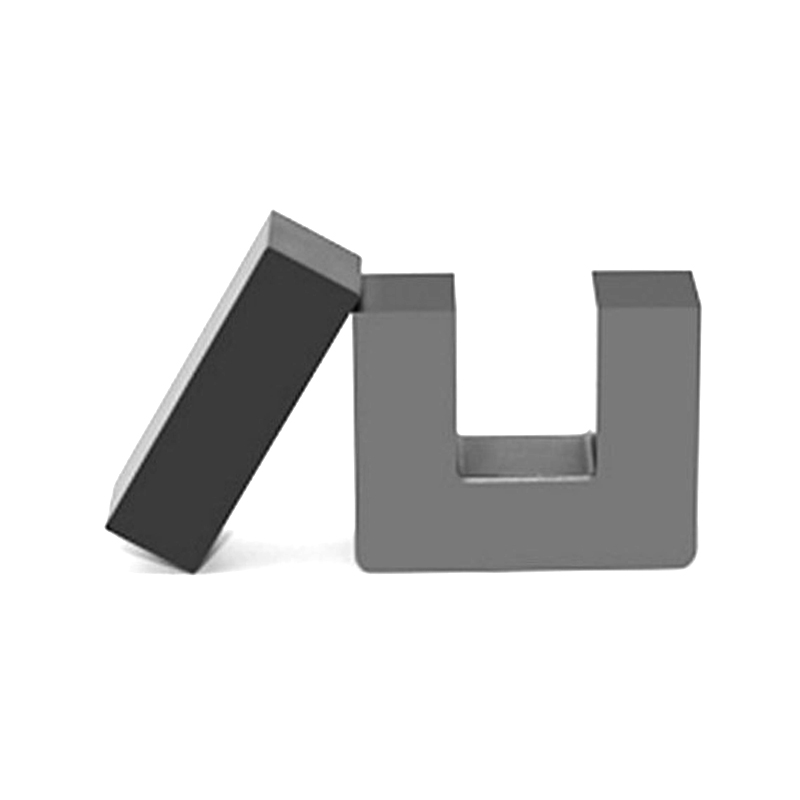
| E/I Core | Transformers, power supplies | Bobbin on center leg | Use bobbin to manage layers |
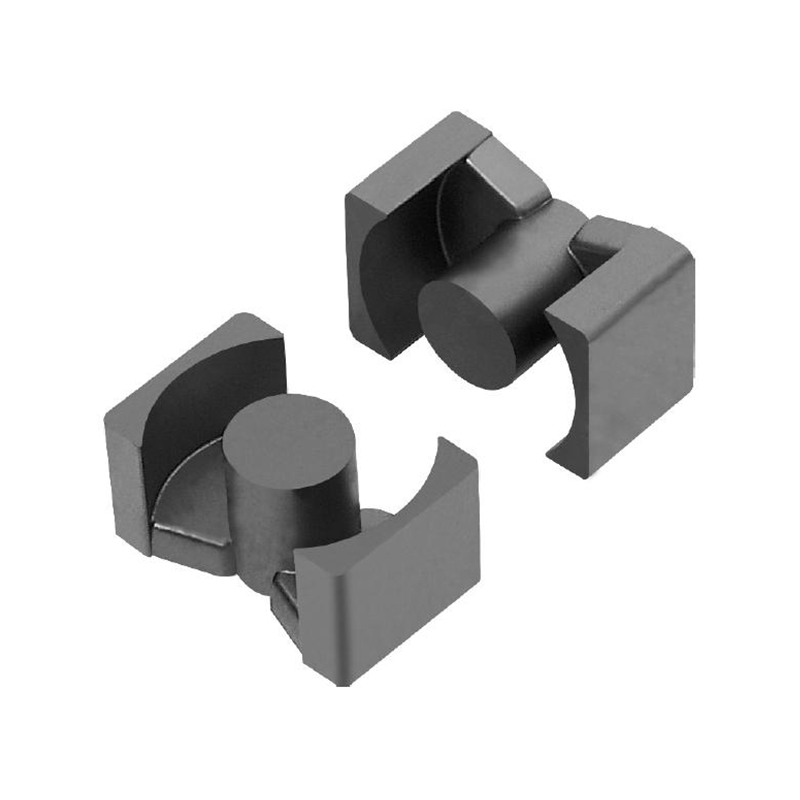
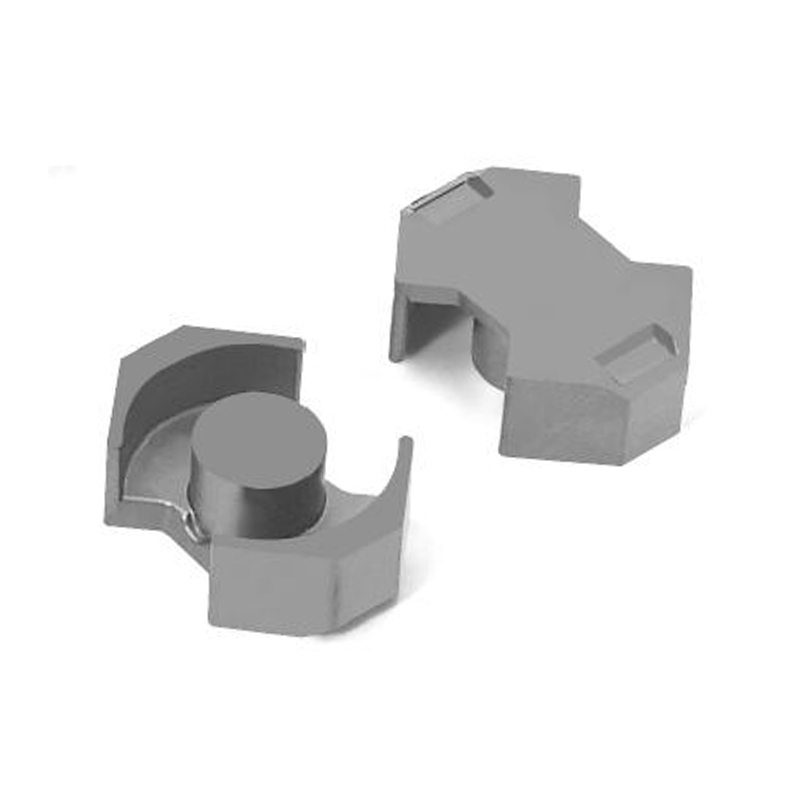
| PQ / RM Core | Switching power supplies | Bobbin with flange | Designed for automated winding |
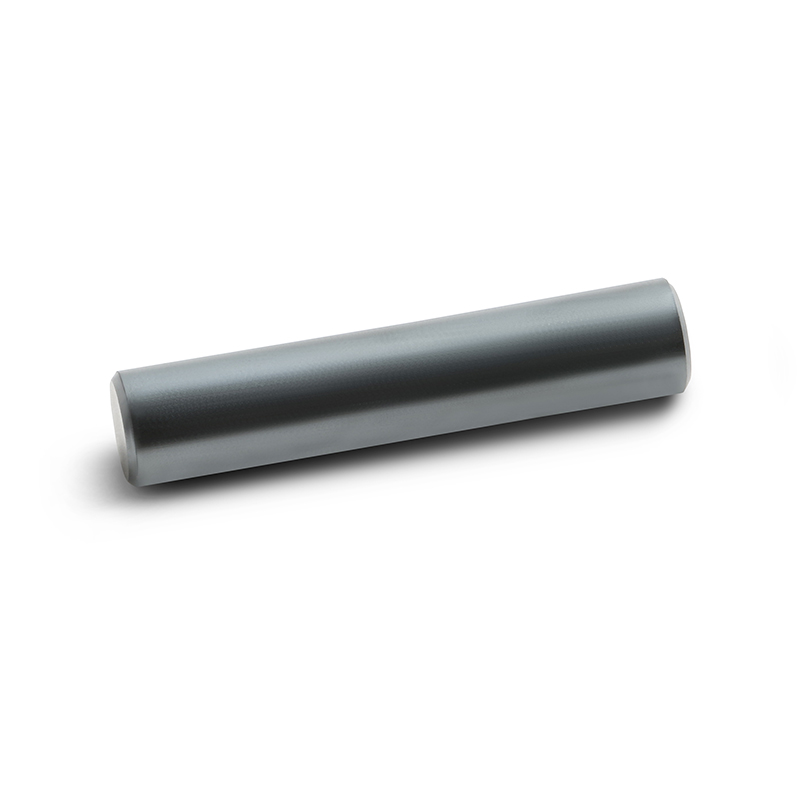
| Rod / Straight Bar | Antennas, RFID | Along the length of the rod | Open flux path; position-sensitive |
| U/I Core | High-current inductors | Around one leg | Gap control affects inductance significantly |
The shape directly determines your winding strategy. For example, on a toroid, every turn must pass physically through the center aperture, which limits the practical number of turns as wire builds up. On an E-core with a bobbin, you can wind multiple layers in a controlled, repeatable fashion.
Selecting the Right Wire for Ferrite Core Winding
Wire selection is not simply a matter of picking a gauge that fits. Three factors must be balanced: current-carrying capacity, operating frequency, and physical winding constraints.
Wire Gauge and Current Rating
Use the standard AWG or SWG current ratings as a baseline, but keep in mind that in high-frequency applications, the effective cross-sectional area of a conductor is reduced by the skin effect. At 100 kHz, the skin depth in copper is approximately 0.21 mm — meaning current concentrates in a thin outer layer. Using a single thick wire at this frequency wastes copper and increases AC resistance.
Litz Wire vs. Solid Wire
- Solid enameled wire (magnet wire): Suitable for low-frequency applications (below ~20 kHz) or where DC resistance is the primary concern. Simple to wind and cost-effective.
- Litz wire: Multiple individually insulated strands twisted together. Preferred for switching frequencies above 50 kHz. Reduces AC copper losses substantially — in some designs, Litz wire cuts winding losses by 40–60% compared to an equivalent solid conductor.
- Foil (copper strip) winding: Used for very high-current, low-turn applications such as output inductors in DC-DC converters. Excellent fill factor but complex to implement.
Insulation Class
Enameled wire is classified by temperature rating: Class B (130°C), Class F (155°C), and Class H (180°C) are the most common. For power electronics running in enclosed enclosures or automotive environments, Class F or Class H is strongly recommended. Failures from insulation breakdown due to thermal stress are one of the leading causes of transformer degradation in the field.
Calculating the Number of Turns
Getting the turn count right is the most critical calculation in ferrite core winding. Too few turns and the core saturates; too many and you introduce unnecessary resistance and leakage inductance.
For an Inductor
The basic relationship is:
L = (N² × μ₀ × μᵣ × Aₑ) / lₑ
Where L is inductance in henries, N is the number of turns, μ₀ is the permeability of free space (4π × 10⁻⁷ H/m), μᵣ is the relative permeability of the core material, Aₑ is the effective cross-sectional area, and lₑ is the effective magnetic path length. For practical design, most core manufacturers supply the A_L value (inductance per turn squared in nH/N²), which simplifies this to: N = √(L / AL). For example, if you need 100 µH and your core has an AL of 2,500 nH/N², you need N = √(100,000 / 2,500) = 6.3 turns — round up to 7.
For a Transformer
The primary turn count is derived from Faraday's law:
N_primary = (V × 10⁸) / (4 × f × B_max × Aₑ) (for a square wave)
Here V is the applied voltage, f is the switching frequency, and B_max is the maximum allowable flux density for the material (typically 200–350 mT for MnZn power ferrite at room temperature). Secondary turns are then scaled by the desired voltage ratio. Always verify that the operating flux density remains below the saturation point at maximum load and minimum supply voltage.
Step-by-Step: How to Wire a Ferrite Core
The following process applies broadly to toroid and bobbin-based cores. Adjust for your specific geometry as needed.
- Prepare the core surface. Inspect the ferrite for chips or cracks — even small surface defects can compromise insulation. For toroid cores, wrap the core in self-adhesive polyester tape or use a pre-made core wrap to prevent the wire insulation from chafing on sharp edges. Sharp edges on ferrite can penetrate enamel insulation under vibration.
- Secure and anchor the start of the wire. Leave a tail of 30–50 mm for termination. For toroid winding, use a winding needle or shuttle loaded with a pre-cut length of wire. Feed the wire through the center aperture and pull snug — but not so tight as to risk cracking the core.
- Wind turns evenly and consistently. On a toroid, distribute turns uniformly around the circumference. As a practical rule, turns should cover no more than 270° of the toroid's circumference — leaving a gap of at least 90° prevents excessive interwinding capacitance. On a bobbin, wind layer by layer, keeping turns tight and parallel in each layer before starting the next.
- Insulate between layers (for multi-layer windings). Apply a layer of Kapton tape or polyester film between each winding layer. This is non-negotiable for transformers with significant voltage between primary and secondary. For safety-certified equipment, the insulation between windings must meet the reinforced insulation requirements of the relevant standard (e.g., IEC 61558 or IEC 62368-1).
- Wind the secondary (if applicable). For a transformer, the secondary should be wound in the same direction as the primary unless a phase inversion is specifically required. Mark the start of each winding with a dot convention — this is essential for correctly connecting multiple secondaries or identifying polarity.
- Terminate and secure the winding. Strip 5–10 mm of enamel from the wire ends using a thermal stripping tool or fine abrasive. Tin the ends with solder. Secure the wire tails with additional tape before final assembly. For bobbin-based cores, solder wire ends to bobbin pins per the pin-out diagram.
- Assemble and secure the core halves (if applicable). For E/I or U/I cores, bring the two halves together carefully to avoid mechanical shock to the ferrite. Apply a small amount of epoxy or use a plastic clip to maintain consistent contact force across the mating surfaces. Uneven clamping pressure can shift the effective gap and alter the measured inductance by 5–15%.
- Test before potting or encapsulating. Measure inductance and DC resistance with an LCR meter. If the result deviates more than ±5% from your design target, identify the cause before proceeding to encapsulation — once potted, rework is effectively impossible.
Winding Techniques for Specific Performance Goals
Reducing Leakage Inductance in Transformers
Leakage inductance causes voltage spikes in switching circuits and reduces power transfer efficiency. The most effective technique is interleaved winding: instead of winding all primary turns first followed by all secondary turns, alternate half-primary / secondary / half-primary. This approach can reduce leakage inductance by 75% or more compared to a simple sandwich construction, which is why it is standard practice in high-performance SMPS designs.
Reducing Interwinding Capacitance for EMI Applications
In common-mode chokes and EMI filters, distributed capacitance between the winding and the core — or between winding layers — provides a path for high-frequency noise to bypass the inductance. Use a single-layer winding where possible, and ensure that the start and finish leads of the winding are positioned on opposite sides of the toroid rather than adjacent to each other. A Faraday shield (a single-turn copper foil with a gap, placed between primary and secondary and grounded) can reduce capacitive coupling by 10–20 dB in sensitive signal transformers.
Bifilar Winding for Coupled Inductors
A bifilar winding involves winding two wires simultaneously, side by side, for the full number of turns. This produces nearly perfect magnetic coupling between the two windings (coupling coefficient k > 0.99 is achievable), making it ideal for common-mode chokes where two equal but opposite currents should cancel in the core. Use wires of identical length and gauge. After winding, confirm that the polarity (start-to-start) is correct before connecting to the circuit.
Common Wiring Mistakes and How to Avoid Them
- Crossed or reversed turns: A single reversed turn effectively cancels two turns of inductance. Always maintain a consistent winding direction throughout each layer. Verify direction before starting each layer, especially when switching from primary to secondary windings.
- Insufficient spacing from sharp core edges: Ferrite ceramics have hard, brittle edges that can cut through enamel insulation over time, especially under thermal cycling. Always tape core edges or use a core with pre-applied edge rounding where vibration is expected.
- Over-filling the winding window: Exceeding the available winding window area causes mechanical stress on both the wire and the core during assembly. A fill factor of 0.4–0.5 is a practical maximum for hand-wound inductors; automated winding can push this slightly higher but at the cost of more complex processing.
- Skipping inter-layer insulation: In a transformer with a 48V primary and a 5V secondary, the voltage stress between layers can be tens of volts. Without inter-layer tape, insulation breakdown is a matter of time. This is especially relevant in equipment subject to certification requirements.
- Inconsistent winding tension: Loose turns allow wire movement under vibration, generating mechanical noise and potentially causing inter-turn shorts. Wind with steady, moderate tension throughout — consistent tension across all turns is more important than winding fast.
- Ignoring thermal derating: The saturation flux density of ferrite drops as temperature rises. MnZn ferrite that saturates at 480 mT at 25°C may saturate at below 200 mT at 100°C. Design with a thermal margin and verify performance at maximum operating temperature, not just at room temperature.
How Core Material Affects Wiring Design Decisions
The ferrite material grade you start with directly constrains how you wire the core. The two most commonly used soft ferrite families are MnZn (manganese-zinc) and NiZn (nickel-zinc), and their characteristics require different wiring strategies.
| Property | MnZn Ferrite | NiZn Ferrite | Winding Impact |
|---|---|---|---|
| Relative Permeability (µᵣ) | 1,000 – 15,000 | 10 – 1,500 | Higher µᵣ = fewer turns needed for same inductance |
| Useful Frequency Range | 1 kHz – 3 MHz | 1 MHz – 300 MHz | Higher frequency demands Litz wire or foil windings |
| Saturation Flux Density | 400 – 530 mT | 300 – 400 mT | Lower Bsat = more turns required to avoid saturation |
| Electrical Resistivity | ~0.1 – 10 Ω·m | ~10³ – 10⁵ Ω·m | NiZn allows bare wire without shorts to core; MnZn requires insulation |
This last point — resistivity — is practically important. MnZn ferrite is semiconducting, with a resistivity sometimes as low as 0.1 Ω·m. Winding bare wire directly onto an uninsulated MnZn core can create a short-circuit path. Always insulate the core surface and use enameled wire when working with MnZn materials. NiZn ferrite, being far more resistive, is more forgiving in this regard, but insulation is still best practice.
If you are sourcing ferrite cores for your design, our soft magnetic ferrite core product range includes both MnZn power ferrite and MnZn high-conductivity ferrite grades, manufactured with tightly controlled permeability and dimensional tolerances to ensure consistent winding results across production batches.
Testing Your Wired Ferrite Core
Once winding is complete, a series of measurements should be performed before the component is installed into a circuit.
Basic Electrical Tests
- Inductance (L): Measure at the design operating frequency using an LCR meter. Compare against the calculated target. A deviation exceeding ±10% warrants investigation.
- DC resistance (DCR): Verify against the theoretical resistance calculated from wire length and gauge. Higher-than-expected DCR suggests wire damage or a missed connection.
- Insulation resistance: For transformers, apply a test voltage between primary and secondary (typically 500–1000V DC for low-voltage equipment) and confirm that resistance exceeds 100 MΩ. This confirms that inter-winding insulation is intact.
- Turns ratio (for transformers): Apply a low-level AC signal (typically 1 V at 1 kHz) to the primary and measure the secondary open-circuit voltage. The ratio should match the designed turns ratio within ±1–2%.
Saturation Check
For power inductors, it is worth verifying that the core does not saturate at the maximum expected current. Apply an increasing DC bias current while monitoring inductance. The inductance should remain relatively stable up to the rated current and only begin to drop at higher levels. A 30% drop in inductance from its zero-current value is the commonly used saturation current definition in the industry. If the core saturates prematurely, either the number of turns must be increased, the core size must be changed, or a gapped core design should be considered.
Starting with a Quality Core Makes Every Step Easier
Even perfect winding technique cannot fully compensate for a core with inconsistent permeability, poor dimensional control, or surface defects that damage wire insulation. As a manufacturer of soft ferrite materials and finished cores, we work with customers to specify the right material grade and geometry from the beginning — which means that when the winding is done, the result matches the design model reliably.
For procurement teams and design engineers looking for a reliable core supply, we offer custom soft magnetic ferrite cores with material certifications and batch consistency to support both prototype and high-volume production. If your application also requires complete wound components, our ferrite core transformer product line covers a range of power and signal transformer configurations.
Getting the wiring right on a ferrite core is a combination of correct calculation, appropriate materials, disciplined technique, and verification testing. Each of these steps builds on the previous one — and the single most common source of field failures is skipping the verification step because time pressure pushes components straight from winding to assembly. Invest ten minutes in testing each wound component, and the cost of a field return will never have to be considered.
Previous Post
Soft Magnetic Ferrites: Properties, Types & Applications
Next Post
Ferrite Core: Types, Properties, and How to Select the Right One