
 English
 한국어
한국어 中文简体
中文简体Home / News / Industry News / High‑Performance Ferrite Core Guide: Selection, Applications, and Best Practices
High‑Performance Ferrite Core Guide: Selection, Applications, and Best Practices
Content
Deep Practical Guide to Ferrite Core Selection and Application
Ferrite core technology plays a crucial role in modern electronics, especially in high‑frequency transformers, inductors, EMI suppression, and power conversion systems. This article focuses on practical guidance for selecting, implementing, and optimizing ferrite cores for real‑world engineering scenarios. You’ll find actionable insights into ferrite core materials, ferrite core types, mounting best practices, and troubleshooting methods. Throughout this guide, we include high‑search‑volume keywords like “ferrite core selection,” “ferrite core applications,” “common mode choke cores,” and “high frequency ferrite cores” to help both search visibility and practical use.
Understanding Ferrite Core Materials
Ferrite cores are ceramic magnetic materials composed of iron oxide blended with additional elements such as manganese, zinc, or nickel. The combination determines the core’s permeability, saturation flux density, and frequency response. Engineers must understand material properties to match core behavior with circuit demands, especially for high frequency or high‑power applications.
Nickel‑Zinc (NiZn) Ferrite Cores
NiZn ferrite cores are widely used in high‑frequency applications due to their higher resistivity and lower core loss at frequencies above 1 MHz. Typical uses include RF transformers, common mode chokes, and EMI suppression in switching power supplies.
- Low loss at high frequency — suitable for broadband applications.
- Common mode choke cores often use NiZn ferrite because of excellent attenuation.
- Not ideal for very high power due to lower saturation flux density.
Manganese‑Zinc (MnZn) Ferrite Cores
MnZn ferrite cores provide higher permeability and better performance in low‑frequency power magnetics (tens of kHz up to a few MHz). They are commonly used in power transformers, inductors, and energy‑storage components in converters. Their higher saturation flux makes them suitable for power conversion tasks where energy density matters.
- High permeability — ideal for power transformer cores.
- Better performance in low‑to‑mid frequency ranges.
- Higher core loss at very high frequencies compared to NiZn.
Types of Ferrite Cores and Their Practical Uses
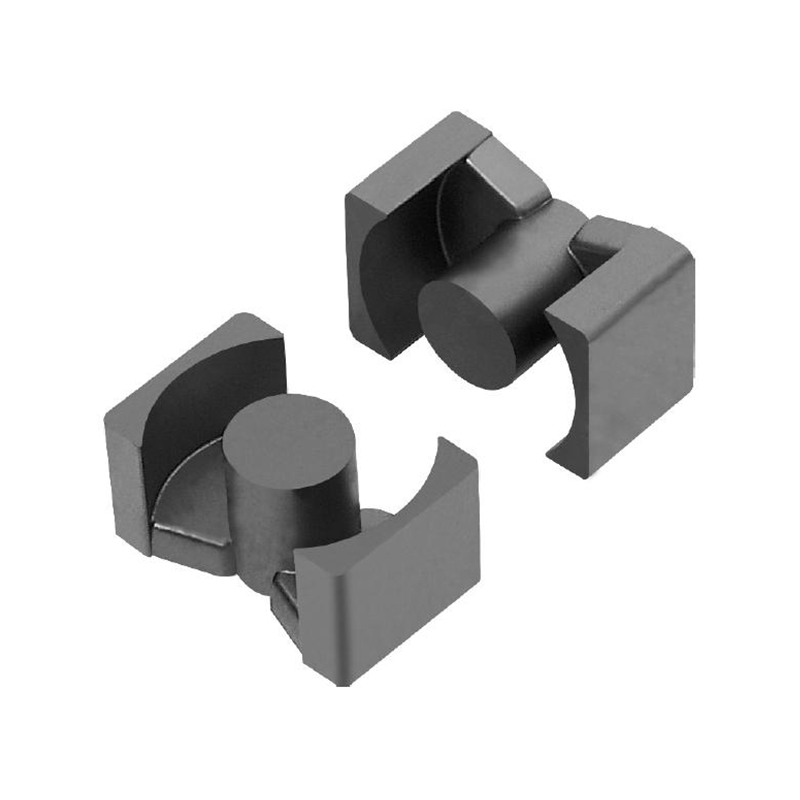
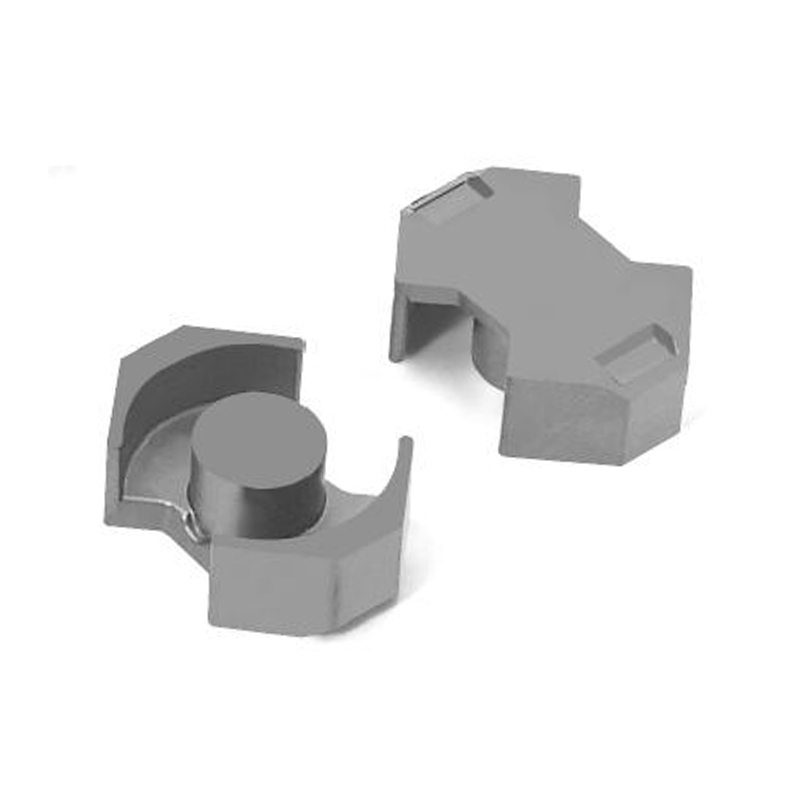
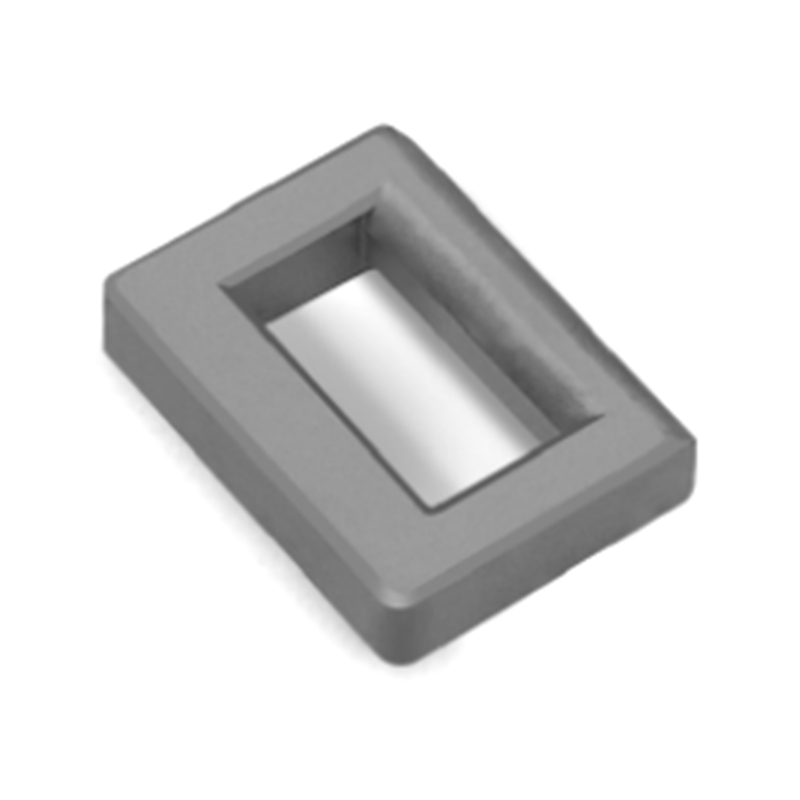
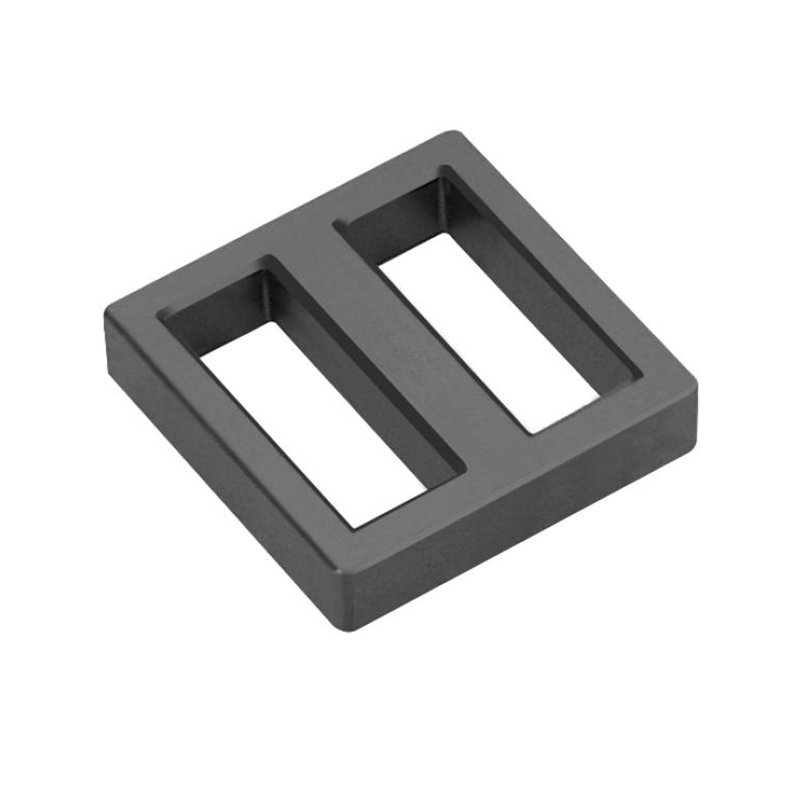
Ferrite core shapes influence magnetic field distribution, ease of winding, and assembly. Selecting the right type often reduces losses, improves EMI suppression, and simplifies manufacturing. Below are common shapes and where they’re most effective.
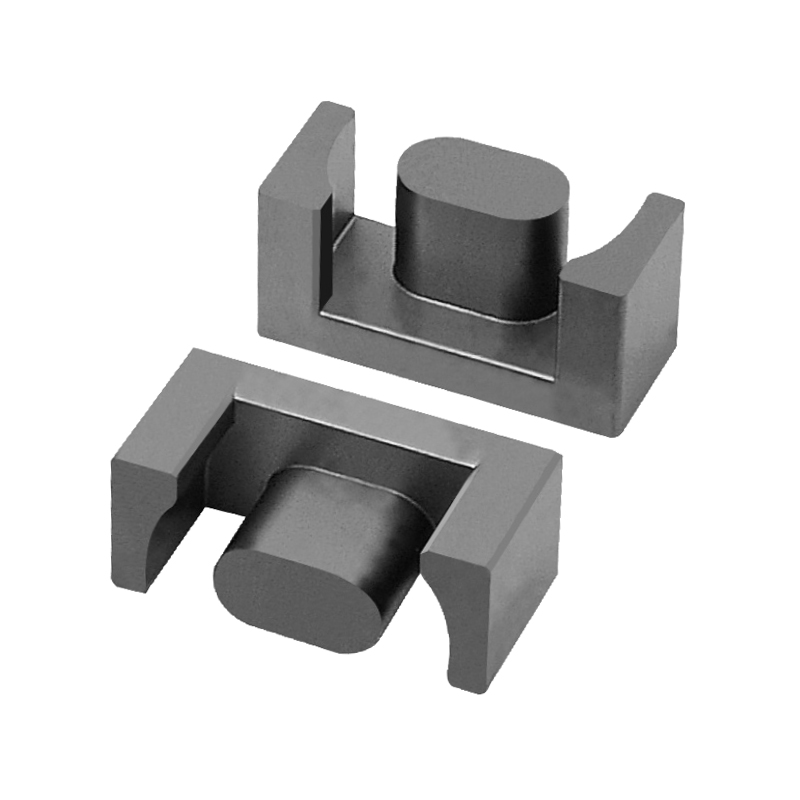
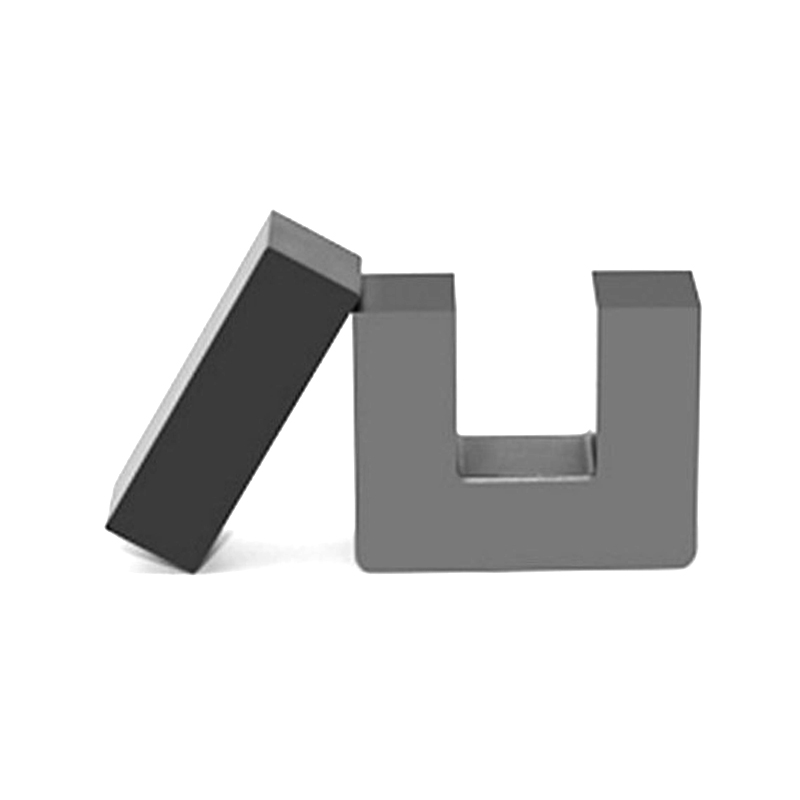
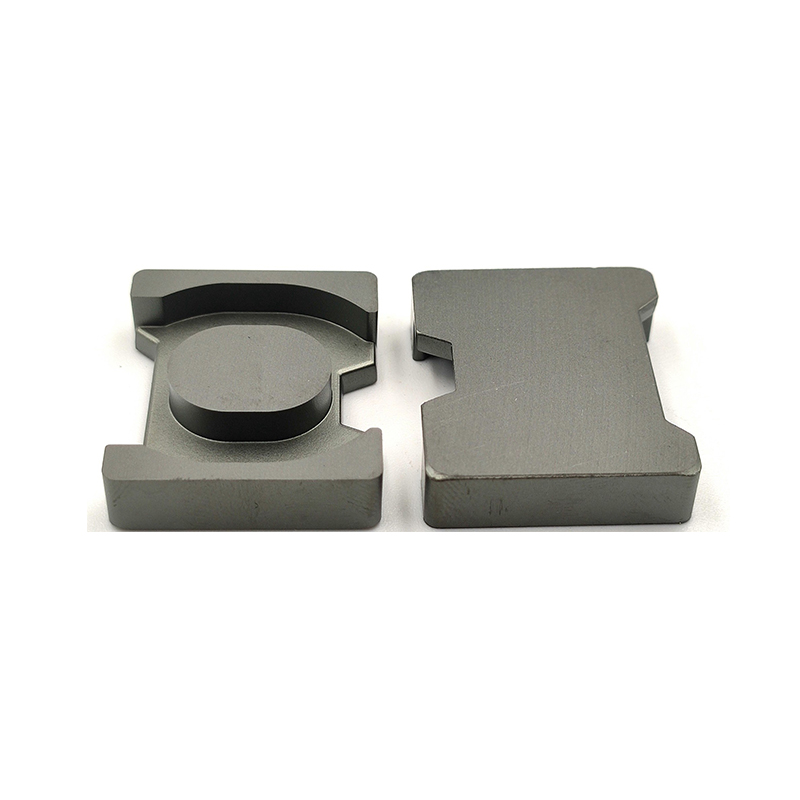
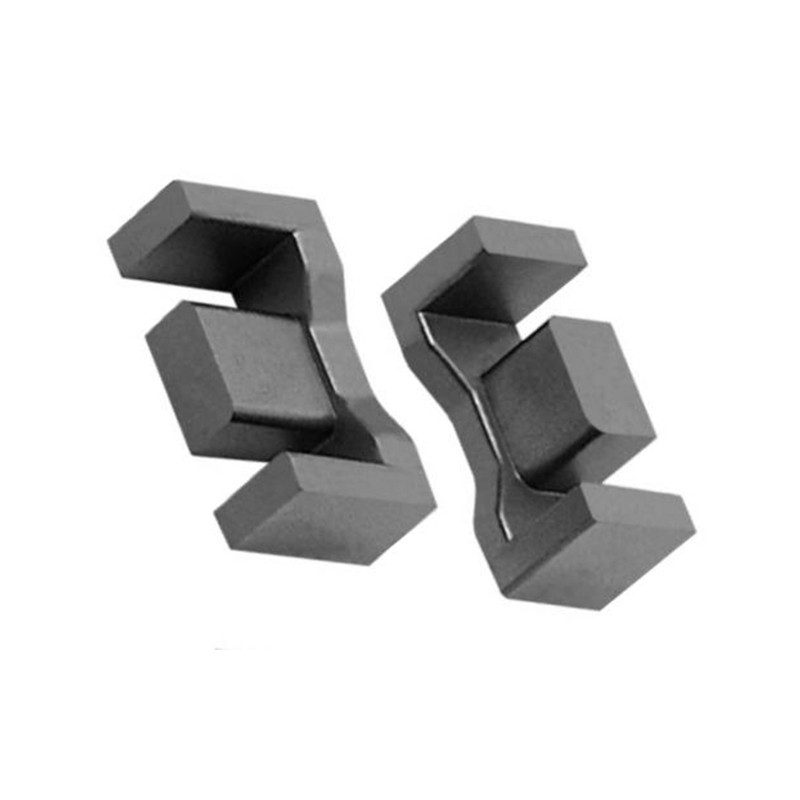
E‑Core and U‑Core
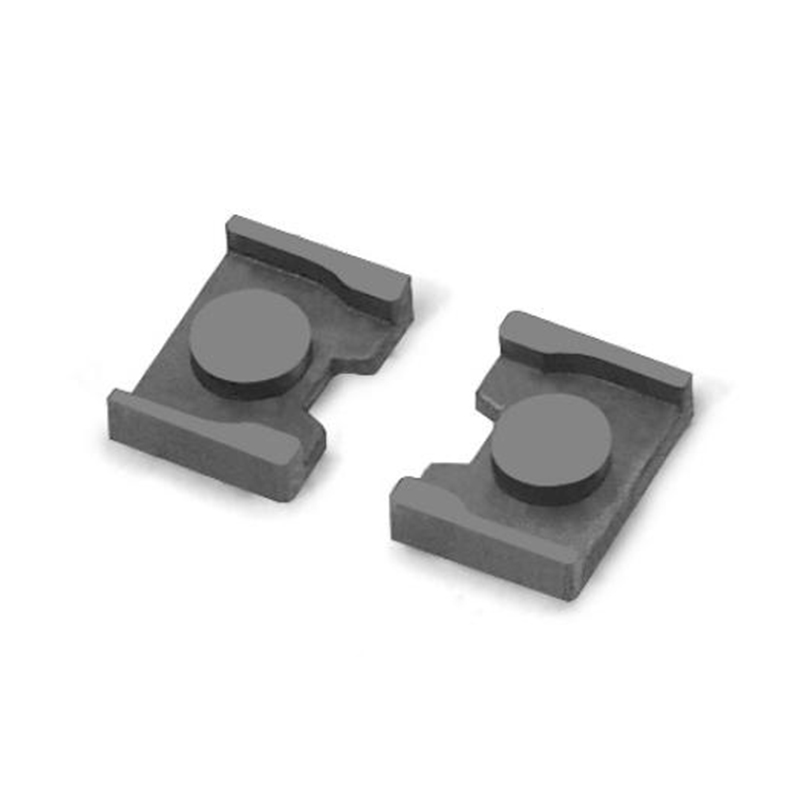
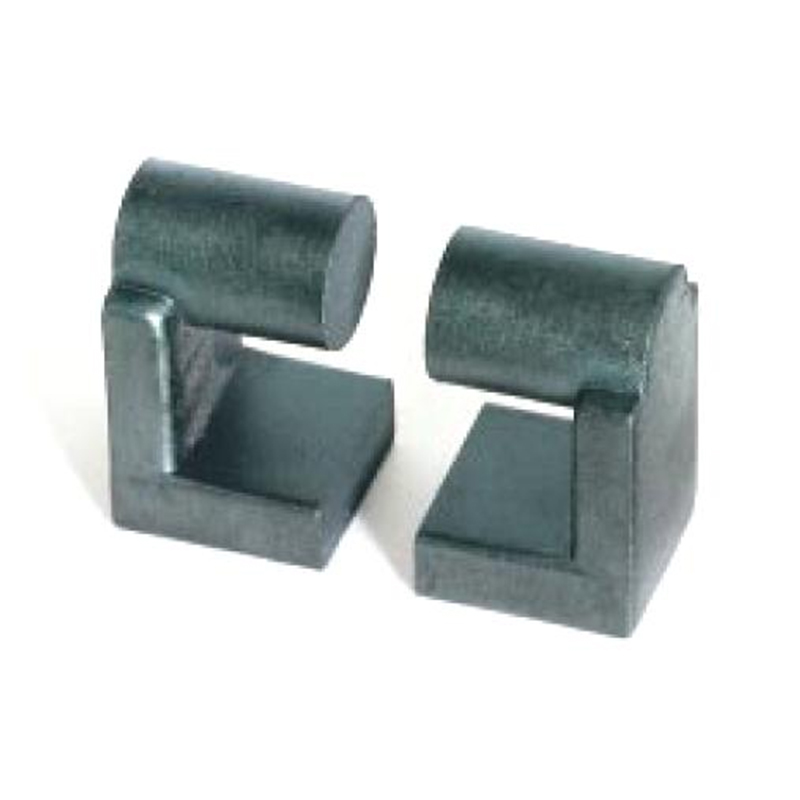
E‑cores and U‑cores are widely used in power electronics because of their ease of assembly and high efficiency in transformer and inductor applications. Their geometry supports low leakage inductance and good coupling.
- E‑cores — excellent for planar winding and automated assembly.
- U‑cores — ideal when paired with flat windings and tight coupling is needed.
- K‑cores enhance control over flux path in transformer designs.
Toroidal Ferrite Cores
Toroidal cores offer uniform flux distribution and very low stray magnetic fields, making them ideal for high‑efficiency power transformers, chokes, and noise suppression rings around cables. However, winding on toroids requires more manual effort or specialized winding machines.
- Minimized electromagnetic interference due to closed magnetic path.
- Used extensively in switch‑mode power supplies (SMPS) and audio transformers.
- Winding complexity can increase assembly cost.
Ferrite Core Selection Criteria for Engineers
Choosing the right ferrite core requires balancing electrical performance, thermal behavior, mechanical constraints, and cost. In practical design workflows, engineers often follow a systematic checklist to ensure reliability and compliance with specifications.
Key Electrical Parameters
| Parameter | What It Means | Why It Matters |
| Permeability (µ) | Magnetic response level | Affects inductance and energy storage |
| Core Loss (Pf) | Energy lost as heat | Determines efficiency and thermal design |
| Saturation Flux Density (Bs) | Maximum usable flux | Impacts maximum power handling |
| Frequency Range | Effective operating range | Ensures performance at target frequency |
These parameters often interact: high permeability may increase inductance but can increase core loss at high frequency. Simulation tools (e.g., LTspice, PLECS) and manufacturer datasheets help validate choices early in the design cycle.
Mechanical and Thermal Considerations
Beyond electrical properties, the physical size, mounting method, and ability to dissipate heat are crucial. Ferrite cores can heat significantly in power applications, so consider core shape, ventilation, and heat sinks where required. Also evaluate mechanical stresses during assembly and operation to avoid core cracking.
Installation Techniques and Common Pitfalls
Proper installation ensures performance and longevity. Here we cover practical tips for winding, securing, and testing ferrite cores.
Winding Best Practices
- Use the right gauge and insulation — thinner wire increases resistance and heat; thicker wire may not fit and can damage the core.
- Maintain tight, neat turns — reduce proximity and skin effects at high frequency.
- Avoid sharp bends — stress fractures in ferrite cores lead to performance degradation.
Testing After Assembly
After installation, measure inductance, DC resistance, and check for abnormal heating under load. Thermal imaging or infrared thermometers can detect hotspots early. Perform EMI compliance tests if used in noise‑sensitive applications to ensure sufficient suppression.
Troubleshooting Ferrite Core Issues
Even with good design and assembly, issues may arise. Common symptoms include overheating, unexpected inductance deviation, audible noise, and EMC failures. Use the following checklist to diagnose issues quickly.
- Overheating often indicates core loss — reassess frequency range and core material selection.
- Reduced inductance may result from loose windings or gaps in core seating.
- Audible noise (buzz) can stem from magnetostriction — use clamp or potting compounds to damp vibrations.
- EMC failures often need additional common mode ferrite rings or adjustment of layout to reduce loop areas.
By following this detailed, practical guidance on “ferrite core material selection,” “core types,” “montage best practices,” and “troubleshooting,” engineers can dramatically improve both performance and reliability of magnetic components in electronic systems.
Previous Post
Optimizing MnZn Ferrite Core Performance in Power Electronics
Next Post
Optimizing Electrical Applications with Mn-Zn High Conductivity Ferrite