
 English
 한국어
한국어 中文简体
中文简体MnZn Ferrite Core Selection Guide: Properties, Types & Applications
Content
- 1 What Makes Mn-Zn Ferrite Different from Other Core Materials
- 2 Two Core Material Families: Power vs. High-Conductivity
- 3 Key Parameters You Must Verify Before Ordering
- 4 Frequency, Temperature, and the Operating Window
- 5 Core Shape Selection: Matching Geometry to Application
- 6 Where MnZn Ferrite Cores Are Used Today
- 7 Practical Selection Checklist
Power electronics engineers face a recurring dilemma: how do you push switching frequencies higher while keeping core losses under control? The answer, for most designs operating below 5 MHz, is the MnZn ferrite core — a mature yet constantly evolving material that quietly underpins everything from EV onboard chargers to server power supplies.
What Makes Mn-Zn Ferrite Different from Other Core Materials
Manganese-zinc (Mn-Zn) ferrite is a soft magnetic ceramic composed primarily of iron oxide (Fe₂O₃), manganese oxide (MnO), and zinc oxide (ZnO), sintered at high temperature into dense polycrystalline cores. Unlike silicon steel laminations, which need physical slicing to limit eddy currents, MnZn ferrite achieves high resistivity through its bulk chemistry — eliminating lamination cost while enabling operation at frequencies from tens of kHz into the low-MHz range.
Two properties set it apart. First, initial permeability (μi) typically ranges from 1,000 to over 10,000, far exceeding NiZn ferrite at the same frequency band. Second, core losses (Pv) at 100 kHz and 200 mT can be held below 300 kW/m³ in modern power-grade materials — a level that directly translates into cooler transformers and smaller heat sinks.
Two Core Material Families: Power vs. High-Conductivity
Not all MnZn ferrites behave the same way in circuit. Choosing the wrong sub-type is one of the most common and costly mistakes in magnetic component design.
Mn-Zn Power Ferrite is engineered for maximum energy conversion efficiency. It delivers high saturation flux density (Bs), low hysteresis loss, and low iron loss — the three pillars that determine transformer and inductor performance in DC/DC converters, LLC resonant stages, and motor drive inductors. Core grades such as YR28, YR48, and YR98 offer progressively higher permeability (AL values typically ranging from 300 nH/N² for small EE6.5 cores up to 15,000 nH/N² for large EE62 types), allowing designers to tune winding turns precisely for each application. A full range of shapes — EE, EF, EB, EC, EI, PQ, ETD, and others — covers geometries from compact 6.5 mm switching cores to 80 mm power modules. You can review detailed dimensional data and AL specifications for Mn-Zn power ferrite cores across all standard shapes and grades.
Mn-Zn High-Conductivity Ferrite targets a different problem: broadband impedance across communications and signal paths. Higher resistivity variants in this family suppress common-mode noise effectively up to 70 MHz — well past the 5 MHz ceiling of typical power ferrite grades. This makes them the material of choice for common-mode chokes on data lines, LAN transformers, and USB/HDMI filter beads. For application details and available core shapes in this category, see Mn-Zn high-conductivity ferrite products and specifications.
Key Parameters You Must Verify Before Ordering
A core datasheet contains a handful of numbers that matter far more than the rest. Here is what each one means in practice:
| Parameter | Typical Range (Power Grade) | Design Impact |
|---|---|---|
| Initial Permeability (μi) | 1,000 – 10,000+ | Determines AL value; higher μi means fewer turns for the same inductance |
| Saturation Flux Density (Bs) | 450 – 530 mT (at 25°C) | Sets maximum flux swing before core saturates; drops ~10–20% at 100°C |
| Core Loss (Pv) | <300 kW/m³ at 100 kHz, 200 mT | Directly adds to thermal dissipation; dominates at high frequency and high flux |
| Curie Temperature (Tc) | 200 – 230°C | Permeability collapses above Tc; operating junction must stay well below this |
| Effective Area (Ae) | 4 mm² (EE6.5) – 783 mm² (EE80) | Scales volt-second capability; larger Ae allows higher power at the same Bpeak |
The AL value — the inductance per squared turn — is the parameter that bridges material properties to winding design. For example, an EE13/6 core in YR48 grade carries an AL of 1,050 nH/N², so achieving 100 µH requires approximately 10 turns. Selecting a core with half the AL doubles the turns count, which adds copper resistance and winding window consumption.
Frequency, Temperature, and the Operating Window
MnZn ferrite cores perform well from roughly 10 kHz to 3 MHz, with the loss minimum typically occurring between 80 kHz and 300 kHz depending on the material grade. Pushing beyond 3 MHz causes resistivity-related eddy current losses inside the grain boundaries to rise sharply — at that point, NiZn ferrite or air-core designs become more efficient.
Temperature is the other boundary. Saturation flux density (Bs) in MnZn ferrite falls as the core heats up. A material rated at 510 mT at 25°C may drop to 390 mT at 100°C — a 23% reduction. Designs that ignore this shift risk entering saturation under full load at elevated ambient temperature, causing a sudden spike in magnetizing current and potential converter failure. The safe rule of thumb is to design peak flux density at operating temperature, not room temperature. For guidance on how thermal cycling and operating conditions interact with the thermal stability of soft magnetic ferrites and how it can be maintained, application-specific testing remains essential.
Core Shape Selection: Matching Geometry to Application
Shape determines thermal management, winding accessibility, and assembly cost as much as it affects magnetics. A few practical guidelines:
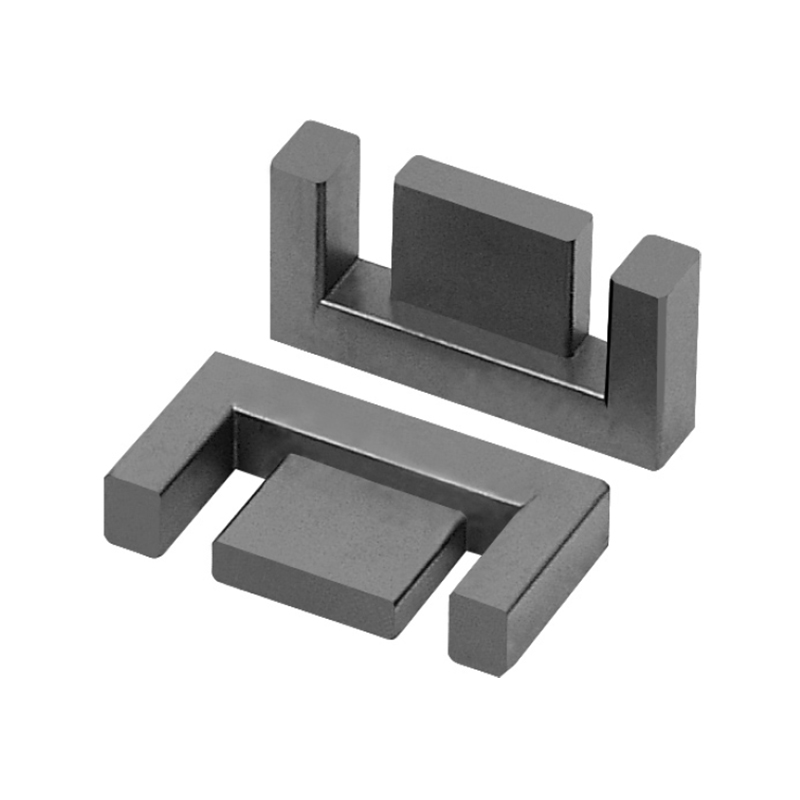
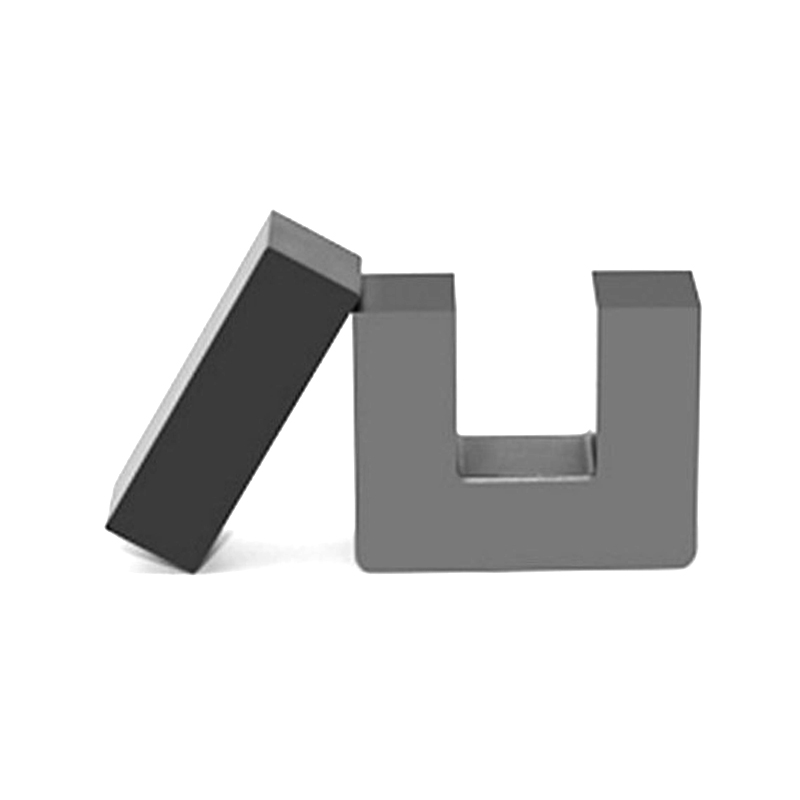
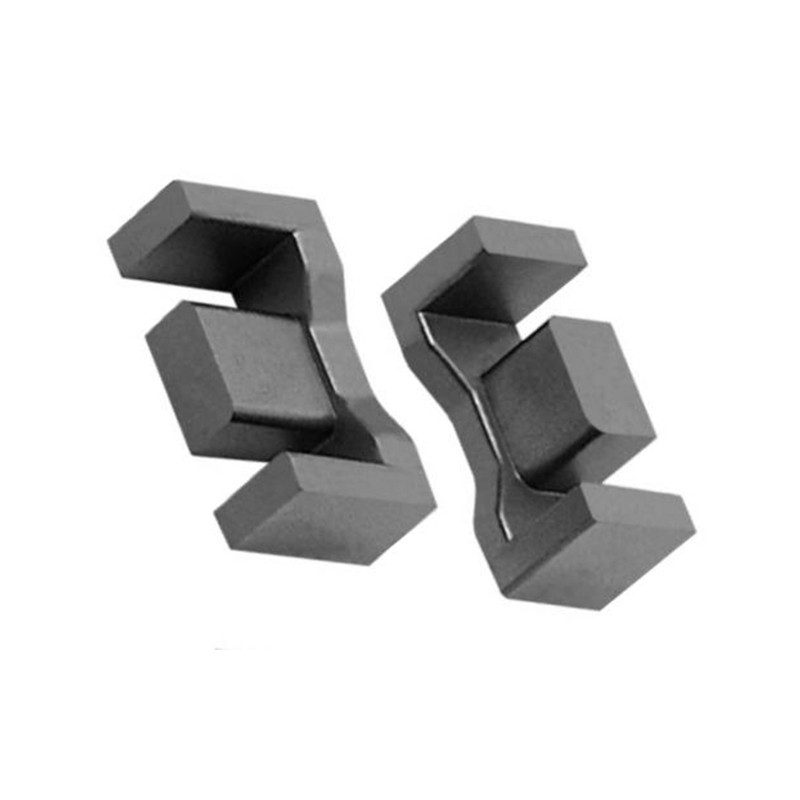
- EE / EF types dominate switched-mode power supplies because the split bobbin design allows separate primary and secondary winding sections, reducing leakage inductance and simplifying isolation creepage distances. The EE series spans 6.5 mm to 80 mm, covering output powers from under 1 W to several kilowatts.
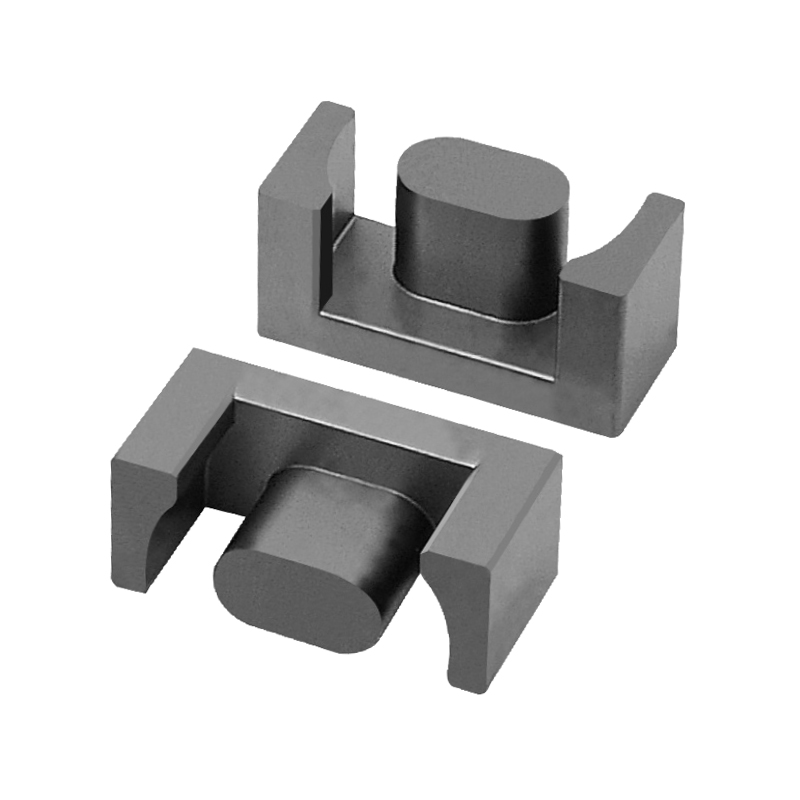
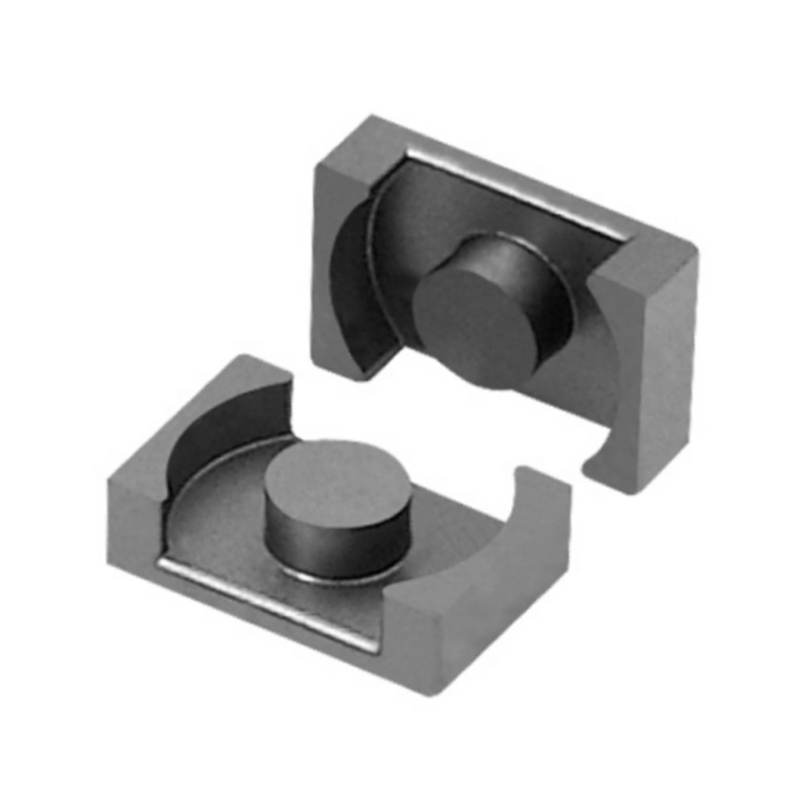
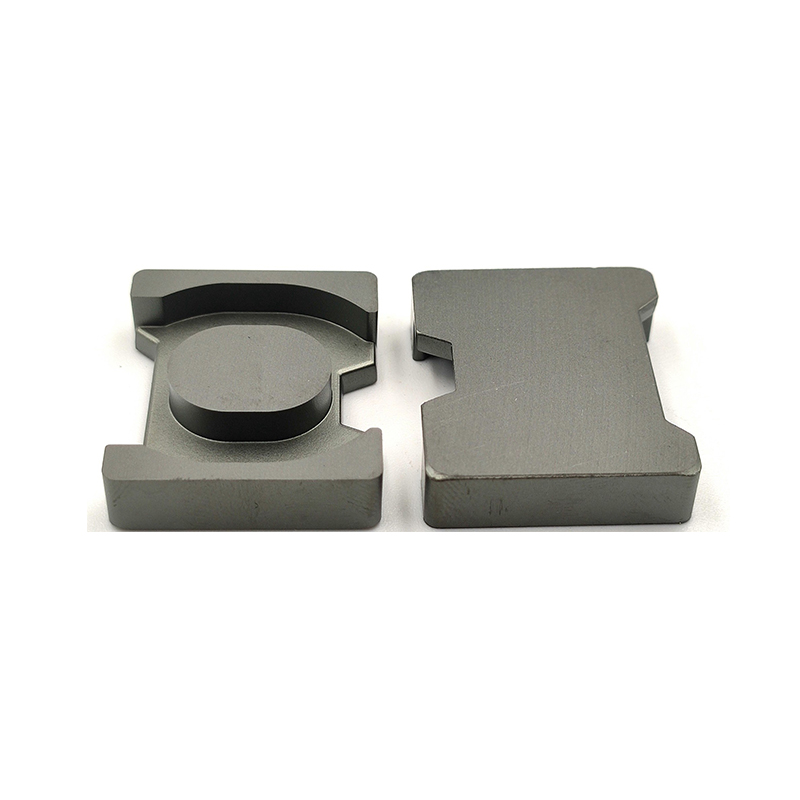
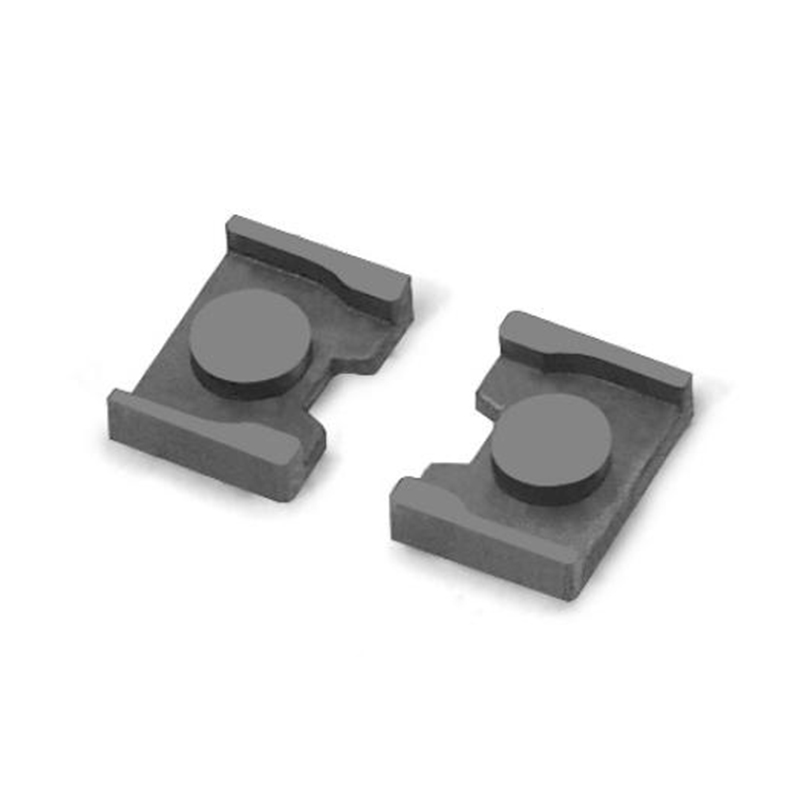
- EC / ER types (round center limb) reduce eddy current losses in the winding by eliminating sharp corners in the flux path, making them well-suited to high-current inductors where proximity effect matters.
- EB types feature a broad, flat winding window that accommodates planar windings — PCB-embedded copper tracks that minimize leakage and maximize power density in high-frequency designs above 200 kHz.
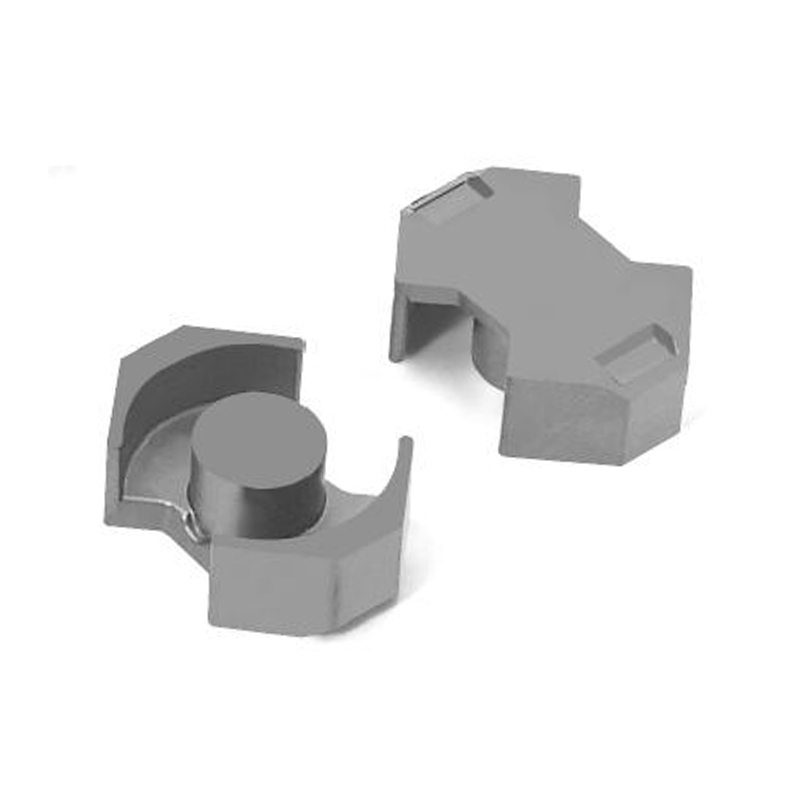
- PQ and ETD types offer compact cross-sections with a high Ve/Ae ratio, ideal for resonant converters where core volume efficiency is critical.
For a broader overview of how different ferrite core types, properties, and selection criteria apply to real designs, reviewing application notes alongside datasheets will save significant iteration time.
Where MnZn Ferrite Cores Are Used Today
The applications list keeps expanding as switching frequencies rise across industries. Current deployments include:
- Flyback, LLC, and phase-shifted full-bridge transformer cores in telecom rectifiers and server PSUs
- PFC boost inductors in EV onboard chargers (6.6 kW to 22 kW range)
- Common-mode chokes on AC mains wiring and DC bus rails
- Gate drive transformers for SiC and GaN switch arrays
- Solar inverter output filter inductors
- Wireless charging coil assemblies (Qi standard, up to 15 W)
The push toward SiC and GaN semiconductors — which operate at 400 kHz and above — is accelerating demand for lower-loss MnZn grades optimized specifically for this frequency range, where traditional PC40-class materials begin to show their limits.
Practical Selection Checklist
Before finalizing a core, confirm all of the following:
- Operating frequency falls within the material's low-loss window (typically 25 kHz – 1 MHz for power grades)
- Peak flux density at maximum load and maximum temperature stays below 80% of Bs at that temperature
- Core loss (Pv × Ve) plus winding copper loss stays within the thermal budget of the design
- Core shape and window area accommodate the required number of turns with adequate insulation margin
- AL tolerance (typically ±25%) has been factored into inductance calculations at both extremes
- For noise suppression applications, the impedance curve has been verified at the target EMI frequencies
Getting all six right on the first pass is uncommon. Simulation tools accelerate the iteration, but there is no substitute for measuring a prototype core under real operating waveforms before committing to a PCB layout.
Previous Post
Mn-Zn High Conductivity Ferrite: Key Properties, Applications & Selection Tips
Next Post
Soft Magnetic Ferrites: Material Types, Core Specs & Selection Guide