
 English
 한국어
한국어 中文简体
中文简体Home / News / Industry News / Mn-Zn High Conductivity Ferrite: Properties, Applications and Selection Guide
Mn-Zn High Conductivity Ferrite: Properties, Applications and Selection Guide
Content
- 1 What Mn-Zn High Conductivity Ferrite Means in a Supplier Catalog
- 2 Key Properties to Verify Before Ordering
- 3 High Conductivity Ferrite vs Power Ferrite: How the Families Divide the Work
- 4 Where Mn-Zn High Conductivity Ferrite Performs Best
- 5 From Powder to Core: Why Manufacturing Control Matters
- 6 A Practical Selection Checklist
A common-mode choke on the input of a 150 W industrial power supply has to hold useful impedance from the 150 kHz switching frequency up into the tens of megahertz, where radiated emissions are measured. Fit a power ferrite grade to that choke and its impedance typically rolls off too early; the filter loses its grip and the unit fails conducted emissions testing. Fit a well-engineered Mn-Zn high conductivity ferrite and the same choke holds impedance across the band without running hot. The conclusion is simple: this material family exists for impedance and signal-integrity work, while its sibling, power ferrite, exists for energy transfer. Knowing the difference before you order prevents redesign cycles and quiet procurement mistakes.
What Mn-Zn High Conductivity Ferrite Means in a Supplier Catalog
Mn-Zn ferrite is a sintered ceramic produced from iron oxide, manganese oxide and zinc oxide, whose atoms arrange into a spinel crystal structure. It is soft in the magnetic sense: it magnetizes and demagnetizes easily, with a narrow hysteresis loop and low coercivity, so little energy is wasted per cycle. Against the nickel-zinc family it offers far higher initial permeability and higher saturation flux density, which is why Mn-Zn dominates magnetic component design below a few megahertz.
The product-line name deserves one clarification. Conductivity is the inverse of resistivity, and Mn-Zn ferrite is in fact the more conductive of the two common ferrite families — that trait is what the category name flags. Grade designers manage it deliberately: small additions of calcium and silicon oxides build insulating layers around each grain, so eddy currents circulating inside the core stay small as frequency climbs. In catalogs, the resulting grades are tuned for signal-path work, meaning high initial permeability, predictable impedance over a wide band and low loss at small drive levels, while power grades are tuned for high-flux energy conversion. If your component's job is to present impedance rather than transfer power, this is the family to shortlist first.
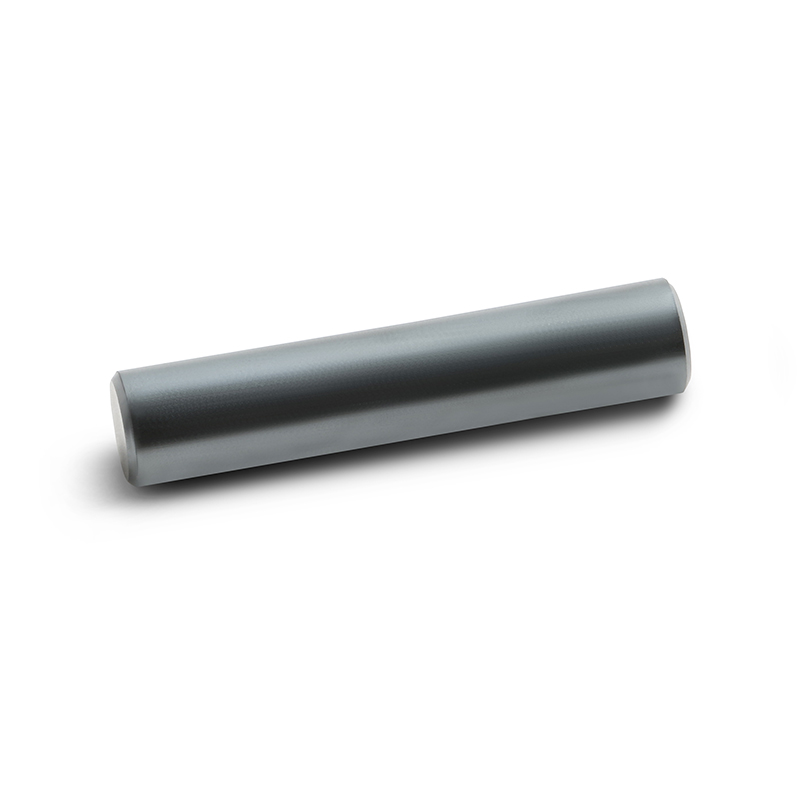
Mn-Zn high conductivity ferrite cores and materials from Yaorun Mn-Zn High Conductivity Ferrite MaterialsThese manganese-zinc ferrite grades are tuned for signal-path work, offering high initial permeability and low loss at small drive levels, making them a natural shortlist when a component must present impedance rather than transfer power.View Product →
Key Properties to Verify Before Ordering
Grade quality shows up in five datasheet lines, and checking them at your actual operating point, not at the headline value, is what separates a smooth build from a field failure.
Permeability and its stability
Initial permeability is the headline number, and high conductivity grades commonly sit in the several-thousand to above-10,000 range, against roughly 1,500 to 3,000 for power grades. Two secondary effects matter just as much: the temperature coefficient, because permeability drifts as the core heats and cools, and disaccommodation, a slow drop in permeability after the core is demagnetized. Filter designs that assume a fixed inductance need grades with a flat permeability-versus-temperature curve.
Saturation flux density and DC bias
Many Mn-Zn grades saturate near 400 to 500 mT at room temperature, and the value falls as temperature rises. Any DC current through the winding shifts the operating point toward saturation, which is why suppliers publish superposition, or DC-bias, curves. Gapping a core trades effective permeability for stability and bias tolerance — a decision worth making early rather than after a prototype saturates.
Losses at your real operating point
Total core loss combines hysteresis, eddy-current and residual components, and the eddy share grows sharply with frequency, which is exactly where grain-boundary resistivity earns its keep. The mechanisms are covered in more depth in this explainer on how MnZn ferrite core material reduces eddy current losses. Also read the test conditions behind any published loss figure: a value quoted at 25 °C tells you little about behavior at 100 °C, where well-designed power grades actually reach their loss minimum.
Curie temperature margin
Above the Curie temperature the material loses its ferrimagnetism entirely. Depending on zinc content, Mn-Zn grades fall roughly between 130 and 250 °C, and high-permeability signal grades usually sit at the lower end. Keep worst-case ambient plus self-heating well below the grade's Curie point, with margin for manufacturing spread.
High Conductivity Ferrite vs Power Ferrite: How the Families Divide the Work
The two lines share a crystal structure and often a factory, but they optimize different failures. High conductivity grades optimize impedance accuracy and stability in signal paths; power grades optimize heat generation under high flux drive. The table below summarizes the split as it appears in working designs.
| Attribute | Mn-Zn High Conductivity Ferrite | Mn-Zn Power Ferrite |
|---|---|---|
| Primary job | Impedance, filtering and signal integrity | Energy transfer and conversion |
| Permeability emphasis | High initial permeability with a flat temperature curve | Moderate permeability with strong DC-bias tolerance |
| Loss target | Low loss at small flux drive across a wide band | Minimum loss at high drive, e.g. 100 kHz, 200 mT, 100 °C |
| Typical components | Common-mode chokes, communications and pulse transformers, EMI filters | Main switching transformers, PFC chokes and power inductors |
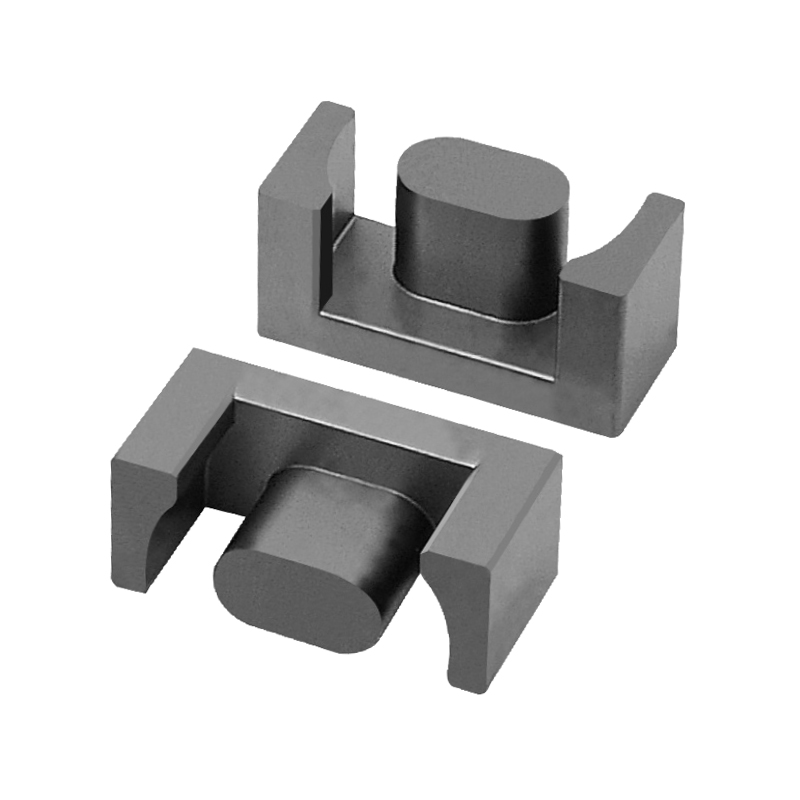
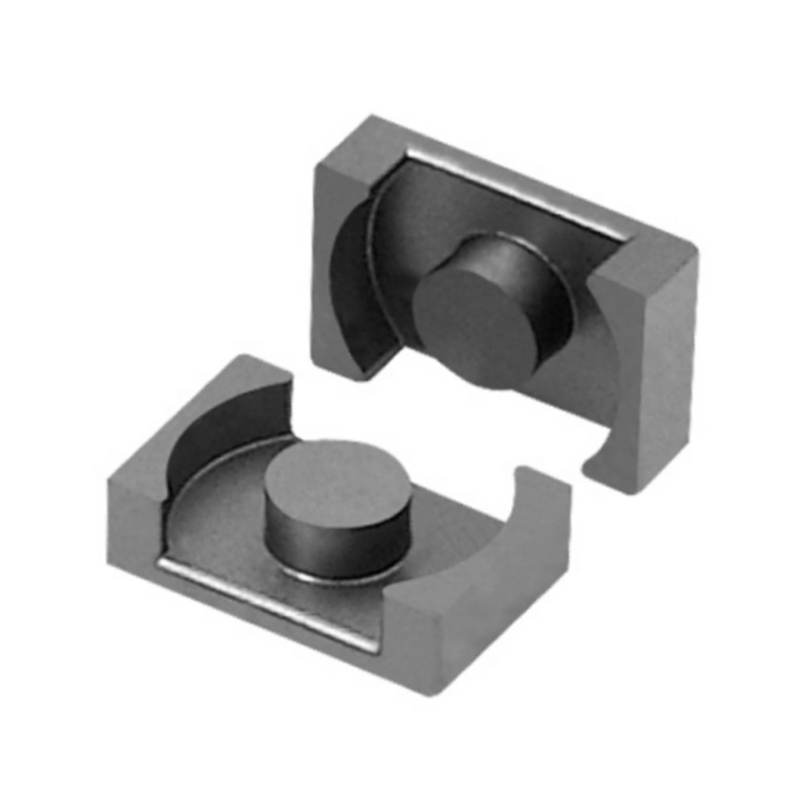
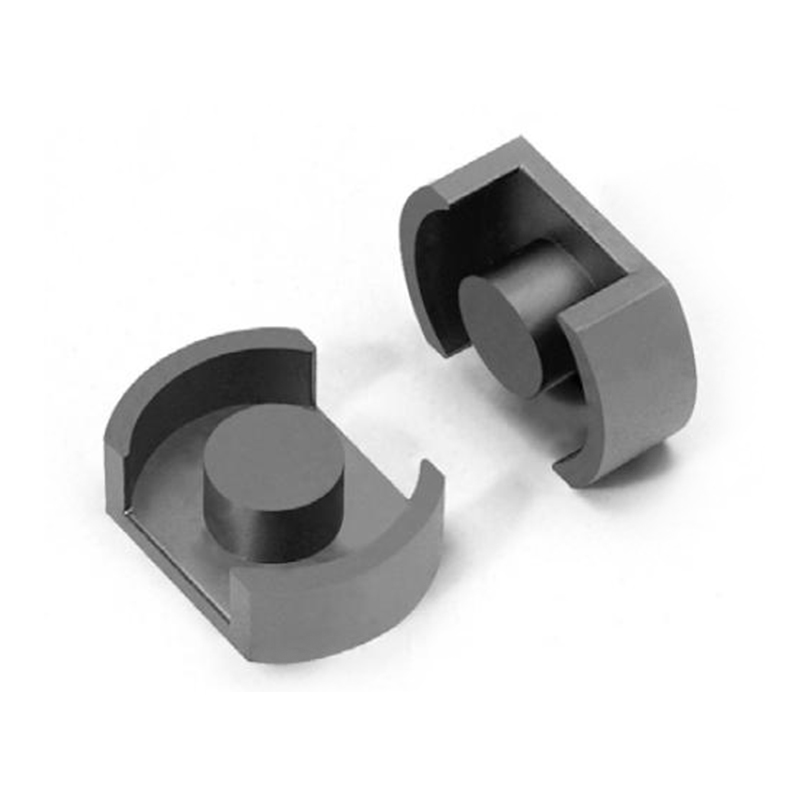
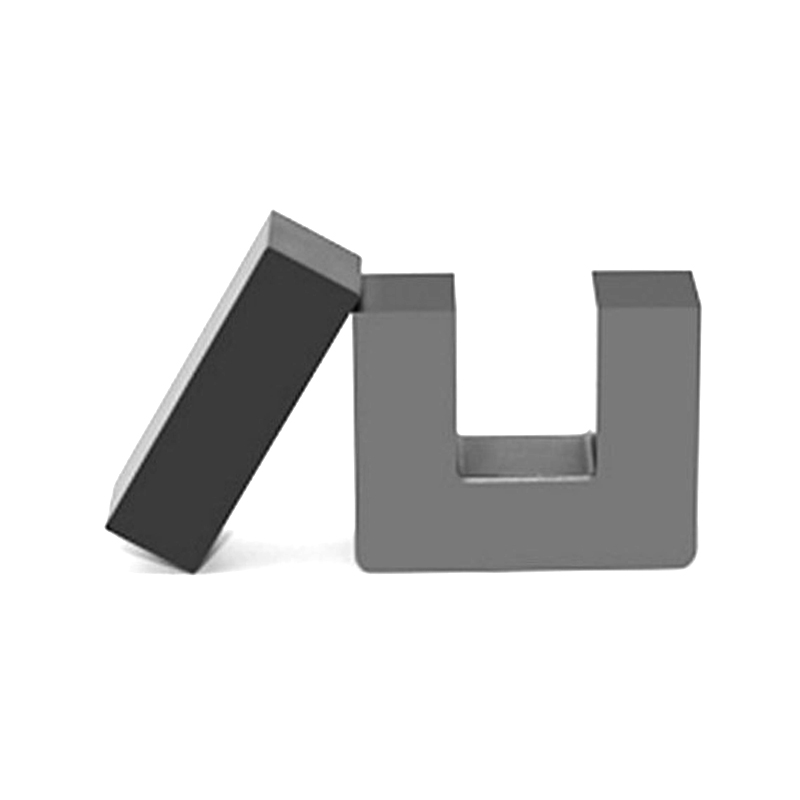
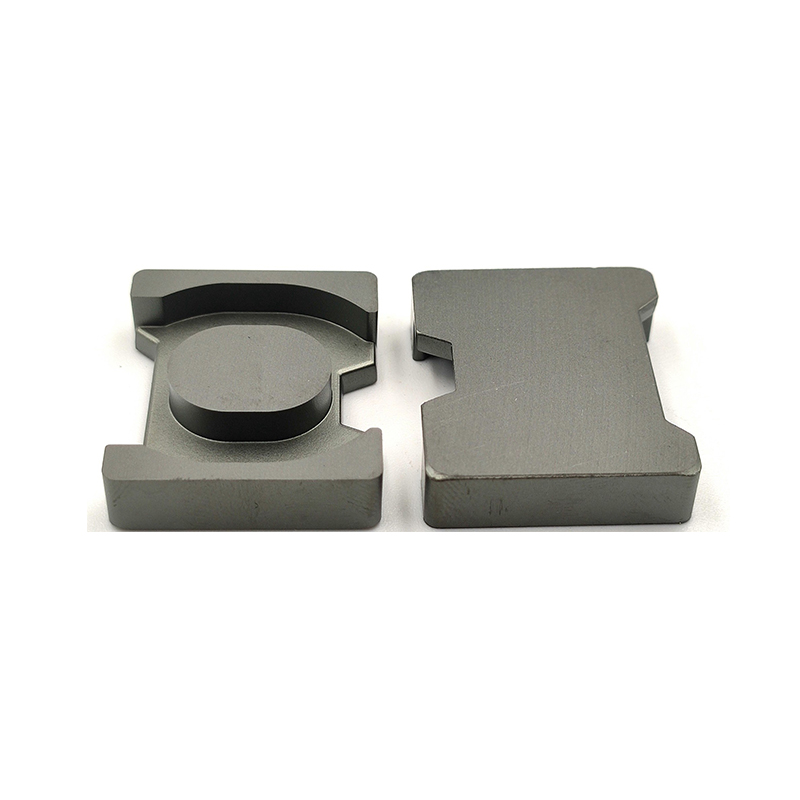
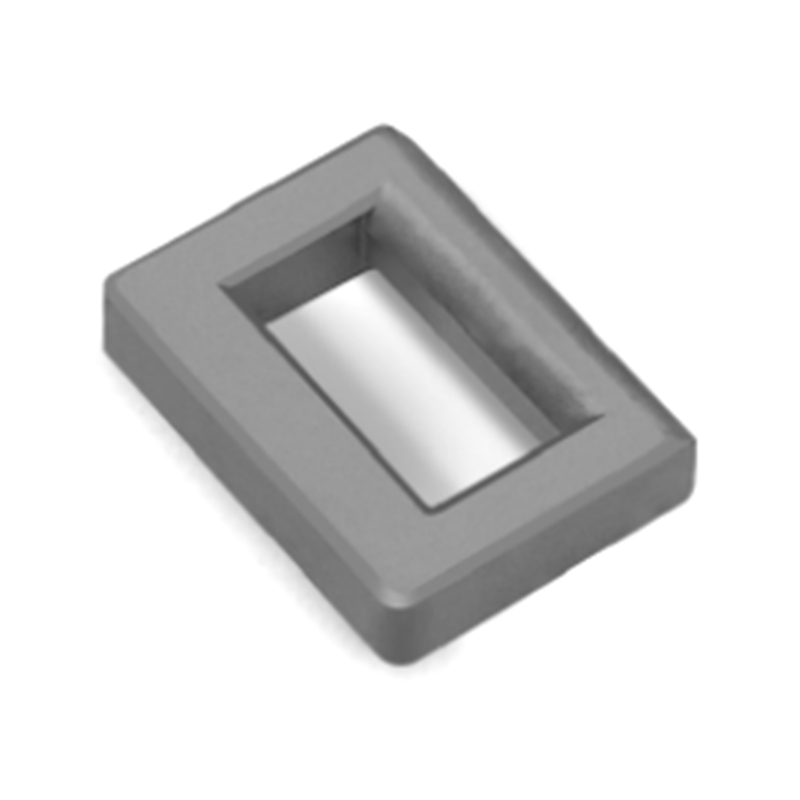
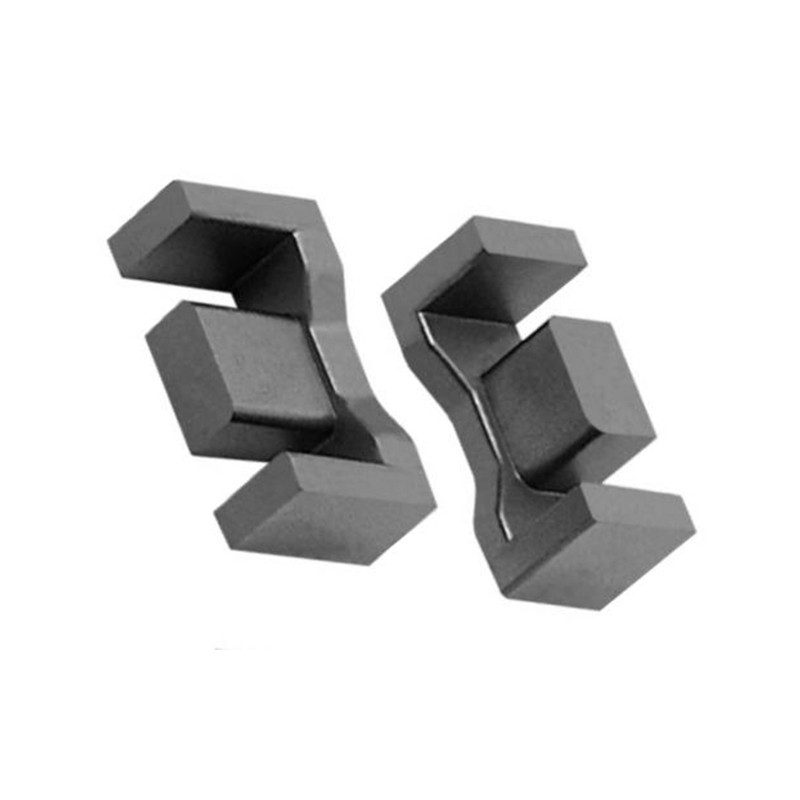
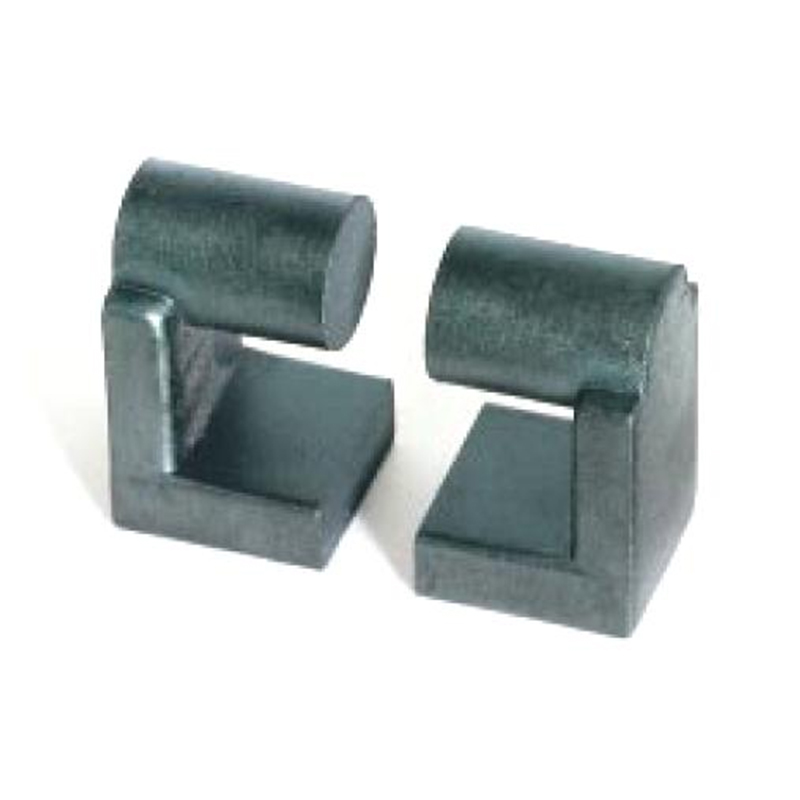
| Usual core shapes | Rings, RM, EP and drum cores | EE, PQ, ETD and RM cores |
Neither family is better in the abstract; they are calibrated for different failure modes. When a board carries both a main converter and a noisy communications interface, the two lines usually appear side by side on the same assembly.
Mn-Zn power ferrite for transformer and inductor conversion stagesMnZn Ferrite Cores for Power and Signal ApplicationsPositioned alongside power ferrite discussion, these MnZn cores complement high-conductivity signal grades, so an assembly carrying both a main converter and a noisy communications interface can draw both lines from one calibrated family.View Product →Where Mn-Zn High Conductivity Ferrite Performs Best
Applications cluster wherever a circuit needs impedance rather than watts:
- Common-mode chokes and mains filters: high permeability turns few windings into high impedance, and the material's inherent loss damps noise instead of reflecting it back onto the line.
- Communications and broadband transformers: impedance matching and isolation from kilohertz into the megahertz range, where a stable permeability-temperature curve keeps passbands where they were designed.
- Switching power supply auxiliaries: drive transformers, input filters and output chokes, while the main transformer uses a power grade.
- Pulse and instrument transformers: low coercivity preserves pulse fidelity and measurement accuracy.
- Automotive electronics: filter components inside control units, supplied under automotive-grade process control.
Two boundaries are worth respecting. Above a few megahertz, nickel-zinc ferrite's much higher resistivity usually takes over, and very high DC bias pushes the design toward gapped power cores. Within those boundaries, though, the high conductivity family is usually the most economical way to buy impedance.
From Powder to Core: Why Manufacturing Control Matters
Mn-Zn ferrite properties are made in the kiln, not just in the formula. Production starts from high-purity iron, manganese and zinc oxides, which are weighed, mixed and calcined, then milled to a fine, controlled particle size and spray-dried into press-ready granulate. Pressing forms the core, and sintering at roughly 1,300 to 1,400 °C under a tightly controlled oxygen atmosphere sets the final microstructure: grain size, porosity and the chemistry of the grain boundaries that give the material its resistivity.
For buyers, the practical question is who controls those steps. A supplier that produces its own ferrite powder, presses and sinters its own cores, and winds finished transformers can trace a property drift back to the batch that caused it, which shortens corrective action. That vertical chain, from powder through cores to components, is also what makes batch-to-batch consistency a contractible specification rather than a hope.
Soft magnetic ferrite powder as the foundation of consistent coresSoft Mn-Zn Magnetic Ferrite PowderAs the starting point of a vertical supply chain from powder through cores to finished components, this soft ferrite powder underpins the batch-to-batch consistency that buyers can specify contractually before volume production.View Product →A Practical Selection Checklist
Before releasing a grade into volume production, work through the following points in order:
- Define the operating frequency band and confirm impedance or permeability data across all of it, not at a single point.
- Check core loss at your real frequency, flux density and temperature, and read the test conditions printed on the datasheet.
- Verify initial permeability tolerance and its temperature coefficient over the full ambient range.
- Quantify DC bias in the winding and decide early between gapped and ungapped cores.
- Confirm Curie temperature margin against worst-case heating, including self-heating.
- Ask about disaccommodation if cores are demagnetized in service or see high process temperatures.
- Confirm the quality system behind the part: ISO 9001 as a baseline, automotive-grade process control where relevant, and safety certifications such as UL or CQC for finished transformers.
- Request batch-to-batch consistency data before qualifying the grade for production.
Mn-Zn high conductivity ferrite rewards buyers who match the material to the job: high permeability and controlled electrical behavior for signal and EMI work, with power ferrite handling the conversion stages. Suppliers such as Tongxiang Yaorun Electronics cover both families plus the powder and transformer layers beneath them, support the grades with a YR series spanning low-loss, wide-temperature, high-superposition and high-permeability variants, and take part in national ferrite standardization work. To discuss a specific grade or request samples matched to your operating point, contact the Yaorun engineering team with your frequency band, drive level and temperature range.
Previous Post
DC Bias Explained: How It Affects Inductors, Capacitors, and Ferrite Cores
Next Post
What Is Manganese-Zinc Ferrite? Properties, Applications, and Selection Guide