
 English
 한국어
한국어 中文简体
中文简体Home / News / Industry News / Manganese-Zinc Ferrite: Key Properties, Applications, and Selection Guide
Manganese-Zinc Ferrite: Key Properties, Applications, and Selection Guide
Content
A power electronics engineer designing a 100 kHz switch-mode power supply will almost always choose manganese-zinc ferrite for the transformer and output inductor cores. The material has been the industry standard for decades, and for good reason: it combines high permeability, high saturation flux density, and manageable core loss up to roughly 1 MHz. But MnZn ferrite is not a single material. It is a family of grades engineered for different combinations of permeability, loss, and temperature stability. Selecting the wrong grade can force you to overdesign the core, reduce efficiency, or rework the circuit entirely. This article explains what manganese-zinc ferrite is, what its key specifications mean, and how to choose the right grade for your design.
What is manganese-zinc ferrite?
Manganese-zinc ferrite is a soft magnetic ceramic produced by sintering iron oxide (Fe2O3), manganese oxide (MnO), and zinc oxide (ZnO) at high temperature. The process forms a cubic spinel crystal structure in which magnetic domains align and reverse easily in response to an alternating field. This "soft" magnetic behavior is what allows transformer and inductor cores to transfer energy efficiently without retaining significant magnetization when the field is removed.
The composition can be adjusted to deliver high initial permeability, low power loss, high saturation magnetization, or a balanced combination. A high-permeability grade may reach an initial permeability of 10,000 or more, making it useful for signal transformers and common-mode chokes. A power grade, by contrast, typically holds permeability between 1,500 and 3,000 but offers a flatter loss-versus-temperature curve, which is essential for switch-mode power supply transformers that operate over a wide ambient range.
Key properties you need to know
When evaluating manganese-zinc ferrite, five properties do most of the design work.
Initial permeability
Initial permeability (µi) describes how easily the material conducts magnetic flux at low field strength. Higher permeability gives more inductance per turn, which allows smaller windings and smaller cores. The trade-off is that very high permeability grades typically have lower saturation flux density and a tighter frequency ceiling. Power transformer designers usually accept permeability in the 1,500 to 3,000 range, while designers of wideband transformers and common-mode chokes may pick grades above 5,000.
Saturation flux density
Saturation flux density (Bs) is the maximum magnetic flux the material can carry before the core saturates and ceases to behave as an inductor. MnZn ferrites typically offer 400 to 530 mT at 25 °C, but Bs falls as temperature rises. At 100 °C, it can drop to roughly 60 to 70 percent of the room-temperature value. This is why power transformer designs are usually validated at maximum operating temperature rather than at ambient.
Core loss
Core loss is the power dissipated as heat in the material when it is cycled by an alternating field. It combines hysteresis loss, eddy current loss, and residual loss. Power-grade MnZn ferrites are formulated to minimize core loss in a selected frequency and flux window. For example, a typical power grade at 100 kHz and 100 mT might dissipate 150 to 300 kW/m³ at 100 °C. At 500 kHz, the same grade will dissipate substantially more, which is why the frequency rating must be checked before production.
Curie temperature
Curie temperature (Tc) is the point at which the material loses ferromagnetic behavior and becomes paramagnetic. Above Tc, an inductor or transformer core stops working. Power-grade MnZn ferrites typically have Tc between 200 and 280 °C. High-permeability grades may sit closer to 120 to 150 °C, which must be considered when the component operates near other heat sources.
Resistivity
Manganese-zinc ferrite has a resistivity of about 0.1 to 10 ohm-m. That is low compared to NiZn ferrite, but many orders of magnitude higher than metallic magnetic materials. Eddy currents are therefore not eliminated, but they are limited enough that MnZn remains practical at frequencies from tens of kilohertz to about 1.5 MHz, depending on the grade.
MnZn versus NiZn: where the line is drawn
Manganese-zinc and nickel-zinc ferrites are the two most common soft ferrite families, and the engineering choice between them is mostly a frequency decision. MnZn offers higher permeability, higher saturation flux density, and lower core loss below roughly 1 MHz. NiZn offers much higher resistivity, often 10³ to 10⁶ ohm-m, which makes it the better option above several megahertz, where eddy current losses in MnZn would become prohibitive.
In practice, most power conversion from 10 kHz to about 1 MHz uses MnZn ferrite. EMI suppression components and inductors operating above 10 MHz tend to use NiZn. If a design sits near the boundary, comparing measured loss data at the exact operating frequency is the only reliable way to decide.
Why core loss matters in real designs
Core loss is not just a datasheet value. It drives the temperature rise of the magnetic component, which affects efficiency, nearby component life, and insulation reliability. In a 100 W power supply, a transformer with excessive core loss can run 40 to 60 °C above ambient, accelerating the aging of adjacent electrolytic capacitors and pulling overall efficiency below regulatory requirements. This is why engineers select a power-grade MnZn ferrite with a loss minimum at the expected core operating temperature, often 80 to 100 °C, rather than at 25 °C.
| Frequency | Flux Density (mT) | Core Loss (kW/m³) |
|---|---|---|
| 25 kHz | 200 | ~80 |
| 100 kHz | 100 | ~200 |
| 100 kHz | 200 | ~450 |
| 300 kHz | 100 | ~350 |
Main applications of manganese-zinc ferrite
MnZn ferrite appears in most power electronics equipment and in many analog signal paths. The major application groups include:
- Switch-mode power supply transformers and power inductors, where low core loss at 50 to 500 kHz drives efficiency.
- Common-mode chokes for electromagnetic interference (EMI) filtering, where high permeability provides strong impedance against conducted noise.
- Wideband and pulse transformers, where high permeability and low leakage inductance are required.
- Automotive electronics, including onboard chargers, DC-DC converters, and battery management isolation transformers.
- Renewable energy inverters and microinverters, where high saturation flux density and stable loss at elevated temperatures are critical.
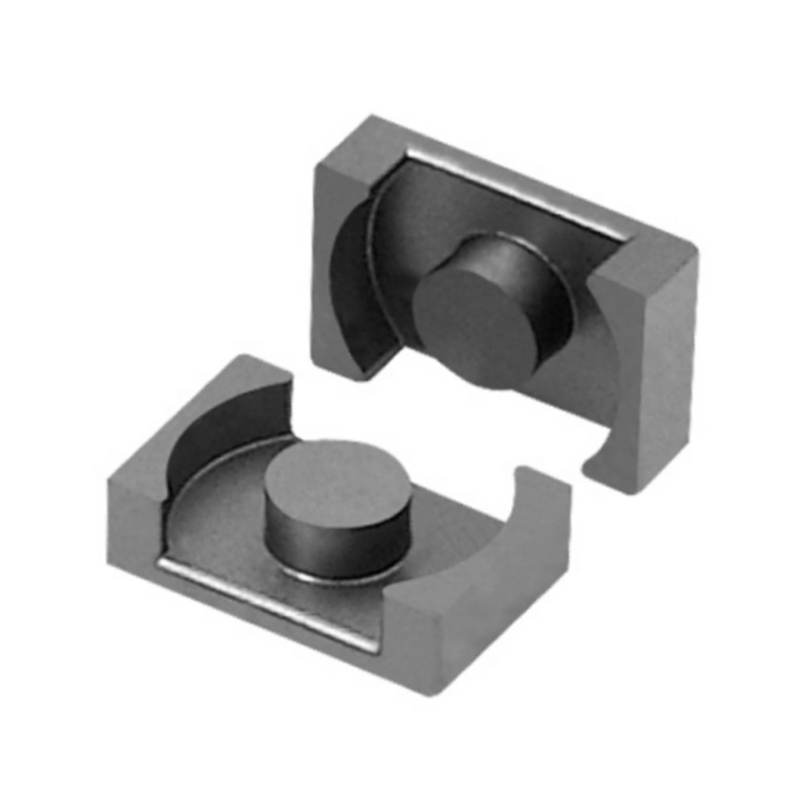
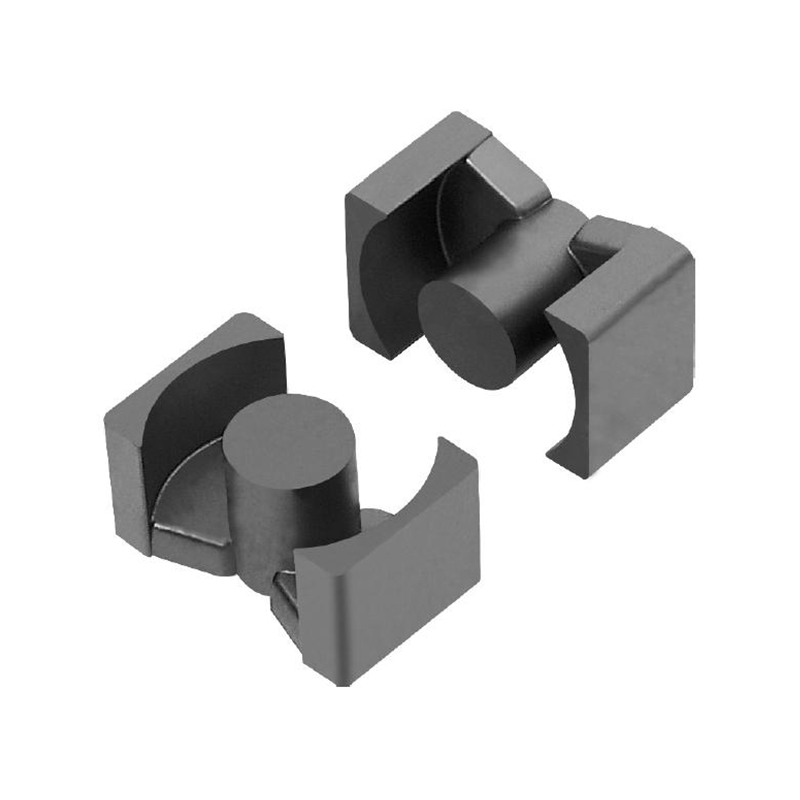
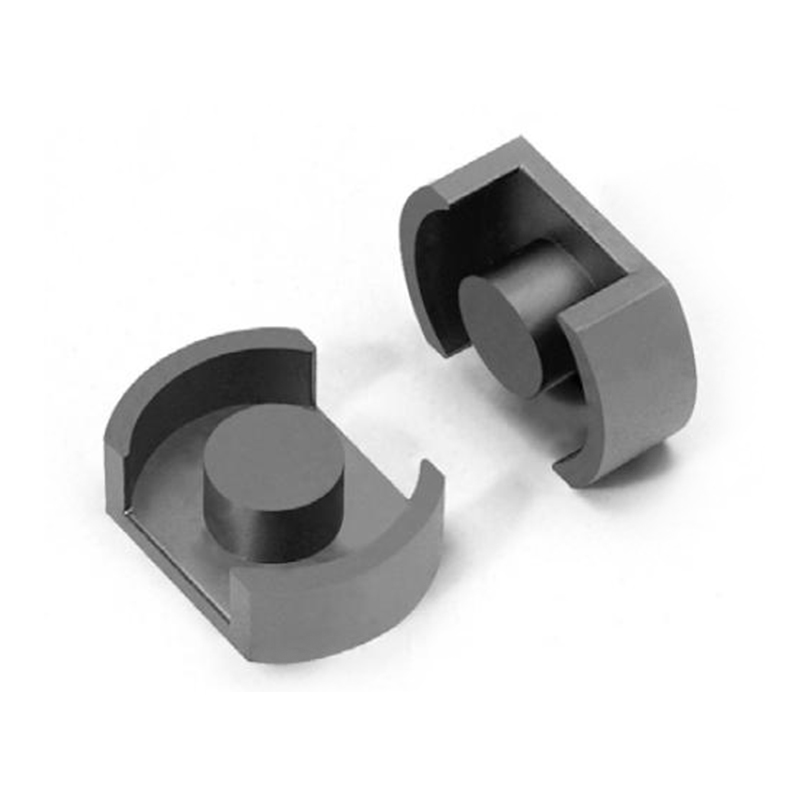
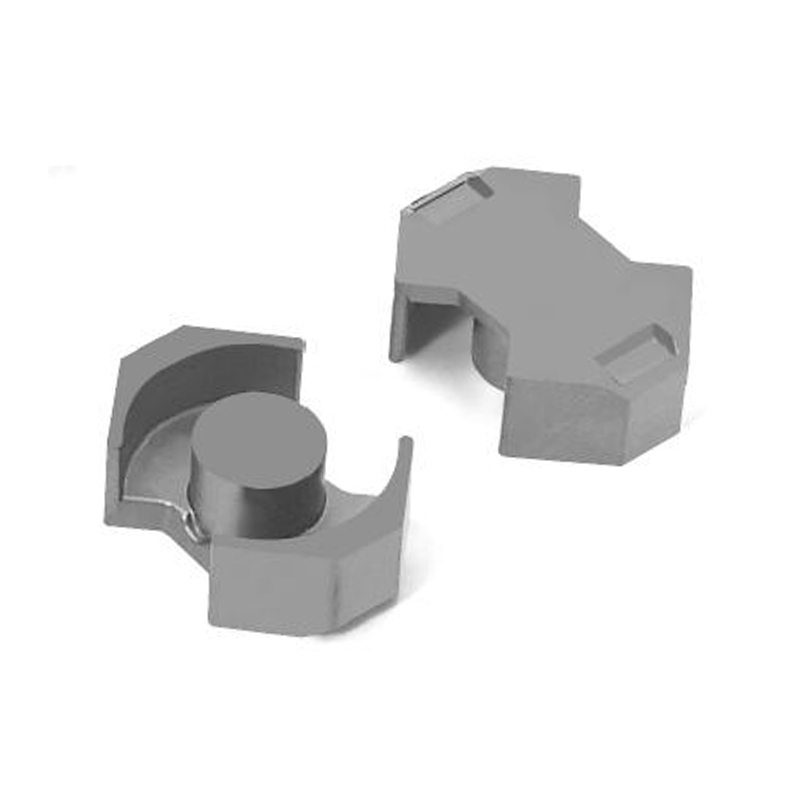
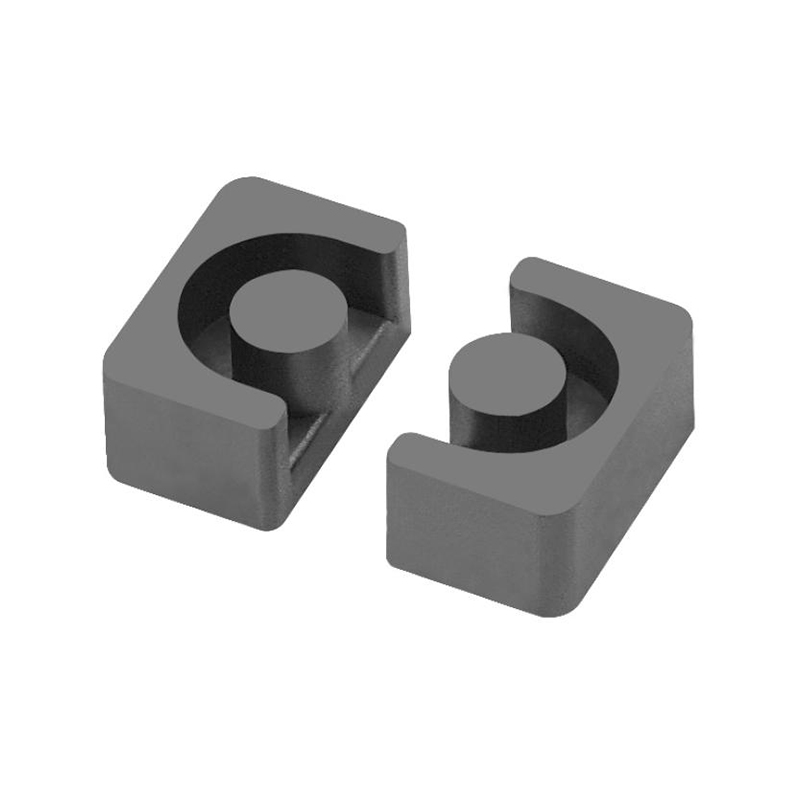
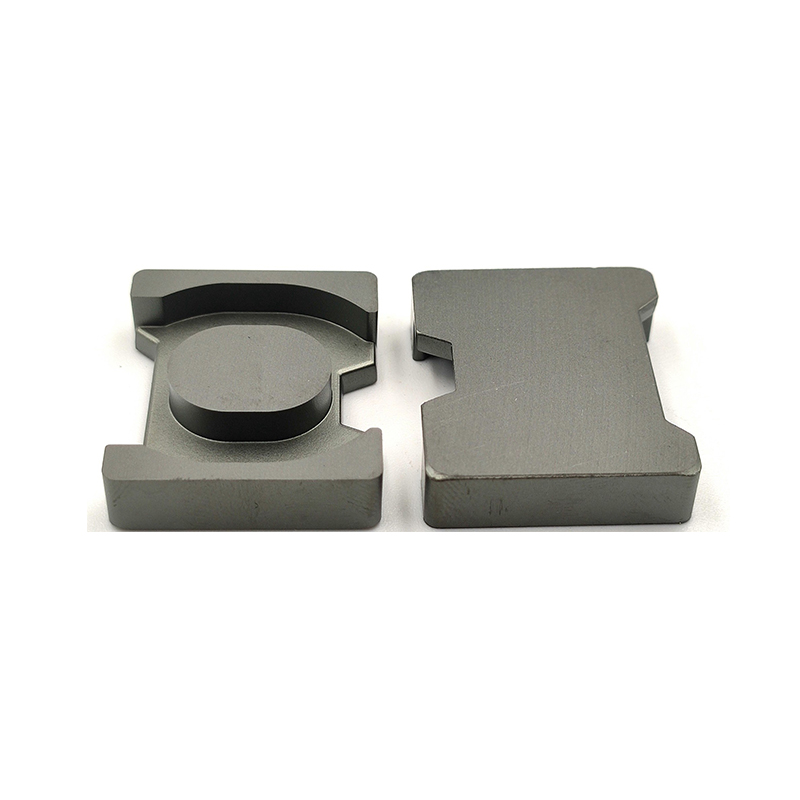
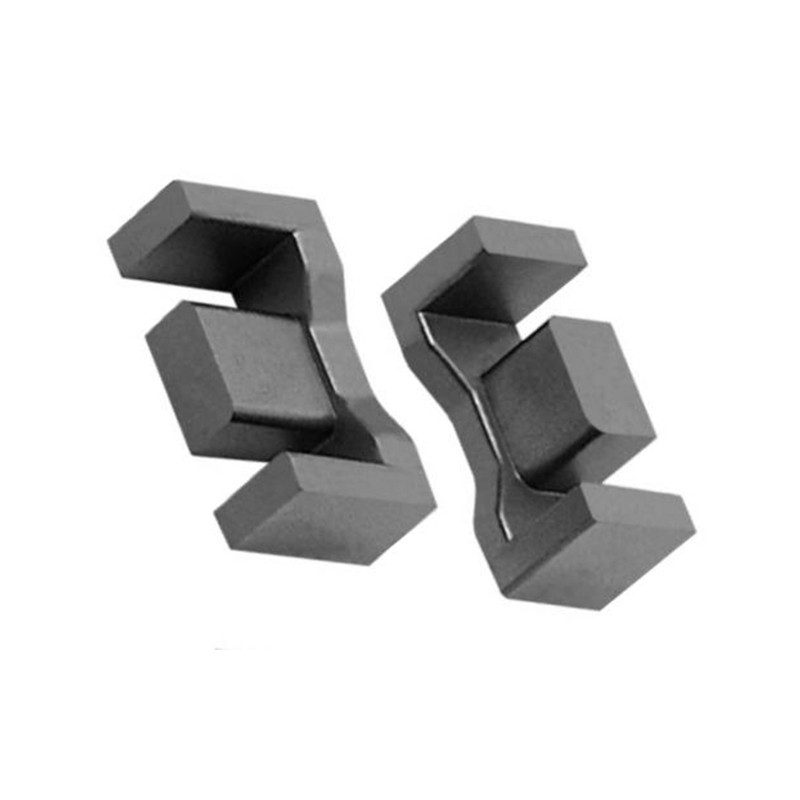
Understanding this application landscape helps in choosing between the two broad MnZn families. For power conversion, the priority is low loss and high saturation; for EMI and signal applications, the priority is permeability and low eddy current contribution. Many manufacturers classify products accordingly. For example, a Mn-Zn power ferrite grade is formulated for transformer and inductor cores in power electronics, while a Mn-Zn high conductivity ferrite grade targets EMI suppression and high-frequency filter applications where eddy currents must be kept low.
 Mn-Zn High Conductivity Ferrite Manufacturers, SuppliersAs China OEM/ODM Mn-Zn high conductivity ferrite manufacturers and suppliers, Tongxiang Yaorun Electronics Co., Ltd. manufacturing of who...View Product →MnZn Ferrite Core Manufacturers, Mn-Zn Ferrite SuppliersTongxiang Yaorun Electronics Co., Ltd. is China Mn-Zn ferrite suppliers and OEM/ODM MnZn ferrite core manufacturers, our factory offer wh...View Product →
Selection criteria for procurement and design
Buying MnZn ferrite cores or powder is not simply a matter of matching one datasheet number. The following criteria determine whether a component will work in production and in the field.
Match the loss curve to the operating temperature
Power-grade MnZn ferrites are designed so that core loss reaches a minimum at a certain temperature, usually between 80 and 120 °C. If the transformer winding temperature is lower, choose a grade with a loss minimum closer to that temperature. Applying the wrong grade can increase loss by 30 to 50 percent, directly reducing conversion efficiency.
Check the frequency limit carefully
A high-permeability MnZn grade may be usable only to 100 kHz, while a power grade can extend to 500 kHz or 1 MHz. Exceeding the intended frequency range raises eddy current losses sharply because resistivity is finite and domain wall movement lags behind the applied field.
Verify dimensional and mechanical tolerances
Ferrite cores are brittle ceramics. Cracks, chips, and grinding tolerances affect effective permeability and can lead to core fractures during coil winding or mounting. In automated production, review the supplier's dimensional specifications, surface finish, and batch consistency. A supplier that produces powder internally can control composition and process more tightly than one that only buys and machines finished blocks. This is one reason vertical integration matters. A manufacturer producing its own soft magnetic ferrite powder can tailor particle size, composition, and pre-sintering conditions to the specific core grade, which reduces batch-to-batch variation.
Soft Mn-Zn Magnetic Ferrite Powder Manufacturers, SuppliersTongxiang Yaorun Electronics Co., Ltd. is China Mn-Zn ferrite powder manufacturers and OEM /ODM soft magnetic ferrite powder suppliers, o...View Product →
Review certification and standards compliance
For automotive and aerospace applications, quality management certifications such as ISO/TS16949 are often mandatory. For transformers sold into the North American market, UL recognition may be required. Confirming that the supplier's factory and specific product lines meet these requirements before sampling can save months of requalification later.
How to work with a MnZn ferrite supplier
When contacting a MnZn ferrite manufacturer, provide the operating frequency, flux density, ambient and core temperatures, and the required inductance or turns count. With those values, an experienced supplier can propose a core size and a material grade instead of forcing you to work through dozens of datasheets. Established manufacturers publish application guidance; for a practical overview of how MnZn ferrite behaves in transformers and inductors, see this summary of MnZn ferrite properties and applications. If a specific design needs validation, request loss curves and impedance data for the actual grade rather than relying on generic figures. Ordering evaluation samples is normally the fastest way to confirm material behavior in a real circuit. For specific inquiries about powder, core, or transformer supply, the manufacturer's contact page is the best starting point.
Previous Post
What Is Manganese-Zinc Ferrite? Properties, Applications, and Selection Guide
Next Post
Soft Magnetic Ferrites: A Practical Selection Guide for Transformers and Inductors