
 English
 한국어
한국어 中文简体
中文简体MnZn Ferrite Core: Properties, Types, and Selection Guide
Content
Every switched-mode power supply on the planet depends on a component that quietly manages kilowatts of energy while barely breaking a sweat. In the overwhelming majority of designs, that component is a MnZn ferrite core—a dense, dark ceramic piece that holds the entire magnetic circuit together. Understanding what it is, why it dominates, and how to pick the right grade cuts straight to the heart of efficient power conversion.
What Is a MnZn Ferrite Core?
A MnZn ferrite core is a soft magnetic ceramic made from a blend of iron oxide (Fe₂O₃), manganese oxide (MnO), and zinc oxide (ZnO). The three oxides are milled, calcined, pressed, and sintered to form a polycrystalline material with a spinel crystal structure. The abbreviation MnZn stands for manganese-zinc, and the resulting ferrite combines high initial permeability with low core losses at frequencies up to a few megahertz.
Unlike metallic magnetic alloys, MnZn ferrite is an electrical insulator. Its high resistivity—typically in the range of 0.1 to 10 Ω·m—suppresses eddy currents even when the core operates at elevated frequencies. This is the physical reason MnZn cores appear in virtually every high-frequency transformer, inductor, and common-mode choke where efficiency matters.
Key Material Properties
MnZn ferrite properties cluster around a few numbers that decide where a core can and cannot go. Below are the typical ranges for power-grade materials (e.g., PC40, PC95, 3C94).
| Property | Value Range | Unit |
|---|---|---|
| Initial permeability (µi) | 2,000 – 20,000 | - |
| Saturation flux density (Bs) | 380 – 530 | mT |
| Remanence (Br) | 80 – 200 | mT |
| Coercivity (Hc) | 10 – 30 | A/m |
| Curie temperature (Tc) | >200 | °C |
| DC resistivity (ρ) | 0.1 – 10 | Ω·m |
| Core loss at 100 kHz, 200 mT | 120 – 600 | mW/cm³ |
High permeability is the headline benefit: initial permeability above 10,000 allows small core sizes even in low-frequency circuits. The saturation flux density of around 0.5 T may look modest next to silicon steel, but in the hertz-to-megahertz realm it is more than sufficient. Core loss density, not saturation, usually pins the operating limit—at 100 kHz and 200 mT, advanced low-loss grades keep losses below 300 mW/cm³.
Temperature stability is another differentiator. Where NiZn ferrites can lose permeability rapidly above 100 °C, MnZn grades maintain usable properties past 200 °C. This makes them indispensable in automotive under‑hood environments and renewable‑energy inverters that run hot.
Why Choose MnZn Over NiZn Ferrite?
Both are soft ferrites, but their chemistry steers them toward opposite ends of the frequency spectrum. The choice is not about better or worse—it is about matching the physics of the application. The table below condenses the practical borderlines.
| Characteristic | MnZn Ferrite | NiZn Ferrite |
|---|---|---|
| Typical frequency range | Several dozen kHz – 5 MHz | 1 MHz – 500 MHz |
| Initial permeability | High (2,000 – 20,000) | Low to medium (10 – 1,500) |
| DC resistivity | 0.1 – 10 Ω·m | 10⁴ – 10⁸ Ω·m |
| Saturation flux density | Higher (up to 530 mT) | Lower (200 – 350 mT) |
| Core loss behavior | Low loss at low‑to‑mid frequencies | Low loss at RF |
| Primary applications | Power transformers, inductors, EMI chokes | EMI beads, RFID, VHF antennas |
For a deeper dive into when to pick one over the other, see our MnZn vs NiZn core comparison. If you need a core that must sustain a high flux while keeping winding turns low, MnZn is the default. If the circuit lives above 10 MHz and winding capacitance becomes the enemy, NiZn takes over.
Primary Applications
MnZn ferrite cores anchor a colossal range of power‑electronic building blocks. Their ability to handle substantial flux at useful frequencies makes them the backbone of the following:
- Switched‑mode power supply (SMPS) transformers – from a 5 W phone charger to a 3 kW server supply, the transformer core is almost always MnZn.
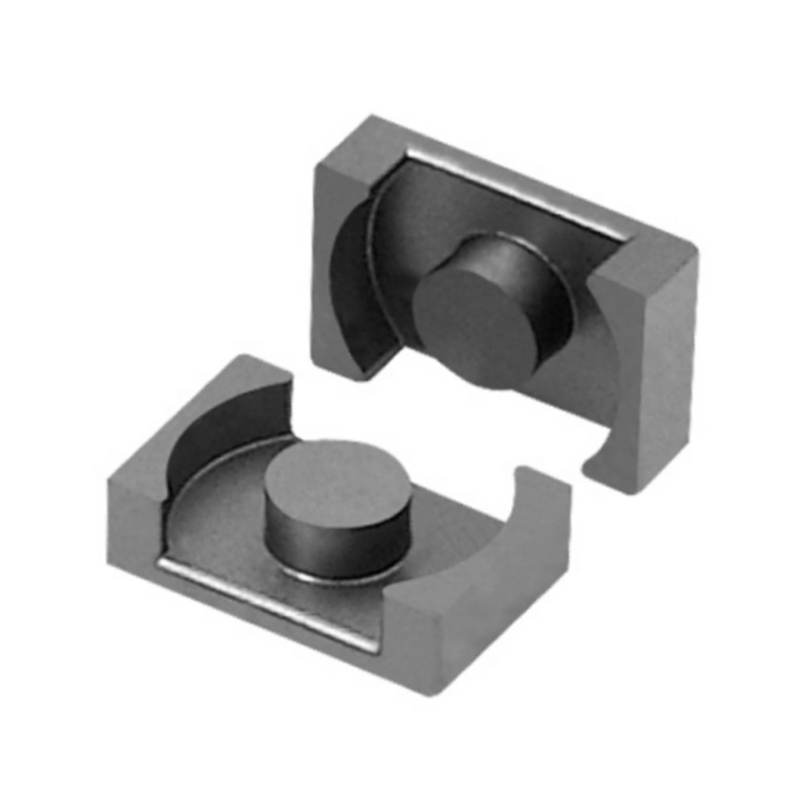
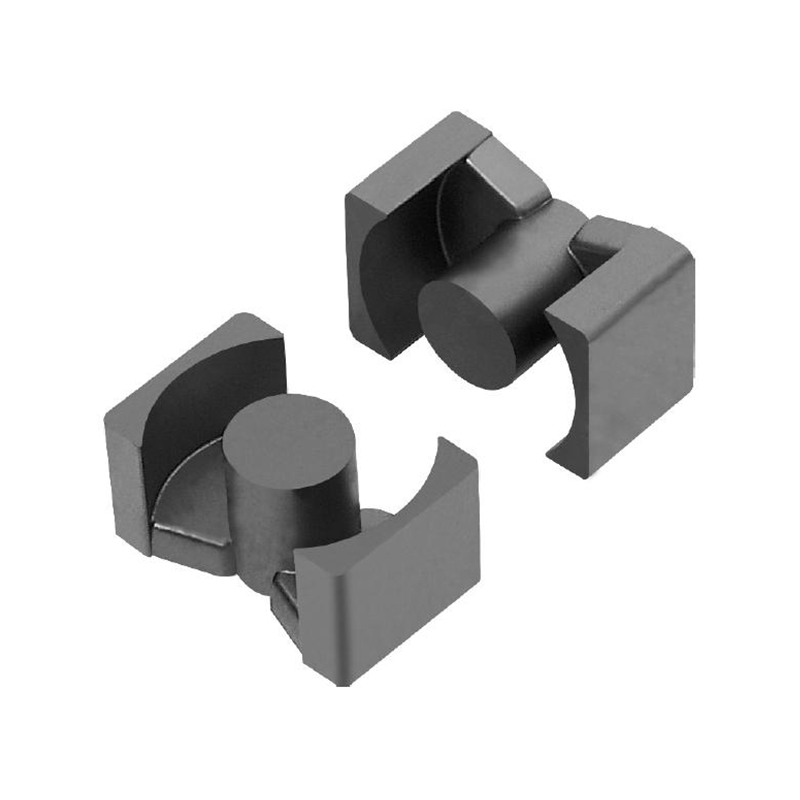
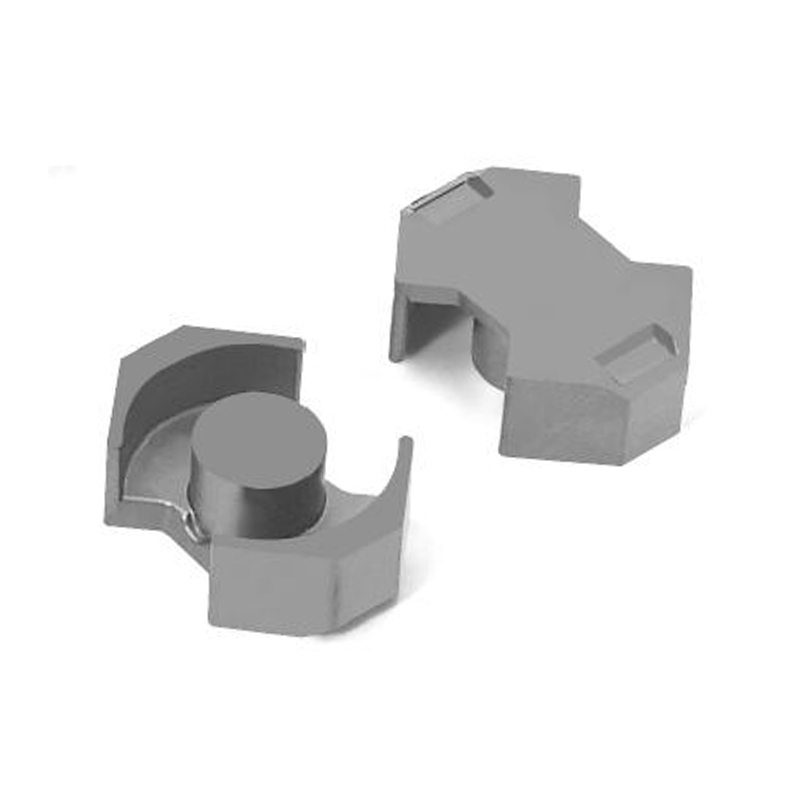
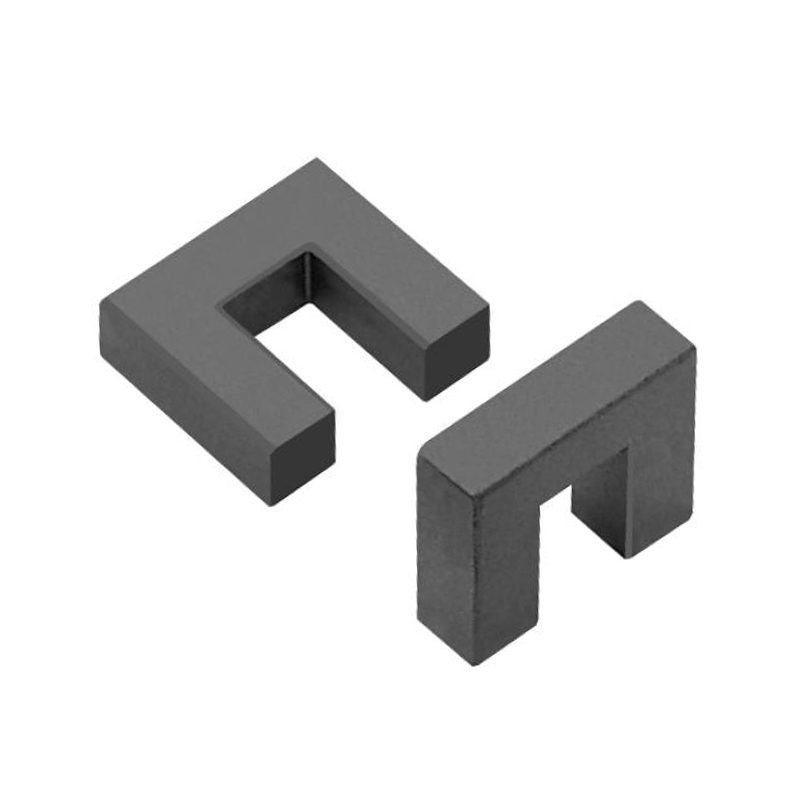
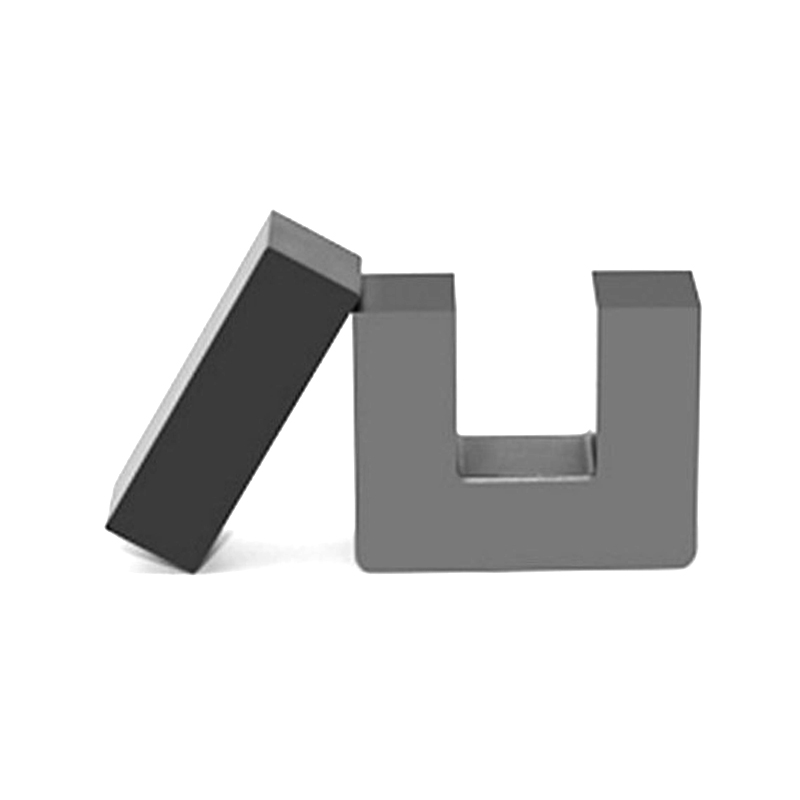
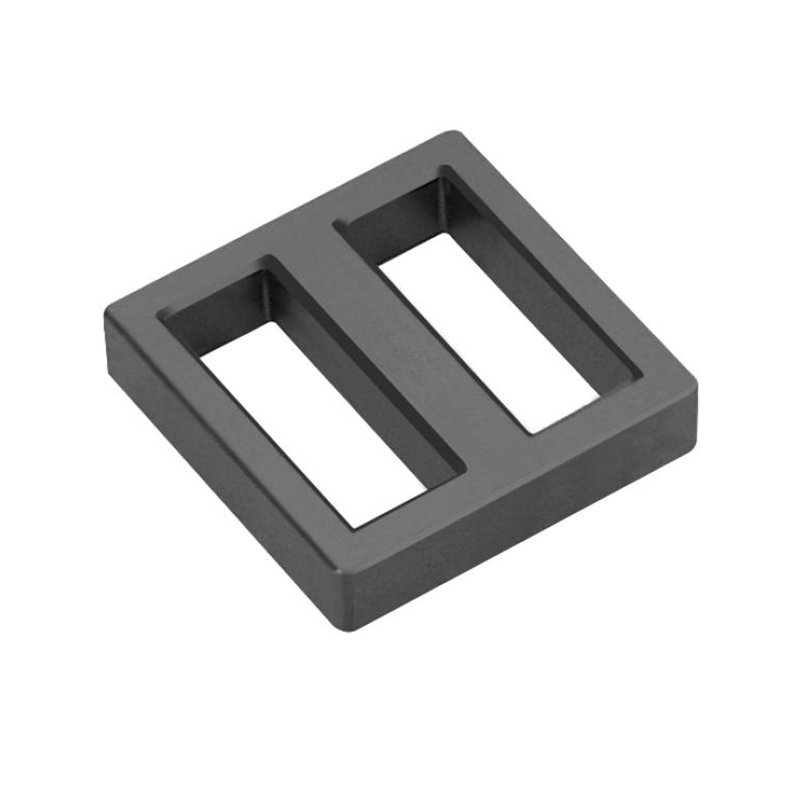
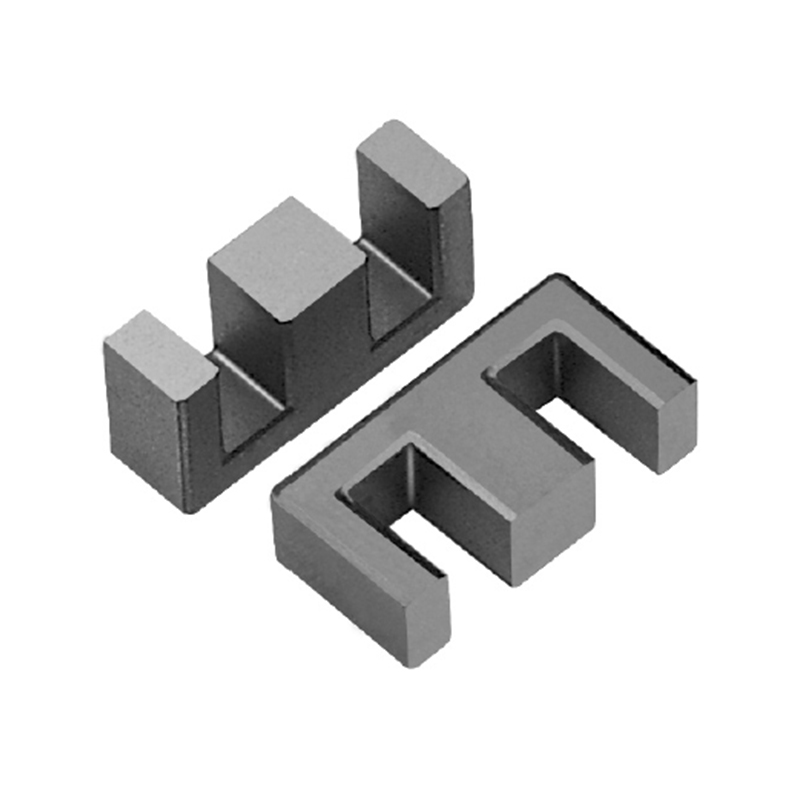
- DC‑DC converter inductors and transformers – automotive 48 V converters and data‑center point‑of‑load modules rely on shaped MnZn cores (E, ER, PQ, RM).
- Power factor correction (PFC) inductors – toroidal or sector‑shaped MnZn cores store the magnetic energy needed to shape the input current.
- Common‑mode chokes and EMI filters – high permeability MnZn toroids deliver large common‑mode inductance in a compact footprint.
- Renewable energy inverters – solar string inverters and wind‑turbine converters use large MnZn blocks for the output filter inductors.
- Automotive onboard chargers and DC‑DC modules – materials with a Curie temperature above 220 °C guarantee reliability inside the powertrain.
For ready‑to‑use shapes and grades, explore our range of MnZn power ferrite cores designed specifically for high‑frequency power conversion.
How to Select the Right MnZn Ferrite Core
Selection is a balancing act between permeability, losses, and flux capability at the actual operating point. Start with these parameters in sequence:
- Operating frequency – determines which material family works. For 25–200 kHz, conventional power grades are fine; for 300 kHz–1 MHz, low‑loss grades (e.g., PC95 or equivalent) are required.
- Peak flux density – dictated by topology and input voltage. Check the material’s B‑H curve at the highest expected core temperature to avoid saturation.
- Core losses – the limiting factor in most designs. Use the manufacturer’s Steinmetz coefficients to predict losses at the switching frequency and flux swing.
- Temperature rise – losses plus ambient must stay safely below the Curie temperature. A drop‑in permeability appears well before Tc is reached.
- Shape and winding window – E‑cores offer convenience; toroids minimize leakage; planar E‑cores suit low‑profile, high‑density modules.
A thorough walk‑through with real‑world numbers can be found in our five key specifications engineers check first when picking a MnZn core. Pay close attention to the loss curves—what looks acceptable at 25 °C often becomes unmanageable at 100 °C.
Manufacturing Process and Quality Control
MnZn ferrite cores begin as a homogeneous powder mixture of the three oxide precursors. After calcination at 800–1000 °C, the material is wet‑milled to a fine particle size, granulated with a binder, and then pressed into a near‑net‑shape green body. Sintering follows at 1200–1400 °C in a controlled oxygen atmosphere, during which the parts densify and the spinel phase forms. Finally, the core faces are ground to precise air‑gap tolerances.
Quality control at every batch involves automated measurement of inductance factor (AL), core loss at one or two standard flux‑temperature points, and dimensional checks. For power materials, the AL value tolerance is commonly held within ±5 %, and core loss repeatability is validated via ring‑core testing per IEC 62044‑2.
Testing Standards and Performance Verification
Engineers do not need to trust a datasheet blindly. Several international standards define how to verify the claimed properties:
- IEC 62044‑2 – measurement methods for core losses under sinusoidal and non‑sinusoidal excitation.
- IEC 62044‑3 – guidelines for determining the amplitude permeability and loss factor.
- IEC 60424 series – physical defect limits and visual inspection criteria for ferrite core shapes.
For incoming inspection, a simple RLC meter test to measure AL and DC resistance of a reference winding often catches gross deviations. Core‑loss calorimetry or a B‑H analyzer is reserved for qualification or when a design pushes the thermal envelope.
Advancements and Future Directions
MnZn ferrite technology is far from static. The push toward wide‑bandgap semiconductors (GaN and SiC) drives demand for materials that operate efficiently at 500 kHz–2 MHz with flux swings of 50–100 mT. Recent developments include ultra‑fine grain control that lowers high‑frequency hysteresis losses and doping strategies that flatten the loss curve between 80 °C and 140 °C.
Higher saturation flux density grades (above 540 mT at 100 °C) are also entering the market, enabling smaller magnetics in EV fast chargers. At the same time, manufacturers are refining the sintering process to improve mechanical strength without sacrificing magnetic performance, a critical detail for large cores that must survive vibration and thermal cycling.
The direction is unequivocal: lower losses, higher temperature capability, and better batch‑to‑batch consistency. Selecting the right MnZn ferrite core is no longer just about ticking a few boxes—it is about leveraging a continuously improving material to shrink the power supply, improve reliability, and reduce total cost of ownership.
Previous Post
Soft Magnetic Ferrites: The Complete Guide for Engineers
Next Post
MnZn Ferrite Core: High Saturation & Low Loss Power Material